
Sappho: The Tenth Muse
"Lyricism, Love, and Legacy from Lesbos"

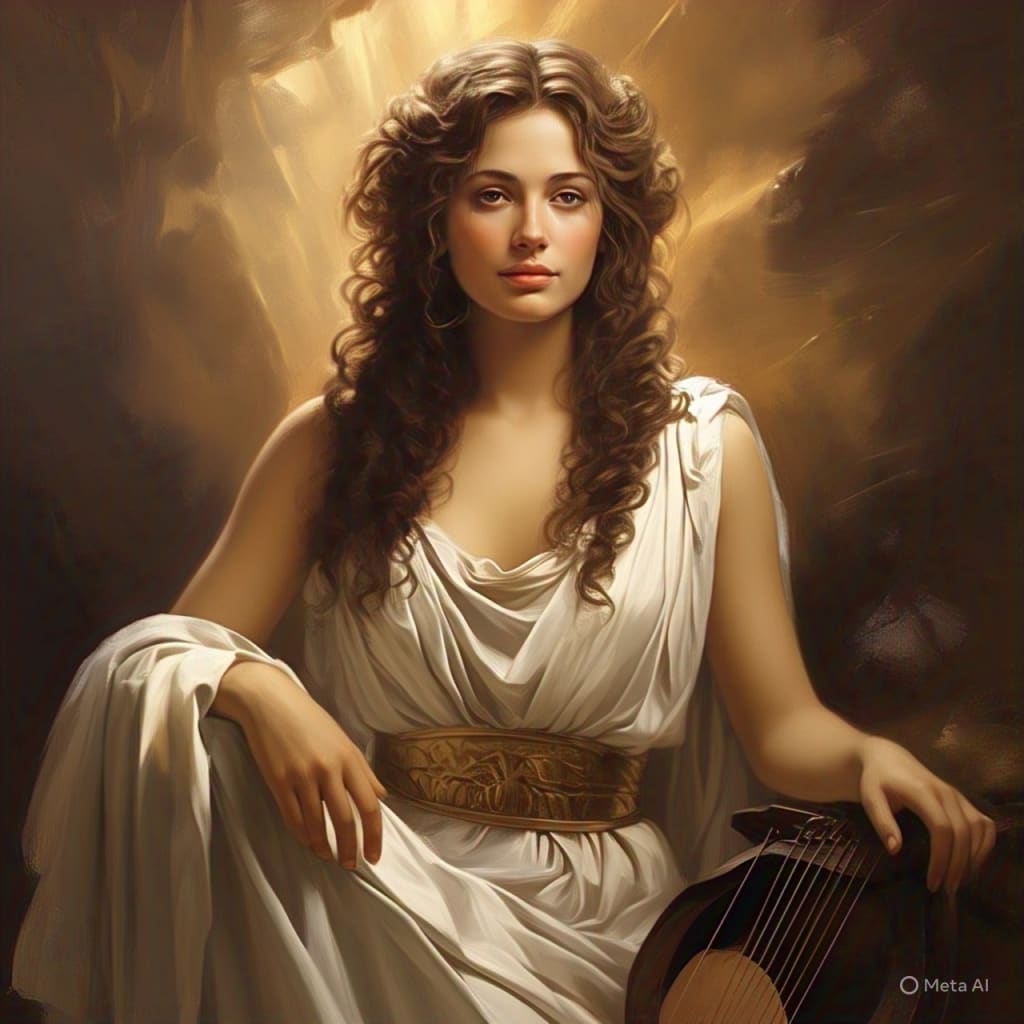
In the golden age of ancient Greek literature, the name Sappho glows like a soft ember—flickering across time with tenderness, power, and mystery. Known as The Tenth Muse, a title once bestowed by Plato himself, Sappho was a poet of passion and precision, of longing and lyricism. She lived over 2,600 years ago on the island of Lesbos, yet her words continue to stir modern hearts with their emotional intensity and beauty.
The Woman Behind the Lyre
Born around 630 BCE, Sappho lived in a society where few women left behind lasting records of their thoughts or experiences. Despite this, she composed thousands of lines of poetry that offered rare insight into the emotional lives of women—especially in their relationships with one another. Her poems were meant to be sung, often accompanied by a lyre, which gave rise to the term "lyric poetry."
Sappho wasn’t a myth. She was real, revered, and read widely in antiquity. In fact, she was so highly regarded that her image once appeared on coins. Unlike the epic poetry of her male contemporaries such as Homer, Sappho’s work didn’t focus on gods or heroes. It focused on the heart—on love, desire, jealousy, friendship, and the subtle beauty of the everyday.
A Poetic Voice of Desire
One of the most remarkable aspects of Sappho’s poetry is its unabashed expression of love and desire for other women. Her work often explores intimate emotional bonds between women, and while it’s tempting to read her poems solely through a modern lens, what remains clear is that her exploration of female emotion was radical for her time. It’s from her island home, Lesbos, that we get the word “lesbian.” The adjective “sapphic” also derives from her name, underscoring her symbolic importance in LGBTQ+ history and discourse. However, beyond any label, her poetry resonates because it is fundamentally human—it speaks of longing, joy, heartache, and connection in ways that transcend gender and time.
“Sweet mother, I cannot weave –
Slender Aphrodite has overcome me
with longing for a girl.”
– Fragment by Sappho
In this fragment, we hear the voice of someone overtaken by feeling, by the ache of love. It’s tender and direct, capturing a moment so personal yet so universal. That’s the power of Sappho—her ability to distill complex emotion into lyrical simplicity.
Fragmented but Immortal
Tragically, much of Sappho’s work has been lost. Of the estimated nine volumes of poetry she once composed, only fragments remain—many damaged, some consisting of just a few words. The only complete poem we have is her "Ode to Aphrodite", a prayer to the goddess of love asking for relief from the pains of unrequited affection. But even in fragments, Sappho’s voice endures. Her words have been rediscovered on papyrus, quoted by ancient scholars, and reimagined by contemporary poets and translators. Each recovered line feels like a whisper from the past—an emotional thread that connects us across centuries.
Cultural and Literary Impact
Sappho’s influence on literature is profound. She helped shape the genre of lyric poetry and set a precedent for using personal emotion as poetic material. Her work influenced poets across time—from Catullus in ancient Rome to 19th-century Romantics, and even contemporary voices in feminist and queer literature today. More than a poet, Sappho has become an icon—a symbol of female authorship, artistic autonomy, and the power of emotion in literature. Her status as a queer cultural figure has brought renewed attention to her life and work in modern times, and she continues to inspire discussion, research, and creative expression.
Why Sappho Still Matters
What makes Sappho’s work so enduring isn’t just its historical significance—it’s its emotional truth. In a world filled with spectacle and noise, her quiet moments of love and longing feel revolutionary. Her poetry reminds us that vulnerability is powerful, that expressing desire isn’t weakness but courage. Sappho was called The Tenth Muse for a reason: she didn’t just add to the artistic world—she transformed it. She sang not of war, but of the wars within. She made poetry personal, and in doing so, she gave voice to feelings that are timeless.
About the Creator
aadam khan
I am publishing different stories
Keep reading
More stories from aadam khan and writers in Poets and other communities.
William Shakespeare: A Poet for All Ages
When people talk about great writers, one name always comes first—William Shakespeare. He is often called the greatest playwright in history, and even after more than 400 years, his works are still read, studied, and performed worldwide. Shakespeare’s plays and poems are filled with deep emotions, universal themes, and beautiful language that connect with people of every age. His writings are not just old books in libraries; they are living works that continue to inspire modern literature, films, and even everyday speech.
By aadam khan4 months ago in Poets
Where's the Glory?
In breaking news, rehabilitated Republican Senator Johnnie Johnson (Pronouns: HE, HIM, HIS) called a press conference from the Men’s room of the New Orleans Louis Armstrong International Airport, Concourse B, across from the Ignatius Reilly’s Lucky Dog stand. The Senator had just returned from a sexual reorientation rehabilitation program in Memphis, TN after being publically disgraced at a Buckee’s Truckstop restroom soliciting sex from an undercover cop three months ago. He is a founding member of the Reformed Christians for Christ, a conservative, pro-family and ex-gay advocacy group. In the spirit of being reborn, Senator Johnson invited reporters to marvel at his plans for a major remodeling of airport bathrooms.
By Cathy Schieffelin7 days ago in Humor


Comments (1)
Sappho's story is truly fascinating. It's amazing how she broke barriers writing about women's emotions back then. I wonder how she managed to get her poems out there in a society that didn't encourage female voices much. Also, her focus on love between women was so ahead of its time. Do you think her work would have had the same impact if it was written in a different form, not just lyric poetry?