
Poetic Acts of Rebellion
In a world that demanded silence, she chose to sing in metaphors.
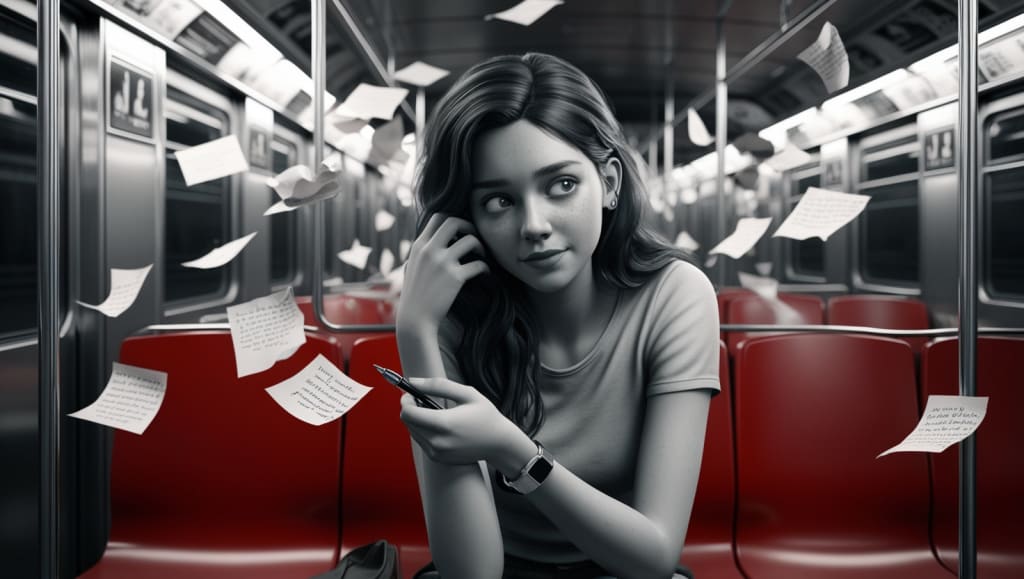
They told her not to write.
Not in the margins of her notebooks, not on napkins, not under her breath in the classroom, not with eyeliner on bathroom mirrors. “There are better things to do with your time,” her uncle once said, folding her poem into quarters like it was trash. “Girls like you don’t need to dream like that.”
So she began writing in secret.
Little poems hidden beneath floorboards, behind light switch covers, inside the lining of her coat. The world said, obey, and she answered in metaphors. The world said, keep your head down, and she replied with rhymes that made people stop and look up.
She was fifteen when she started her first rebellion.
It wasn’t loud. There were no marches, no chants, no fists raised skyward. Instead, there were sticky notes.
One morning, the school bathroom mirror had this written in Sharpie:
"You are not as small as they taught you to be."
No one knew who wrote it.
The next week:
"The cracks in you let the light out, too."
Then:
"We carry stars inside us, don’t forget."
Soon, other hands joined her.
Different handwriting, same heartbeat. Words began appearing in lockers, under desks, inside textbooks. Tiny revolutions. A secret society of softness in a world that glorified coldness.
They found her eventually.
A teacher caught her scribbling a verse on the edge of a bulletin board.
She was taken to the principal’s office. They called her poems graffiti, said she was disruptive, distracting, not appropriate.
She listened quietly.
When they asked if she had anything to say for herself, she recited one of her own lines:
“You built walls around our wonder,
and now you're surprised when we try to escape?”
They suspended her for three days.
She came back with poems stitched into the hem of her uniform skirt.
Wrote haikus in the condensation of classroom windows.
Left rhymed couplets on the chalkboard before the teacher arrived.
They told her she had a problem with authority.
She thought authority had a problem with imagination.
Her mother worried. “They’ll never let you succeed if you keep this up.”
She smiled and said, “Maybe I was never meant to fit the version of success they’re selling.”
At seventeen, she turned her bedroom into a press.
Old typewriter. Recycled paper. Ink-stained fingers. She printed tiny zines filled with her words, folded and stapled with care, and left them in waiting rooms, on bus seats, in grocery store aisles.
Each one ended the same way:
“This page is a mirror.
Look closer.”
She didn’t want fame.
She wanted freedom.
Not the kind on billboards or in campaign slogans. The kind you feel when someone whispers, “You made me feel seen.”
In college, she majored in literature and protest.
Not officially—her transcript said English and Sociology—but her real education came from back alleys and used bookstores, from midnight readings in candlelit basements where people cried when strangers read their truth out loud.
She tattooed a comma on her wrist.
A reminder that her story wasn’t over, even on days it felt like it was.
When the university passed a rule banning chalk messages on campus sidewalks, she responded the next day with a poem made entirely of flower petals.
“They paved over your joy.
So I planted mine.”
It made the front page of the school paper.
The administration wasn’t amused. The students were inspired.
She never shouted her rebellion.
She didn’t need to.
She whispered it between the lines, tucked it into broken places, wrapped it around people like a blanket.
Where the world demanded compliance, she answered with lyricism.
Where it pushed conformity, she planted wild metaphors.
Now she’s 28.
She still writes.
Still leaves poems in odd places—on subway poles, ATM receipts, empty coffee cups.
Her handwriting has grown messier. Her courage hasn’t.
One afternoon, in a bookstore she’s never entered before, she finds a sticky note on a shelf of poetry.
“Your words made me want to live louder.”
It’s not her handwriting.
She smiles.
About the Creator
Keep reading
More stories from Abuzar khan and writers in Poets and other communities.
Walking Through Unspoken Pain
There’s a kind of grief that doesn’t cry out. It doesn’t scream, doesn’t collapse in the kitchen or tear through photographs in fury. It lingers. Quiet. Heavy. The kind you carry in your spine, in the way your shoulders hunch or how you hesitate before answering “I’m fine.”
By Abuzar khan6 months ago in Poets
Official Notice: Preservation of the Heart
Attention. This is an official notice to all residents of the inner landscape. Your heart requires daily inspection. Neglect may lead to quiet corrosion, unnoticed at first, creeping through thoughts like fog through a forest.
By Sound and Spiritabout 3 hours ago in Poets



Comments
There are no comments for this story
Be the first to respond and start the conversation.