
Walking Through Unspoken Pain
Some wounds never bleed—but they echo with every silent step we take.
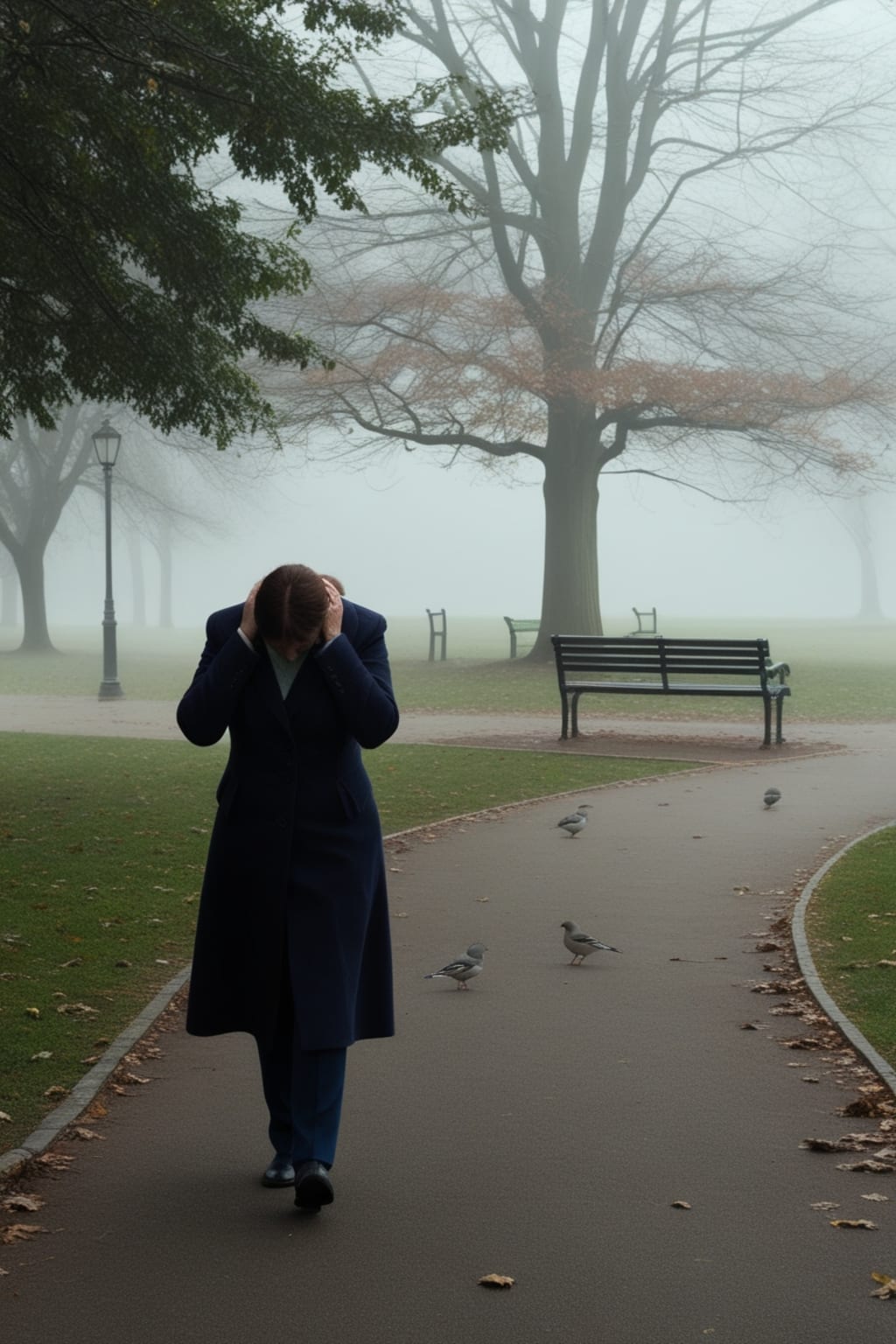
There’s a kind of grief that doesn’t cry out. It doesn’t scream, doesn’t collapse in the kitchen or tear through photographs in fury. It lingers. Quiet. Heavy. The kind you carry in your spine, in the way your shoulders hunch or how you hesitate before answering “I’m fine.”
I’ve been walking with that kind of grief for three years now.
It started the morning after she left. I say “left,” though the truth is, she vanished. No note, no explanation. Just an empty closet and the faintest scent of lavender where her pillow used to be.
Nora.
The name still feels sharp when I say it out loud, so mostly I don’t.
I tried telling people at first.
“She left,” I’d say.
“Did she say why?”
“No.”
“Are you sure she didn’t—?”
“Yes. She’s just… gone.”
And they’d nod politely, offer casseroles or cliché advice. “Time heals,” they’d say. But time doesn’t heal. It hides things. Buries them under calendars and routines and other people’s noise.
I became quieter after that.
Not depressed. Just… quieter.
There’s this park near my apartment. Wide gravel paths, ancient trees, and a pond where ducks float like tiny ships. I walk there every day. Same loop. Same time.
It’s the only place my grief and I speak.
Not in words—just in presence. Step after step, breath after breath.
Some days, I imagine Nora walking beside me. Not ghostly or surreal. Just… how it used to be. Her scarf catching wind. Her fingers brushing mine. Her laugh—God, that laugh—cutting through cold air like warmth.
But then I blink, and I’m alone again.
Always alone.
One morning, I noticed her.
A woman sitting on the same bench every day, feeding birds from a crumpled paper bag. She never smiled. Never made eye contact. Just scattered crumbs like prayers and stared into the trees.
Weeks passed.
I started timing my walks to pass her bench, unsure why.
Until one day, our eyes met.
A flicker.
Recognition? Or just two strangers caught in each other’s gravity?
She nodded. Barely.
And I nodded back.
The next day, I sat beside her.
We didn’t speak. Didn’t need to. Just two people steeped in silence, letting grief breathe for once.
Eventually, I said, “You feed them every day.”
She replied, “They expect me to. Like it’s a contract.”
Her voice was hoarse, unused. I liked it.
We never exchanged names.
Instead, we spoke in bits. Weather. Ducks. Memories folded into sentences like origami. I told her Nora liked birds. She told me her son once named one Steven for no reason at all.
It became a kind of ritual.
One windy Thursday, she said, “People think pain is loud. But silence—real silence—is heavier than screaming.”
I didn’t respond. I just looked at her, and I think that was enough.
That was the day I realized: I wasn’t the only one walking with something unspoken.
I started writing again.
Just small things. Paragraphs. Thoughts. Little pieces of sadness and wonder that had nowhere else to live but the page.
Nora once said I had “the kind of soul that bruises beautifully.”
I never understood it until then.
One afternoon, the bench was empty.
Birds still gathered, expectant, confused.
She never came back.
I waited three days before asking the old park keeper. He just shrugged. “Happens,” he said. “People drift.”
Drift.
It felt like the right word.
She had never told me her name. And still, her absence made the world feel slightly less possible.
But I kept walking.
Every day.
Same path. Same time.
Because sometimes, that’s all we can do. Keep walking through the pain we don’t know how to name. Trusting that somewhere in the rhythm of our steps, healing will hum a soft melody.
One rainy morning, a girl—maybe eight or nine—ran past me, laughing, chasing nothing. She slipped. I reached out instinctively, catching her by the arm.
“You okay?” I asked.
She nodded, out of breath. “I’m fine. Just pretending I’m a bird.”
I smiled.
And for the first time in three years, I felt the faintest tug of lightness in my chest.
Like a candle flickering in a long-dark room.
I still don’t know where Nora went.
I still don’t know the name of the woman on the bench.
But I know this:
Pain changes shape. It softens. It lingers, yes—but it also teaches you how to move gently through the world.
I no longer crave explanations.
I crave presence.
The feel of gravel underfoot. The sting of wind on my cheeks. The quiet knowing that, somewhere, someone else is walking with their own unspoken sorrow.
And maybe, someday, we’ll meet on a bench again.
Say nothing.
And understand everything.
About the Creator
Keep reading
More stories from Abuzar khan and writers in Poets and other communities.
The First Cut
The first cut wasn’t with a blade. It wasn’t even visible. It came one spring morning, in the back of a red pickup truck with rusted doors and a cracked windshield, the kind of vehicle that smelled like gasoline, coffee, and broken promises. I was sixteen. My father was silent.
By Abuzar khan8 months ago in Poets



Comments
There are no comments for this story
Be the first to respond and start the conversation.