
Mine eye and heart are at a mortal war by William Shakespeare
Shakespeare’s Sonnet 46 explores the conflict between the eye and the heart over the beloved’s beauty. The eye claims physical appearance, while the heart insists on emotional possession. Using a courtroom metaphor, the poet resolves the dispute by dividing love into outward beauty (eye) and inward affection (heart).

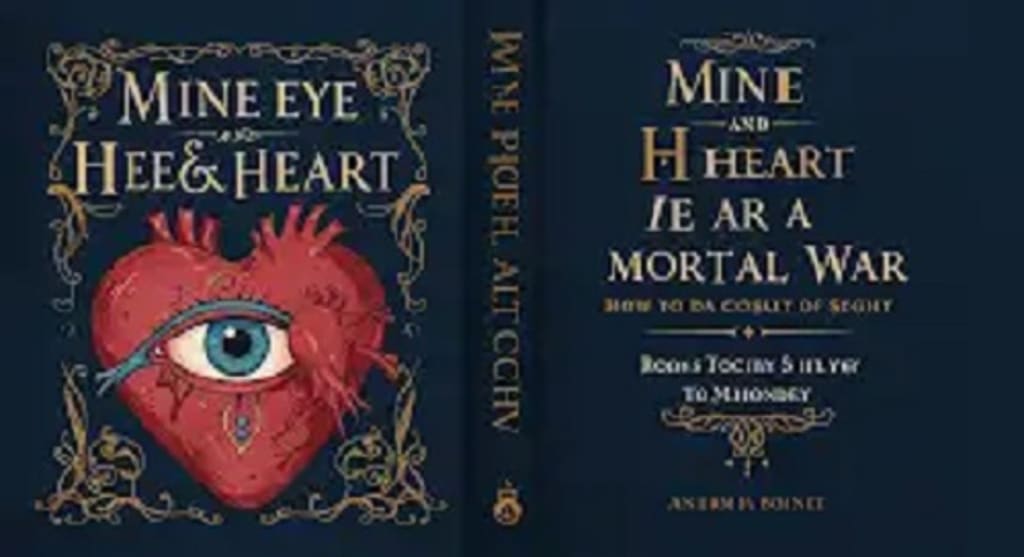
William Shakespeare’s Sonnet 46 is a profound exploration of the internal conflict between the heart and the eye, personified as two entities engaged in a legal battle over the ownership of the beloved’s image. This poem belongs to the Fair Youth sequence, where Shakespeare expresses deep admiration and affection for a young man. In this sonnet, the poet dramatizes the struggle between visual attraction and emotional connection, ultimately arriving at a resolution that divides the beloved between the eye and the heart.
“Mine eye and heart are at a mortal war
How to divide the conquest of thy sight”
Shakespeare begins with a dramatic metaphor, depicting a fierce battle between his eye and his heart. The phrase “mortal war” suggests that the conflict is intense and potentially life-threatening. The cause of this war is the desire to “divide the conquest of thy sight.” Here, “conquest” implies victory, as if the beloved’s beauty has been captured, but now there is a dispute over its rightful ownership. The eye wishes to claim the beloved’s appearance, while the heart desires a deeper, more emotional possession.
“Mine eye, my heart thy picture’s sight would bar
My heart, mine eye the freedom of that right,”
These lines illustrate the conflicting desires of the eye and the heart. The eye, having captured the beloved’s image, wants to keep it for itself and prevent the heart from having access. Conversely, the heart seeks to deny the eye its exclusive right, asserting that true possession should be emotional rather than visual. The tension here highlights the dual nature of love—both physical and emotional.
“My heart doth plead that thou in him dost lie
A closet never pierced with crystal eyes;”
The heart argues its case by claiming that the beloved resides within it, in a sacred, protected place (“a closet”), which the eyes, no matter how clear (“crystal eyes”), cannot penetrate. This metaphor suggests that true love exists within the heart, beyond mere physical perception. The phrase “crystal eyes” implies clarity and perception, but also their limitation—they can only see the surface, not the inner depth of love.
“But the defendant doth that plea deny
And says in him thy fair appearance lies.”
Here, the eye presents its counterargument, rejecting the heart’s claim. The eye insists that the beloved’s “fair appearance” belongs to it, reinforcing the idea that beauty is something to be seen rather than felt. The use of legal terminology (“plea,” “defendant”) strengthens the metaphor of a courtroom battle, giving the poem a structured, almost judicial tone.
“To side this title is impanelled
A quest of thoughts, all tenants to the heart,”
To resolve the dispute, a jury of “thoughts” is assembled. These thoughts are described as “tenants to the heart,” suggesting that they reside within and are loyal to the heart. This indicates a bias in the decision-making process, implying that the judgment may favour the heart’s claim. The legal framework continues, enhancing the dramatic effect of the poem.
“And by their verdict is determined
The clear eye’s moiety, and the dear heart’s part.”
The jury delivers its verdict, determining how the beloved’s image should be divided. “Moiety” refers to a share or portion, meaning the eye and the heart each receive a part of the beloved. The eye is granted the right to admire the external beauty, while the heart is given the privilege of holding onto the inner love and essence.
“As thus, mine eye’s due is thy outward part,
And my heart’s right, thy inward love of heart.”
The poem concludes with a resolution: the eye claims the external beauty of the beloved, while the heart retains the internal affection and emotional connection. This division acknowledges the importance of both physical attraction and deep emotional attachment in love.
Conclusion
Sonnet 46 is a beautifully crafted meditation on the conflict between physical sight and emotional depth. Shakespeare masterfully employs legal and metaphorical imagery to depict this struggle, ultimately offering a resolution that acknowledges the importance of both aspects of love. By dividing the beloved between the eye and the heart, the sonnet highlights the necessity of harmonizing physical attraction with deep emotional connection in human relationships.
About the Creator
Muhammah Hanzalah
Passionate about history and culture. Join me on Vocal Media for captivating insights into hidden historical gems and diverse cultural traditions. Let's explore the rich tapestry of our shared heritage and artistic expressions.
Keep reading
More stories from Muhammah Hanzalah and writers in Poets and other communities.
On the Grasshopper and Cricket by John keats
John Keats’s sonnet “The Poetry of Earth” is a testament to the enduring beauty of nature’s voice, even amidst the extremes of seasonal changes. Composed in 1816, this Petrarchan sonnet exemplifies Keats’s sensitivity to the subtleties of the natural world and his Romantic conviction that beauty and poetry are omnipresent in life. In this article, we will explore the poem’s structure, themes, and imagery stanza by stanza, while understanding how Keats’s mastery immortalizes the ceaseless music of the earth.
By Muhammah Hanzalahabout a year ago in Poets
What the Night Remembers — Uncovering secrets buried by daylight
The lamp on Marcus's nightstand has been on for three hours. It's 11:47 PM, and he hasn't moved from the bed. The envelope sits on the dresser across the room, Sarah's handwriting still crisp on the front: Read this when you're ready. Not before. She'd left it six months ago, back when leaving still felt impossible. Back when they were still negotiating the geometry of their collapse.
By Anie Liban4 days ago in Poets


Comments
There are no comments for this story
Be the first to respond and start the conversation.