
Maya Angelou: The Voice of Resilience and Empowerment
Maya Angelou (1928–2014) was an extraordinary figure whose life and work spanned poetry, memoirs, activism, acting, singing, and public speaking. Her story is one of resilience, artistry, and advocacy for equality, making her one of the most influential voices in American history.
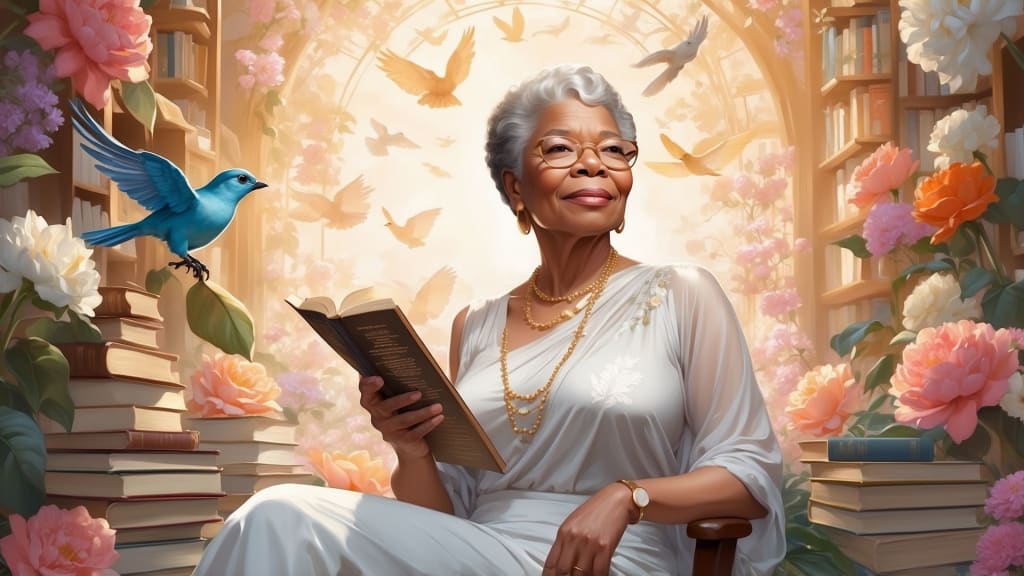
Early Life and Challenges
Maya Angelou was born as Marguerite Annie Johnson on April 4, 1928, in St. Louis, Missouri. Her older brother, Bailey Jr., nicknamed her "Maya," derived from calling her "My Sister." Her childhood was marked by turbulence and trauma. At the age of eight, Maya was sexually assaulted by her mother’s boyfriend. Following this, she stopped speaking for nearly five years, believing her words had caused his death after he was killed shortly after she revealed what had happened. During this period of silence, she developed a deep love for literature, memorizing works by Shakespeare, Edgar Allan Poe, and Black poets like Paul Laurence Dunbar.
Despite these hardships, Maya’s early exposure to storytelling and the written word set the foundation for her future career as a writer and poet.
A Multitalented Performer
In her late teens and early twenties, Maya Angelou worked as a dancer, singer, and actress, adopting her professional name during her time as a Calypso performer. She toured internationally, appearing in productions like Porgy and Bess and releasing albums of her music. Her career in performing arts allowed her to explore her creative side while exposing her to the richness of global cultures. She spent time in Ghana, where she became deeply involved in Pan-African activism and connected with leading intellectuals and revolutionaries, including Malcolm X and Kwame Nkrumah.
The Writing That Changed Everything
Angelou’s literary breakthrough came with her first autobiography, I Know Why the Caged Bird Sings (1969). This memoir detailed her early life, addressing themes of identity, racism, sexual violence, and resilience. The book’s candid and unapologetic portrayal of Black womanhood was groundbreaking, and it became an instant classic. Although it faced bans and challenges in schools for its raw depictions of trauma, the book is now celebrated as a seminal work in American literature.
She went on to write six more autobiographies, including Gather Together in My Name (1974), The Heart of a Woman (1981), and A Song Flung Up to Heaven (2002). Through these works, Angelou chronicled her life experiences while exploring broader social and cultural themes, such as civil rights, motherhood, and personal growth.
Poetry as Power
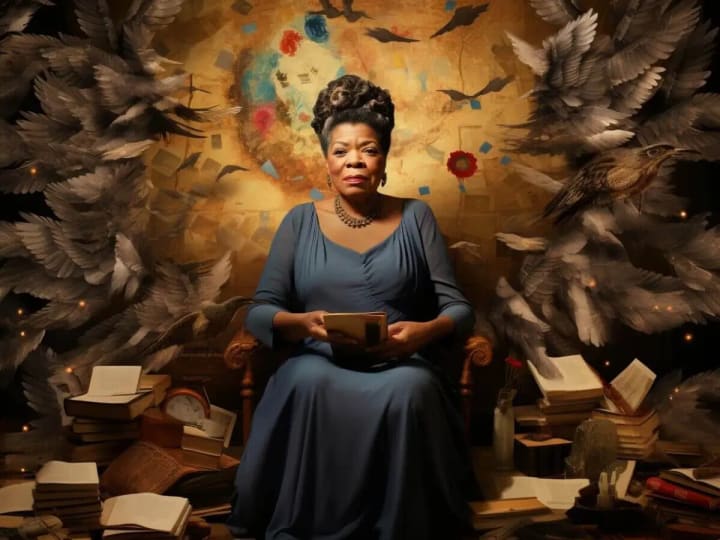
While Angelou is best known for her autobiographical works, her poetry holds an equally significant place in her legacy. She published several acclaimed poetry collections, including And Still I Rise (1978), Phenomenal Woman (1995), and On the Pulse of Morning (1993). Her poems often celebrate the strength, beauty, and resilience of Black women while addressing universal themes of hope, struggle, and empowerment.
One of her most famous poems, Phenomenal Woman, is a bold and unapologetic celebration of womanhood. Its rhythm and repetition underscore Angelou’s central message: beauty and power come from confidence and self-love rather than external validation. Similarly, her poem Still I Rise is a declaration of resilience in the face of oppression, embodying her indomitable spirit.
Her ability to weave personal and collective narratives into her poetry made her work deeply relatable and inspirational, resonating across generations and cultures.
Civil Rights Activism
Maya Angelou’s activism was as central to her life as her artistic pursuits. During the Civil Rights Movement, she worked closely with both Dr. Martin Luther King Jr. and Malcolm X. She served as the Northern Coordinator for the Southern Christian Leadership Conference, an organization co-founded by King. After her time in Africa, she returned to the U.S. to help Malcolm X establish the Organization of Afro-American Unity.
Angelou’s activism wasn’t confined to any single movement or period. Throughout her life, she spoke out against racism, sexism, and injustice, using her platform to promote equality and human rights. Her art and activism were inseparable, each fueling the other.
Legacy of Inspiration
Maya Angelou’s influence extended far beyond her published works. In 1993, she was invited to recite her poem On the Pulse of Morning at President Bill Clinton’s inauguration, becoming the second poet in U.S. history to perform at a presidential inauguration. This moment cemented her status as a cultural icon, bringing her voice to millions around the world.
In addition to her literary achievements, Angelou was a teacher, mentor, and public figure. She held teaching positions at various universities, including Wake Forest University, where she was a professor of American Studies. Her warmth, wisdom, and larger-than-life presence made her a sought-after speaker and an inspiration to countless individuals.
Angelou’s honors include over 50 honorary degrees, the Presidential Medal of Freedom (awarded by President Barack Obama in 2011), and a National Book Award nomination. She was also celebrated as a trailblazer for Black women, opening doors in literature, film, and activism.
Themes in Her Work
The themes in Maya Angelou’s work are universal, yet deeply personal, reflecting the intersections of her identity as a Black woman in America. Some recurring themes include:
Resilience: Her poetry and prose are filled with messages of overcoming adversity, as seen in Still I Rise and I Know Why the Caged Bird Sings.
Empowerment: Angelou’s work empowers marginalized voices, especially women, to embrace their worth and demand respect.
Racism and Injustice: Her writing unflinchingly addresses systemic racism and its impact on individuals and communities, as well as the ongoing fight for equality.
Love and Compassion: Angelou often wrote about love—romantic, platonic, and self-love—as a source of healing and strength.
Identity: Whether exploring her roots, her womanhood, or her role in society, Angelou delved into the complexities of identity with honesty and nuance.
A Lasting Impact
Maya Angelou passed away on May 28, 2014, at the age of 86, leaving behind a towering legacy. Her words continue to inspire readers and listeners worldwide, reminding them of their own strength and potential. She once said, “I’ve learned that people will forget what you said, people will forget what you did, but people will never forget how you made them feel.” This sentiment encapsulates her enduring influence.
Through her books, poems, and speeches, Maya Angelou has made millions feel seen, heard, and valued. Her life story, marked by resilience and triumph, serves as a testament to the power of courage, creativity, and compassion.
About the Creator
Mr Ali
Hello EveryOne..!!
A System That Isn’t Working Challenge Winners
Systems promise order. They organize behavior, distribute opportunity, and suggest that if everyone follows the rules, things will work. The entries in A System That Isn’t Working look closely at what happens when that promise begins to slip.
By Vocal Curation Team5 days ago in Resources


Comments
There are no comments for this story
Be the first to respond and start the conversation.