


No one’s getting
A Nobel prize
For being the first
To lift their hand
From the buzzer
Letting all their
Shackled
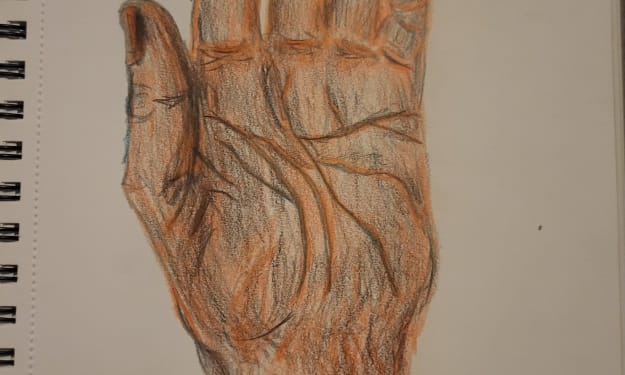
Brethren run free
They will be captured
Cuffed
Shot down like a dog
That doesn’t mean
It won’t be
A victory
To be celebrated
Held aloft
K.B. Silver
People often forget that doing something righteous or noble doesn’t preclude you from suffering painful or negative consequences. They sometimes shrink back at the first sign of punishment. Usually, to accomplish something of moral value, there will be at least a minimum of punishment along the way. Or else that item would already be checked off the proverbial to-do list. Because of this, the prospect of punishment itself is not a good method of evaluation on whether something is worth doing or not; in fact, depending on what action we are considering, it may be a higher indication.
The poem itself references the Milgram Experiment, an ethically questionable study done at Yale University in 1963 that shed some light on how people react to authority. I am fascinated by this study as someone who has repeatedly proved bad at following poorly explained or obviously hurtful directions, but extremely good at carrying out well-explained and supposedly helpful directions. I have often wondered if I could be tricked into a situation such as this, if presented with enough evidence that it was for another person’s good. Unfortunately, science says yes, I can, and you can too.
The Milgram Experiment is not the only study to show that authority is a corrupting force. The Stanford prison experiment is horrifying, and frankly, the reality we live in continues to prove something we already know, and have to deal with to a greater or lesser degree every day.
About the Creator
K.B. Silver
K.B. Silver has poems published in magazine Wishbone Words, and lit journals: Sheepshead Review, New Note Poetry, Twisted Vine, Avant Appa[achia, Plants and Poetry, recordings in Stanza Cannon, and pieces in Wingless Dreamer anthologies.
Keep reading
More stories from K.B. Silver and writers in Poets and other communities.
CH 20~ Party Down
Argento’s ninth (eighteenth in earth years) Birthday came and went Thursday, the thirteenth, and he’d already received his father’s gift, if you could call it that. You had to commit a fairly serious infraction to be cut off; the Arch-Baron was keeping up appearances and maintaining his own reputation as much as any sense of love or attachment to Argento with his “gift.”
By K.B. Silver Exclusive • 8 days ago
Do You have a Support Network?
Life is harder when you’re on your own. Human beings are social creatures, and we usually feel better when we have support from a strong social network around us. For most people, it’s our families that hold us together like glue.
By Elizabeth Woodsabout 15 hours ago in Psyche



Comments
There are no comments for this story
Be the first to respond and start the conversation.