
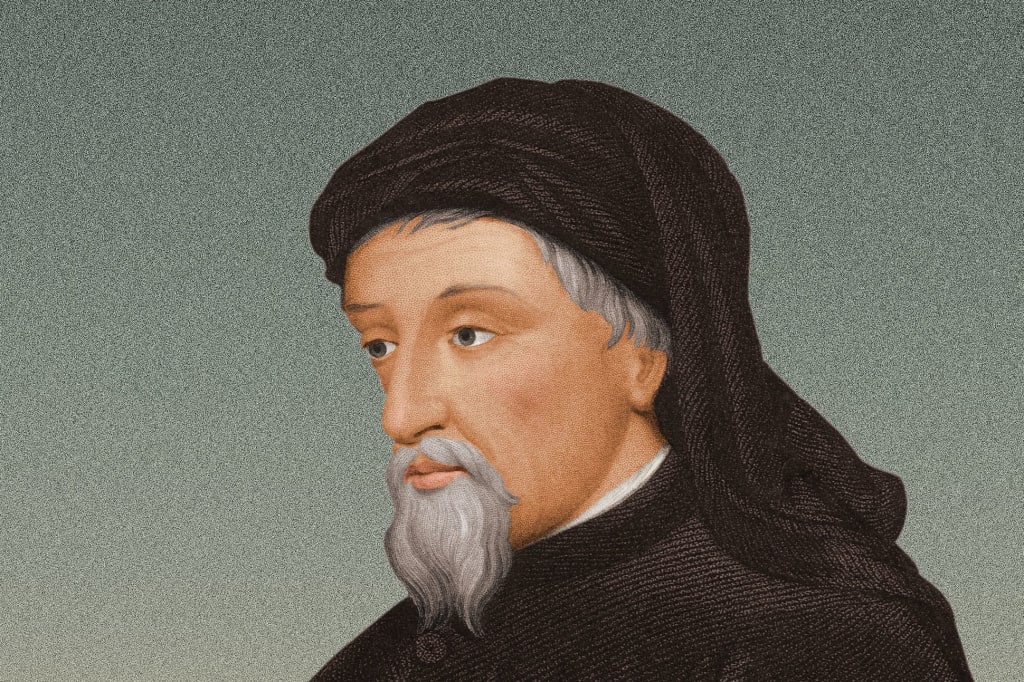
Geoffrey Chaucer (c. 1343–1400, England) – The Canterbury Tales
The Canterbury Tales by Geoffrey Chaucer is one of the most significant works in English literature. Written in Middle English in the late 14th century, it is a collection of 24 stories within a larger frame narrative. The tales are told by a group of pilgrims traveling to the shrine of Saint Thomas Becket in Canterbury. The journey serves as a storytelling contest among the pilgrims, each of whom represents different social classes and occupations of medieval England. Chaucer’s work is renowned for its vivid characterizations, humor, and exploration of themes such as social class, corruption, love, and morality.
The Frame Narrative
The story begins with a prologue in which Chaucer introduces the setting: a group of 29 pilgrims gather at the Tabard Inn in Southwark, near London, preparing for their pilgrimage to Canterbury. The host of the inn, Harry Bailey, suggests that to pass the time, each pilgrim should tell two tales on the way to Canterbury and two on the way back. The best storyteller will receive a free meal upon their return, paid for by the other pilgrims.
The Pilgrims
Chaucer provides detailed descriptions of the pilgrims in the General Prologue. The group is diverse, representing a cross-section of medieval society, from the noble Knight to the corrupt Pardoner and the humble Parson. Each character’s personality is revealed through their appearance, occupation, and the stories they tell.
Among the most notable pilgrims are:
The Knight – A noble and chivalrous man who tells a romantic tale of honor and love.
The Wife of Bath – A bold and experienced woman who shares her views on marriage and female independence.
The Miller – A bawdy, drunken character who tells a humorous and crude tale.
The Pardoner – A corrupt churchman who sells fake relics and tells a moral tale about greed.
The Parson – A virtuous and pious clergyman who preaches honesty and humility.
The Summoner – A lecherous man who enforces church laws but is himself deeply corrupt.
The Clerk – A poor but knowledgeable scholar who values learning over wealth.
Selected Tales and Their Themes
Each tale reflects the personality and beliefs of the teller. Here are some of the most famous tales:
The Knight’s Tale
A tale of chivalry, romance, and fate, this story revolves around two knights, Palamon and Arcite, who both fall in love with Emily, the sister of Queen Hippolyta. They duel for her love, with Arcite winning, only to be fatally wounded. Before dying, he asks Emily to marry Palamon, emphasizing themes of destiny and honor.
The Miller’s Tale
A humorous and bawdy story, this tale follows the love triangle between a carpenter, his young wife Alison, and two men who desire her. The story includes clever trickery and a famous comedic scene involving a mistaken kiss. It is a direct contrast to the Knight’s Tale, highlighting different social perspectives on love and relationships.
The Wife of Bath’s Tale
One of the most famous tales, it presents a knight who is forced to learn what women most desire. An old woman provides the answer—women want sovereignty over their husbands. As a reward, the woman marries the knight and later transforms into a beautiful young lady, illustrating themes of gender roles, power, and transformation.
The Pardoner’s Tale
A moral story warning against greed, it follows three men who seek to kill Death but end up killing each other over gold. The Pardoner, who himself is greedy and corrupt, ironically tells this story, showing Chaucer’s critique of religious hypocrisy.
The Nun’s Priest’s Tale
A fable about a rooster named Chanticleer who is nearly outwitted by a cunning fox. The tale explores themes of flattery, fate, and wisdom, using humor and satire.
Themes and Social Commentary
Chaucer uses The Canterbury Tales to critique and satirize various aspects of medieval society:
Social Class and Corruption – Many of the tales reveal the flaws in different societal groups, particularly the clergy, exposing greed and hypocrisy.
Love and Marriage – Several stories explore different views on love, marriage, and gender dynamics, with the Wife of Bath’s Tale standing out for its proto-feminist perspective.
Morality and Religion – The contrast between the Parson and the Pardoner highlights the moral and immoral aspects of religious figures in medieval society.
Fate vs. Free Will – Tales like the Knight’s Tale explore whether human life is governed by fate or personal choices.
Conclusion
Although unfinished, The Canterbury Tales remains a landmark in English literature. Chaucer’s ability to blend humor, morality, and realism gives readers insight into medieval society while exploring timeless human concerns. His work laid the foundation for modern storytelling and character-driven literature. Whether read for its historical value, poetic beauty, or entertaining stories, The Canterbury Tales continues to be celebrated as one of the greatest literary achievements in history.
About the Creator
Mr Ali
Hello EveryOne..!!


Comments (1)
Geoffrey Chaucer Is a historical figure from history! Great work