
Emily Dickinson: The Solitary Genius of American Poetry
Emily Dickinson stands as one of the most iconic and enigmatic poets in American literature. Born on December 10, 1830, in Amherst, Massachusetts, she lived a life largely confined to her family’s homestead, yet her poetic imagination soared to unparalleled heights. Known for her innovative use of language, unconventional punctuation, and profound exploration of universal themes, Dickinson’s work remains as fresh and relevant today as it was in her time.
Early Life and Education
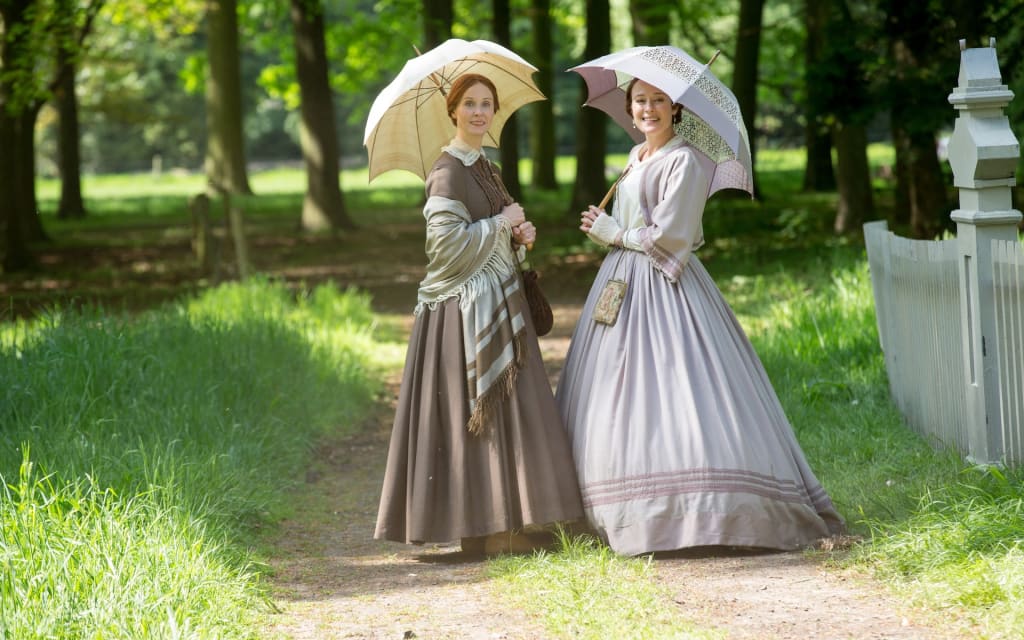
Emily Elizabeth Dickinson was the second of three children born to Edward and Emily Norcross Dickinson. Her father was a prominent lawyer and politician, while her mother was more reserved, focusing on the household. Emily grew up in a deeply religious and conservative environment, attending Amherst Academy and later Mount Holyoke Female Seminary. Although she excelled academically, Dickinson withdrew from Mount Holyoke after less than a year, a decision that has been attributed to homesickness, health issues, and perhaps her discomfort with the school’s religious fervor.
From a young age, Emily displayed a keen interest in literature and nature. She immersed herself in works by Shakespeare, the Bible, and contemporary poets such as Elizabeth Barrett Browning and Ralph Waldo Emerson. These influences would shape her poetic voice, which was distinct even in her earliest writings.
A Life of Seclusion
By her late twenties, Dickinson began to withdraw from the world. While she maintained correspondence with a wide circle of friends and acquaintances, she rarely left her family home. This seclusion has been the subject of much speculation. Some scholars attribute it to her introverted personality, while others suggest it might have been due to physical ailments, unrequited love, or her resistance to societal norms, particularly those imposed on women of her time.
Dickinson’s choice of isolation allowed her to focus intensely on her poetry. The quiet of the homestead, the cycles of nature, and her introspection became fertile ground for her creative genius. Her “world” was largely limited to her house and garden, but her poetry transcended these physical confines, delving into themes of life, death, love, immortality, and the human condition.
The Poetry of Emily Dickinson
Dickinson’s body of work consists of nearly 1,800 poems, though only a handful were published during her lifetime. Those that were published were heavily edited to conform to the poetic conventions of the 19th century, which Dickinson often disregarded. Her poems, written in short lines with irregular rhyme and meter, were groundbreaking in their style and content.
Key characteristics of Dickinson’s poetry include:
Unorthodox Punctuation and Capitalization: She often used dashes instead of traditional punctuation, creating pauses and ambiguity that invite multiple interpretations.
Slant Rhyme: Rather than sticking to perfect rhymes, she employed “slant rhymes,” which are close but not exact, adding a layer of tension to her work.
Conciseness: Her poems are often brief, but their compactness belies the depth of meaning contained within.
Themes of Mortality and Immortality: Dickinson had a preoccupation with death, exploring it not with fear but with curiosity and wonder.
Famous Poems
Some of Emily Dickinson’s most celebrated poems include:
“Because I could not stop for Death”
This poem personifies death as a kind and patient carriage driver who takes the speaker on a journey toward eternity. Dickinson’s portrayal of death as a companion rather than a fearsome entity is both haunting and comforting.
“I’m Nobody! Who are you?”
In this playful yet profound poem, Dickinson reflects on individuality and the social pressures to conform. Her sharp wit and humor shine through.
“Hope is the thing with feathers”
Using the metaphor of a bird, Dickinson celebrates hope as an enduring and resilient force that requires no effort to sustain, even in the face of adversity.
“I heard a Fly buzz – when I died”
This poem offers a striking meditation on death, juxtaposing the mundane (a fly buzzing) with the profound (the moment of dying).
“This is my letter to the World”
Dickinson addresses the reader directly, revealing her sense of isolation and her desire for her work to be understood and appreciated.
The “Master Letters”
One of the great mysteries of Dickinson’s life is the series of three letters she wrote to an unidentified individual referred to as “Master.” These deeply emotional letters have sparked debates among scholars about whether they were intended for a real person, a fictional creation, or even a metaphor for God or an idealized lover. Regardless of their intended recipient, the letters reveal Dickinson’s intense inner world and her struggles with love, longing, and spiritual connection.
Posthumous Recognition
During her lifetime, Emily Dickinson was largely unknown as a poet. It was only after her death in 1886 that her sister Lavinia discovered a treasure trove of handwritten poems in her bedroom. Determined to share her sister’s genius with the world, Lavinia enlisted the help of Mabel Loomis Todd and Thomas Wentworth Higginson to edit and publish the poems.
The first collection of Dickinson’s poetry appeared in 1890, but it was heavily altered to align with conventional tastes. It wasn’t until the mid-20th century that scholars and readers began to appreciate her work in its original, unedited form. Today, she is celebrated as a pioneer of modern poetry, whose innovative style has influenced countless poets and writers.
Dickinson’s Legacy
Emily Dickinson’s impact on literature is immeasurable. Her exploration of the human experience resonates across cultures and generations. By challenging poetic norms and conventions, she paved the way for future poets to experiment with form and language.
Beyond her literary contributions, Dickinson’s life and work have inspired discussions about individuality, creativity, and the role of women in society. Her decision to live on her own terms—eschewing marriage, public recognition, and societal expectations—makes her a feminist icon.
In recent years, Dickinson has been the subject of numerous biographies, films, and even a TV series (Dickinson, starring Hailee Steinfeld), which reimagine her life for modern audiences.
Conclusion
Emily Dickinson’s poetry is a testament to the power of imagination and introspection. Though she lived a life of relative obscurity, her words have achieved immortality, speaking to the universal truths of existence. As she wrote in one of her poems:
“If I can stop one heart from breaking,
I shall not live in vain;
If I can ease one life the aching,
Or cool one pain.”
Through her poetry, Emily Dickinson continues to ease, inspire, and illuminate the lives of readers around the world.
About the Creator
Mr Ali
Hello EveryOne..!!
The Devil's Cut
“Comrade, finally you’re awake.” The voice was smooth, sensual. A flickering incandescent bar was all that lit the white, sterile room. All Vladimir remembered was everything going black. He tried to move his arms and found them strapped to the gurney.
By Matthew J. Fromm5 days ago in Fiction



Comments (1)
Great poem story! Good work and Gazoogabloga!