
Elizabeth Bishop (1911–1979): A Master of Precision and Observation
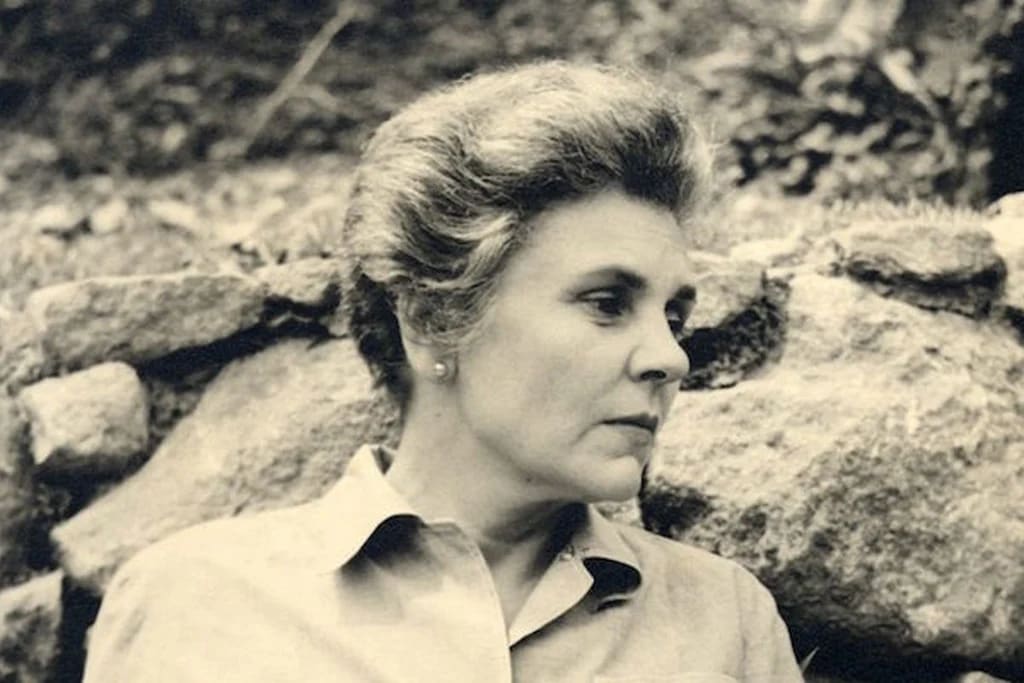
Elizabeth Bishop is considered one of the most important American poets of the 20th century. Her work is known for its precision, meticulous observation, and emotional restraint, as well as her ability to transform everyday experiences into profound meditations on life and the human condition. Bishop's poetry reflects a unique balance between personal introspection and an almost scientific attention to detail, making her one of the most admired voices in modern poetry.
Early Life and Education
Elizabeth Bishop was born on February 8, 1911, in Worcester, Massachusetts. Her childhood was marked by tragedy and instability. Her father died when she was just eight months old, and her mother suffered from mental illness, leading to her institutionalization when Bishop was only five years old. As a result, Bishop was raised by various relatives, spending much of her childhood in Nova Scotia, Canada, and Massachusetts. This sense of displacement and the search for a sense of home became recurring themes in her poetry.
Bishop attended Vassar College, where she initially pursued music before turning to poetry. At Vassar, she met influential figures like Marianne Moore, who became a mentor and lifelong friend. Moore’s emphasis on precision and clarity in poetry had a profound influence on Bishop’s writing style.
Themes in Bishop’s Poetry
1. Observation and Detail
Bishop was a poet of observation. Her poems often focus on ordinary objects, animals, or landscapes, transforming them through vivid imagery and careful attention to detail. For example, in her poem "The Fish," Bishop describes catching a fish with painstaking precision, observing its "pattern of darker brown / was like wallpaper" and its "speckled with barnacles." Her ability to elevate the mundane into the extraordinary is one of her defining traits.
2. Travel and Geography
Bishop’s sense of restlessness and her experiences as a traveler profoundly shaped her work. Having lived in Nova Scotia, New York, Brazil, and other places, her poetry often explores themes of geography and the search for belonging. Poems like "Questions of Travel" and "Brazil, January 1, 1502" reflect her fascination with new environments and the tensions between exploration and alienation.
3. Loss and Displacement
Bishop’s early experiences of loss and instability deeply influenced her poetry. While her work rarely delves into raw emotion, the undercurrent of loss is palpable. In "One Art," a villanelle exploring the theme of loss, she famously writes:
"The art of losing isn’t hard to master; / so many things seem filled with the intent / to be lost that their loss is no disaster."
The poem’s controlled structure contrasts with its deeply personal subject matter, showcasing Bishop’s ability to convey vulnerability without sentimentality.
4. Nature and the Human Condition
Bishop often used the natural world as a lens to explore the human condition. Her keen observations of animals, landscapes, and weather serve as metaphors for larger existential questions. For instance, in "Sandpiper," the bird’s obsessive search for meaning mirrors humanity’s own quest for purpose. Similarly, in "At the Fishhouses," she uses the cold, clear sea as a metaphor for knowledge and its elusiveness.
Style and Technique
1. Precision and Restraint
Bishop’s poetry is celebrated for its meticulous craftsmanship. She believed in choosing words carefully, ensuring each carried weight and purpose. Unlike confessional poets of her time, such as Sylvia Plath or Anne Sexton, Bishop avoided overt displays of emotion. Instead, she let her subjects speak for themselves, allowing readers to draw their own conclusions.
2. Use of Imagery
One of Bishop’s greatest strengths was her ability to create vivid imagery. Her descriptions are rich with sensory details, making her poems immersive and memorable. For example, in "The Moose," she describes the Canadian countryside with such precision that readers feel as if they are traveling alongside her:
"A moose has come out of / the impenetrable wood / and stands there, looms, rather, / in the middle of the road."
3. Musicality and Form
Although Bishop’s poetry often appears conversational, it is highly musical. She was skilled at using rhythm and sound to enhance her work. Additionally, Bishop was adept at working within traditional forms, such as the villanelle in "One Art," while making them feel modern and personal.
Bishop’s Life in Brazil
One of the most transformative periods of Bishop’s life was her time in Brazil. In 1951, she traveled there intending to stay briefly but ended up living in the country for nearly two decades. During this time, she formed a deep romantic relationship with Lota de Macedo Soares, an architect. Brazil became a significant influence on her poetry, inspiring works like "Brazil, January 1, 1502" and "Questions of Travel." The country’s landscapes, culture, and people provided Bishop with a wealth of material, allowing her to explore themes of identity, belonging, and cultural difference.
However, her time in Brazil was not without challenges. The relationship with Lota became strained, and Lota’s eventual suicide in 1967 deeply affected Bishop. These personal tragedies, while not explicitly detailed in her poetry, resonate in the undercurrents of her later work.
Legacy and Influence
Elizabeth Bishop received numerous accolades during her lifetime, including the Pulitzer Prize for Poetry (1956) for her collection "Poems: North & South—A Cold Spring." She also won the National Book Award and served as the U.S. Poet Laureate from 1949 to 1950.
Bishop’s influence extends far beyond her awards. Her commitment to craft, restraint, and observation has inspired generations of poets. Writers like Robert Lowell, who admired her immensely, and modern poets such as Mary Oliver and Louise Glück have acknowledged her impact on their work. Bishop’s ability to find beauty and meaning in the ordinary continues to resonate with readers and writers alike.
Conclusion
Elizabeth Bishop’s poetry is a testament to the power of observation and the beauty of restraint. Her ability to transform the mundane into the extraordinary, coupled with her deep understanding of loss, displacement, and the human condition, has cemented her place as one of the greatest poets in American literature. Her legacy endures not only in her timeless poems but also in the inspiration she provides to those seeking clarity, precision, and honesty in their own writing.
About the Creator
Mr Ali
Hello EveryOne..!!



Comments
There are no comments for this story
Be the first to respond and start the conversation.