
Echoes in the Crowd
The Search for Those Who Truly Listen

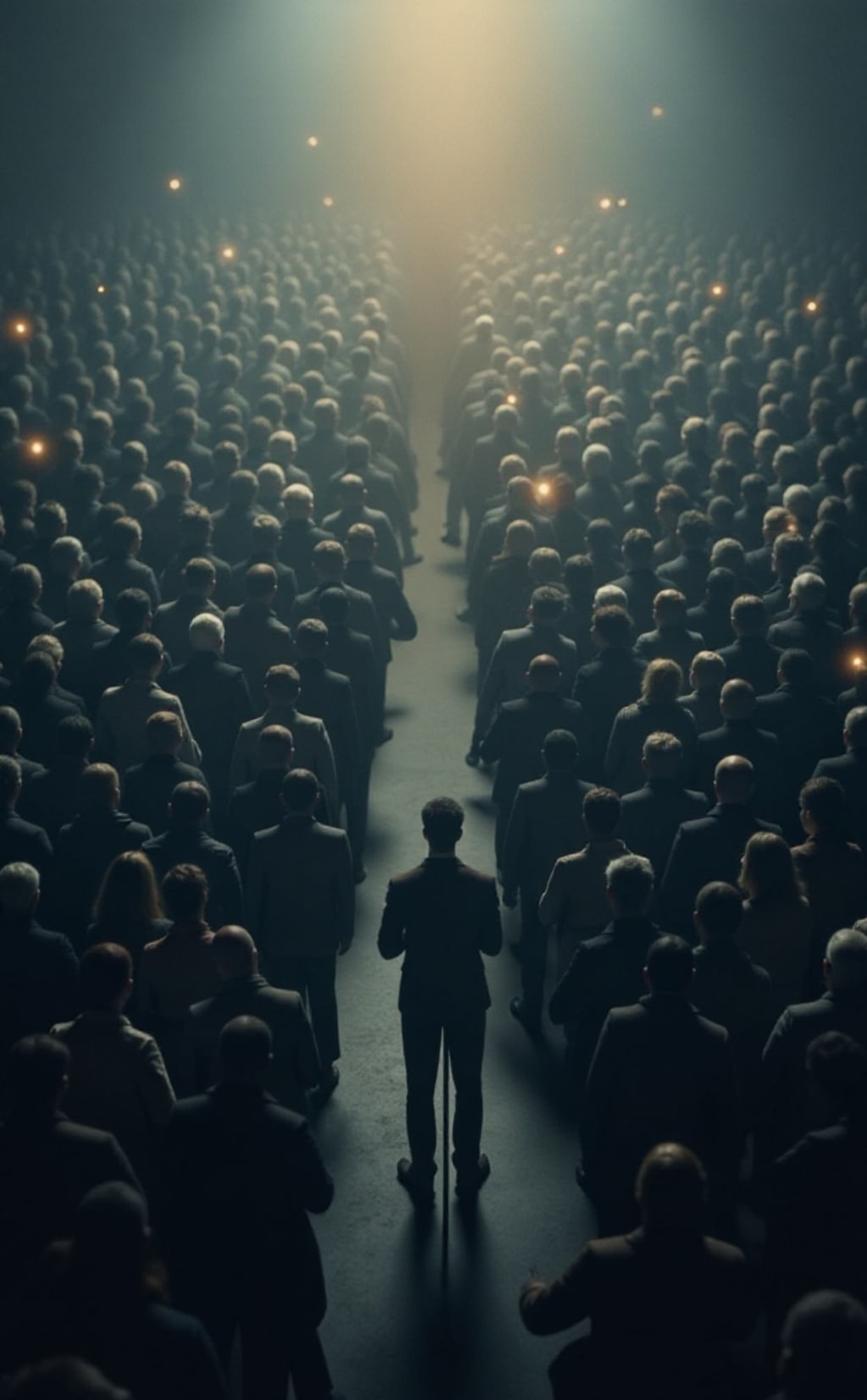
In a world teeming with voices — tweets, posts, podcasts, and platforms — we are constantly speaking, broadcasting, sharing. Yet behind the endless stream of words lies a quieter, more vulnerable truth: many of us are still searching for someone who truly listens.
Echoes in the Crowd: The Search for Those Who Truly Listen is not just a title. It’s a reflection of an increasingly universal experience: the challenge of finding connection in the age of overwhelming communication. Whether you're an artist yearning for resonance, a leader hoping to inspire, a friend needing understanding, or simply a person trying to be seen for who you really are — this story is yours.
The Illusion of Being Heard
Modern life is noisy. Social media platforms give us megaphones, but rarely true listeners. We’re encouraged to “put ourselves out there,” yet often find that our messages are drowned out by a sea of distractions, algorithms, and surface-level engagement.
We measure success in likes and shares, in views and follows. But beneath these metrics, a haunting question lingers: Who actually hears us?
Not just audibly. Not just passively. But really hears us — with empathy, curiosity, and attention.
The truth is, speaking is easy. But being heard is rare.
The Metaphor of the Crowd
In Echoes in the Crowd, the crowd is both literal and symbolic. It represents the fast-paced world where everyone is vying for attention — where the volume of communication has gone up, but the depth has gone down.
The main figure at the center of this metaphor is someone like you or me. They have something to say — a story, an idea, a plea, a truth — and they step into the crowd hoping to find ears that care. But what they encounter is a blur of indifference, noise, and self-interest. Their words echo, but don’t land. They return not with applause, but with emptiness.
Yet, amid the thousands of turned backs and distracted faces, a few begin to turn toward the voice. Slowly. Quietly. But fully present.
These are the people we’re looking for. The ones who don’t just hear the sound — they feel the meaning.
The Psychology of Listening
Studies in psychology and communication science tell us that deep listening is one of the most powerful human acts — and one of the rarest. Unlike hearing, which is passive, listening is intentional. It requires us to put aside our assumptions, distractions, and egos to fully receive another person’s message.
In relationships, this kind of listening fosters trust. In leadership, it builds loyalty. In art, it creates impact. And in activism or advocacy, it’s the foundation for change.
But in a culture of instant reactions, shallow replies, and perpetual scrolling, listening has become a radical act.
Echoes in the Crowd calls us back to this essential human need — not just to be heard, but to truly hear.
Artists, Creators, and the Fear of the Void
For creators, Echoes in the Crowd strikes a particularly tender chord. Whether you're a writer, musician, filmmaker, or public speaker, you've likely faced the fear that your work might go unnoticed — that your voice might echo unanswered into the void.
The blank stares. The lack of feedback. The polite nods instead of real dialogue.
But the story reminds us that an audience doesn't have to be large to be meaningful. Sometimes, reaching one person deeply is more powerful than reaching a thousand passively. Sometimes, the most important thing is not to be loud, but to be real — and to trust that those who are ready to listen will find you.
Leaders and the Listening Crisis
In the realm of leadership — whether in business, politics, or community work — the concept of listening has become a buzzword. Leaders are told to be “empathetic” and “approachable.” Yet many still fail to create spaces where people feel genuinely heard.
Echoes in the Crowd challenges the idea that speaking more makes one a better leader. Instead, it turns that idea on its head: The best leaders are the best listeners.
They hear not only what is said, but what is unsaid. They read the silences between sentences. They ask questions instead of giving lectures. And because of that, their teams trust them. Their followers believe in them. Their messages resonate — not because they’re perfect, but because they’re grounded in shared understanding.
Connection Over Performance
At its core, Echoes in the Crowd is about choosing connection over performance. In a world that rewards appearances and virality, this story reminds us that depth still matters. That real relationships are not built on how well you speak, but how well you listen and respond.
Whether it’s in a conversation with a friend, a quiet post shared into the digital sea, or a speech given to a room full of people — the measure of success isn’t just who claps. It’s who listens. Who carries your words with them long after the noise fades.
The People Who Turn Toward You
Perhaps the most hopeful part of Echoes in the Crowd is this: You don’t need the whole world to listen. You just need the right few.
The teacher who truly sees a struggling student. The partner who remembers the little things. The stranger who sends a message to say your story meant something to them. These are the listeners who give your voice a home.
And often, you don’t find them by shouting louder — you find them by speaking honestly, and listening in return.
Final Thoughts
Echoes in the Crowd: The Search for Those Who Truly Listen is a mirror held up to the modern world — a reflection of the loneliness, longing, and hope woven into every message we send out into the ether.
It’s a call to speak with purpose and to listen with heart. It’s a reminder that while the crowd may be loud and overwhelming, somewhere within it, someone is waiting to hear what only you can say.
So keep speaking. But also — keep listening.
Because in the end, it’s not the echo that matters.
It’s the moment someone turns toward it — and says, “I hear you.
About the Creator
Keep reading
More stories from Habibullah khan and writers in Poets and other communities.
A Typo Tale in Technicolor
There comes a moment in every writer’s life—whether professional, casual, or somewhere in between—when the words escape the page and rebel. Not dramatically. Not maliciously. But with style. With flair. And most of all, with typos. And in one particular story, they did it with purple paint.
By Habibullah khan 10 months ago in Poets
Discarded Souls: The Old Woman & The Old Robot
INTRODUCTION In the year 2230, faces are no longer fixed things. People shift. Machines shift. Even memories shift, flickering like old film reels caught between timelines. The characters you meet in these fragments — the Old Woman and the Old Robot known as Echo — may appear in different forms, bodies, or styles, depending on which recovered file you’re viewing. This is not a mistake. It is the nature of shape‑shifter stories.
By Vicki Lawana Trusselli 7 days ago in Poets
Top tipple tricks
Been thinking a lot about drinking, lately. Not least because of a recent episode of over-indulgence and the inevitable after effects. Some readers may recall the earlier articles I wrote about beating the booze. Here I set out an experiment in techniques for cutting down on my alcohol intake. The experiment was successful, the techniques worked, and I have armed myself with an arsenal of weapons in the war against the demon drink. I have yet to fire the first round however. It's all a question of timing (perhaps procrastination).
By Raymond G. Taylor6 days ago in Psyche



Comments
There are no comments for this story
Be the first to respond and start the conversation.