
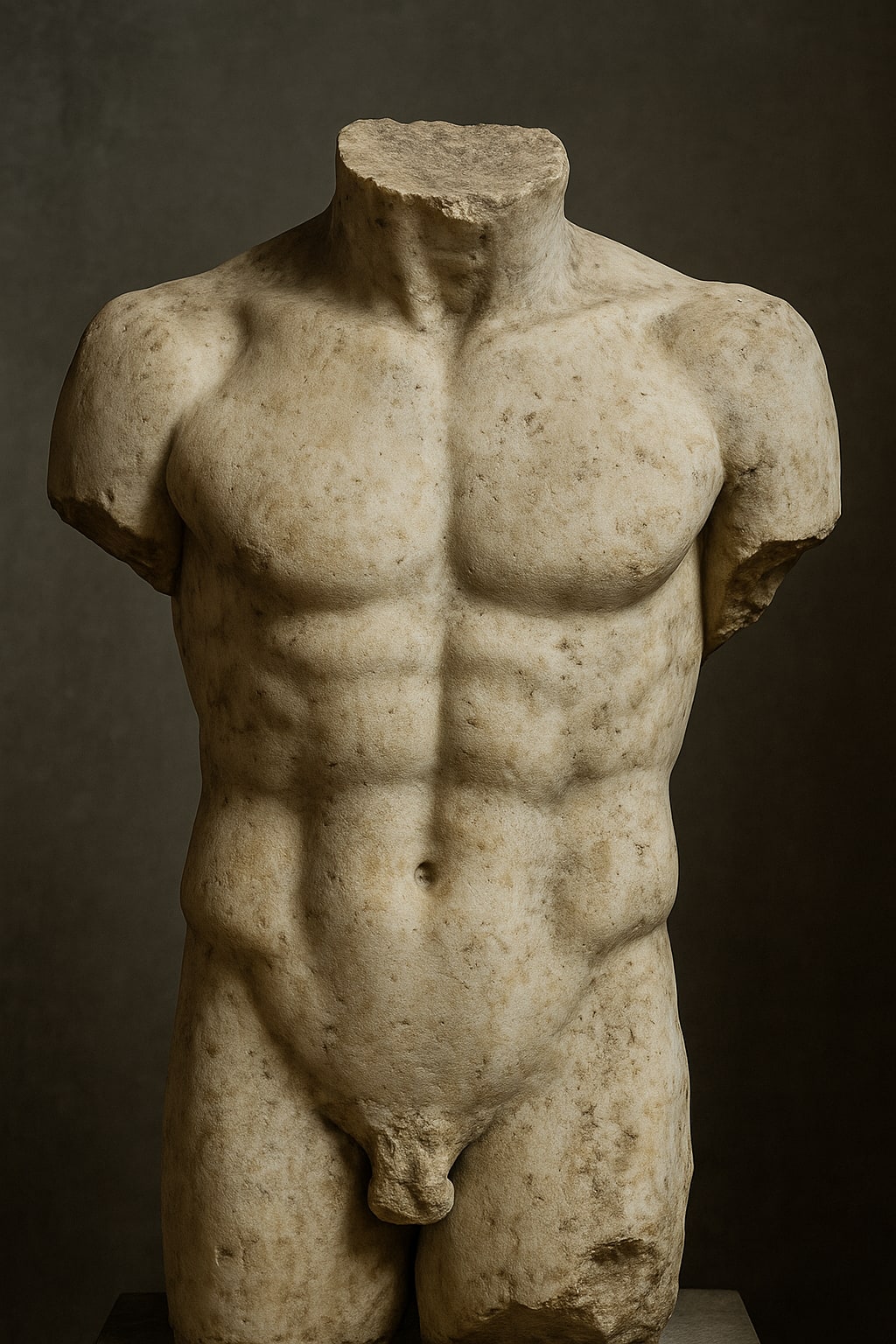
He’s a smart one, they say, and either
hate him or love him depending upon
their individual preference for smarts.
But if he doesn’t watch his actions,
he’s not so smart as he may seem.
____________________________________________________
Our life reveals our philosophy. Every breath, gesture, and glance signals what we truly believe. The body knows the truth long before the mind does.
____________________________________________________
We think of ourselves, following a thought experiment by Descartes, as minds carried around by machines. But the body is not just a vehicle. It a stage on which truth makes its entrance. When we say, “What what they do, not what they say,” we are acknowledging a timeless truth: the tilt of the head, the catch in the breath, the incongruous gesture often tell more about us than even we ourselves imagine.
Philosophy is not all hot air—arguments, syllogisms, concepts wafting upward in seminar rooms. Aristotle knew that virtue is not an idea but a habit: a repeated action that shapes the soul. You do not become just by analyzing justice, but by doing it with your hands and feet. The body, in its repetitive actions, makes philosophy real.
The divorce between thought and character is a human failing. And the body reveals the truth of the matter. A preacher may extol the blessedness of humility while striding arrogantly around his parish. Or he may praise peace, although he himself fidgets constantly. Merleau-Ponty wrote that perception itself is already philosophy: the way we pause at a open doorway or look at an approaching face is instantly laden with significance.
Our daily lives broadcast our philosophy. We attend to what we cherish; we neglect what we despise. If we bury ourselves in entertainment, then we embrace chaos. If we help the sick and the dying, then we love humanity. Your life is your philosophy. What your body does every day is what you really believe.
What would it mean for a whole society to believe this? To judge itself not by its brilliance but by its bearing? We would look less to dicta and more to deeds. We would be less litigious and more receptive.
To think well is not only to reason effectively. It is also to listen carefully to what the body is saying. Every breath, every glance, every gesture is signaling what we really believe. The body knows the truth about us long before we do.
About the Creator
William Alfred
A retired college teacher who has turned to poetry in his old age.
Keep reading
More stories from William Alfred and writers in Poets and other communities.
Standing While Falling
Quotation from Friedrich Nietzsche "He who wrestles long with monsters should beware lest he himself become a monster. And if you gaze long into an abyss, the abyss also gazes into you. Man is not destroyed by suffering, but by the meaning he makes of it."
By LUCCIAN LAYTH5 days ago in Critique



Comments
There are no comments for this story
Be the first to respond and start the conversation.