
Analysis of Percy Bysshe Shelley's "Ode to the West Wind"
Introduction Percy Bysshe Shelley’s "Ode to the West Wind" is one of the most celebrated poems in English Romantic literature. Written in 1819 and published in 1820, the poem is both a tribute to the power of nature and a personal reflection on the poet’s role as a revolutionary voice. Shelley invokes the West Wind as a force of destruction and renewal, seeing it as both a natural phenomenon and a metaphor for political and artistic change.
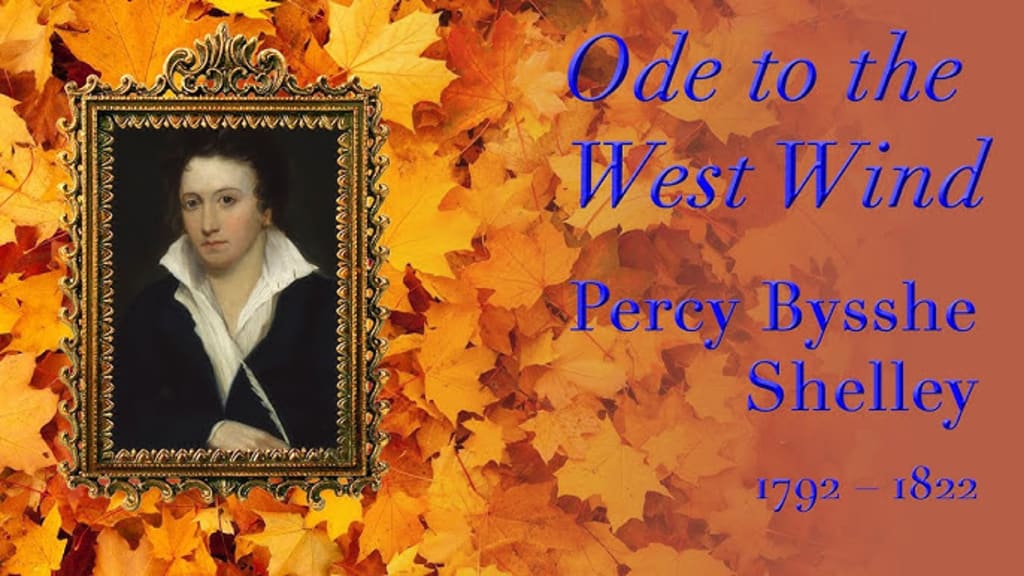
The poem consists of five cantos (stanzas), each with 14 lines, following the terza rima rhyme scheme (ABA BCB CDC DED EE), which was inspired by Dante's Divine Comedy. Shelley’s use of this interlocking structure creates a dynamic and fluid movement that mimics the wind’s own power.
Themes in the Poem
Nature’s Power and Duality – The West Wind is both destroyer and preserver, embodying the natural cycle of life and death.
Revolution and Change – The wind symbolizes political and social transformation, reflecting Shelley’s radical ideals.
Poetic Inspiration and Immortality – Shelley seeks to become like the wind, spreading his ideas far and wide.
Human Struggle and Transcendence – The poet wrestles with personal despair but ultimately finds hope in renewal.
Now, let's break the poem down canto by canto to understand its deeper meanings.
Canto I: The Wind as a Force of Change
O wild West Wind, thou breath of Autumn’s being,
Thou, from whose unseen presence the leaves dead
Are driven, like ghosts from an enchanter fleeing,
The poem opens with an apostrophe (directly addressing an inanimate force), as Shelley calls upon the West Wind. The wind is depicted as a wild and uncontrollable force that scatters the dead leaves like ghosts. This simile reinforces the theme of death and decay, but also hints at rebirth, since these leaves will fertilize the soil for new life in spring.
Shelley describes the three elements affected by the wind:
Leaves (Earth) – Symbolizing death and transformation.
Clouds (Air) – Representing turbulence and chaos.
Waves (Water) – Suggesting depth and hidden power.
By linking these elements, Shelley portrays the wind as a universal force affecting the natural world on all levels.
Canto II: The Wind as a Harbinger of Storms
Thou on whose stream, mid the steep sky’s commotion,
Loose clouds like Earth’s decaying leaves are shed,
Shook from the tangled boughs of Heaven and Ocean,
Here, the wind moves from affecting the earth to stirring the sky, driving clouds like leaves. The simile of clouds as "decaying leaves" reinforces the cycle of destruction and renewal. The storm imagery intensifies as Shelley calls the clouds "angels of rain and lightning", suggesting both destruction (storm, thunder) and divine power.
He refers to the sky as "the dome of a vast sepulchre", emphasizing death and decay, but also foreshadowing revolutionary change—a storm that will clear away the old.
Canto III: The Wind and the Ocean’s Power
Thou who didst waken from his summer dreams
The blue Mediterranean, where he lay,
Lulled by the coil of his crystalline streams,
Now, the wind moves over the ocean, stirring its depths and awakening the Mediterranean from its peaceful slumber. Shelley describes the seabed, where old ruins and "palaces" rest in silence, suddenly disturbed by the wind’s force. This imagery suggests hidden power beneath the surface—perhaps a metaphor for oppressed peoples waiting to rise.
The poet connects the wind's influence to all parts of nature, emphasizing its unstoppable energy.
Canto IV: The Poet’s Personal Plea
If I were a dead leaf thou mightest bear;
If I were a swift cloud to fly with thee;
A wave to pant beneath thy power, and share
The impulse of thy strength, only less free
Than thou, O uncontrollable!
This section marks a shift—Shelley no longer just observes the wind; he wants to merge with it. He longs for freedom, wishing to be carried like a leaf or cloud. But unlike nature, he feels trapped in human suffering and despair.
The poet’s tone becomes personal as he laments his struggles. He references his youthful energy ("in my boyhood") and compares his former self to the wind—free, wild, and untamed. Now, however, he feels weighed down by life’s burdens.
This stanza reveals Shelley’s self-doubt, yet also hints at hope—he still seeks inspiration and transcendence.
Canto V: The Poet as the Wind’s Instrument
Make me thy lyre, even as the forest is:
What if my leaves are falling like its own!
Here, Shelley pleads with the wind to use him as an instrument—a lyre (harp), just as the wind plays music through the trees. Even though he, like the trees, is losing his "leaves" (strength, youth, or optimism), he still desires to be a voice for change.
Drive my dead thoughts over the universe
Like withered leaves to quicken a new birth!
This is the climax of the poem—Shelley fully embraces the wind’s power. He wants his poetry, like the wind, to spread revolutionary ideas across the world, even if it means the "death" of old ways.
The final lines express hope and renewal:
If Winter comes, can Spring be far behind?
Here, winter symbolizes oppression, despair, and stagnation, while spring represents hope, rebirth, and revolution. Even in dark times, Shelley reminds us, change is inevitable.
Conclusion: The Poem’s Lasting Impact
Shelley’s "Ode to the West Wind" is both deeply personal and profoundly political. It reflects his desire to inspire change, both in society and within himself. The West Wind serves as a metaphor for revolutionary energy, sweeping away the old and making way for new life.
Key Takeaways
The poem is structured like the wind itself, moving through different realms of nature.
Shelley’s use of vivid imagery, metaphors, and personification makes the wind a living force.
The shift from describing the wind to directly addressing it shows his growing personal involvement.
The final lines offer hope and renewal, reinforcing Shelley’s belief in inevitable progress.
“Ode to the West Wind” remains one of the greatest Romantic poems, capturing the power of nature, the struggle of the poet, and the endless cycle of death and rebirth—a message that still resonates today.
About the Creator
Mr Ali
Hello EveryOne..!!
Do You have a Support Network?
Life is harder when you’re on your own. Human beings are social creatures, and we usually feel better when we have support from a strong social network around us. For most people, it’s our families that hold us together like glue.
By Elizabeth Woodsabout 10 hours ago in Psyche


Comments
There are no comments for this story
Be the first to respond and start the conversation.