
Allen Ginsberg: Voice of the Beat Generation
Allen Ginsberg (1926–1997) was one of the most influential poets of the 20th century, a central figure in the Beat Generation, and a pioneer in shaping countercultural movements through his groundbreaking and provocative works. His poetry, often characterized by its raw honesty, spiritual undertones, and radical politics, continues to resonate with readers and inspire new generations of artists.
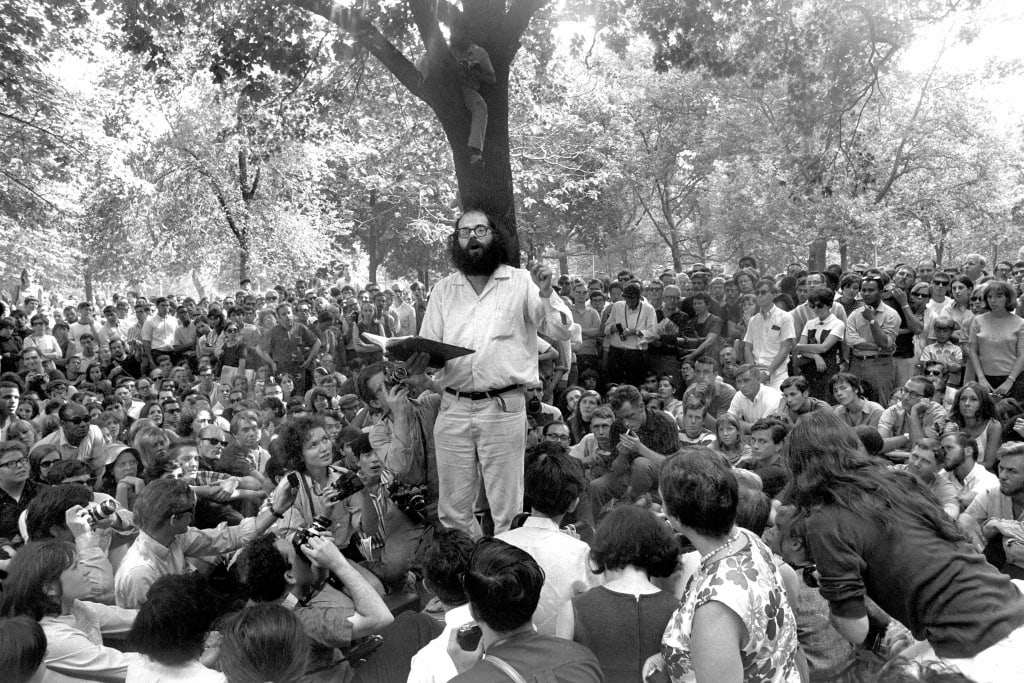
Early Life and Influences
Born on June 3, 1926, in Newark, New Jersey, Irwin Allen Ginsberg grew up in a family steeped in literary and cultural consciousness. His father, Louis Ginsberg, was a poet and high school teacher, while his mother, Naomi, was a politically active member of the Communist Party and suffered from severe mental illness, including paranoid schizophrenia. Naomi’s struggles profoundly influenced Ginsberg's work, particularly in his haunting poem Kaddish, which chronicles her life and death with heartbreaking candor.
As a young man, Ginsberg attended Columbia University, where he encountered the intellectual and creative forces that would shape his life and career. It was here that he met fellow writers Jack Kerouac, William S. Burroughs, and Neal Cassady—key figures in what would later be called the Beat Generation. Ginsberg’s education at Columbia and his exposure to modernist poetry, particularly the works of William Blake, Walt Whitman, and T.S. Eliot, provided him with a foundation for his own poetic style, which combined traditional forms with experimental techniques.
Howl and the Beat Generation
Ginsberg’s breakthrough came in 1956 with the publication of Howl and Other Poems. The titular poem, Howl, is widely regarded as a manifesto of the Beat Generation and one of the most important works of American literature. Written in sprawling, free-verse lines inspired by Whitman, Howl is a searing critique of contemporary society, exploring themes of capitalism, conformity, sexual repression, mental illness, and the alienation of postwar America.
The opening lines of Howl remain some of the most iconic in modern poetry:
"I saw the best minds of my generation destroyed by madness, starving hysterical naked,
dragging themselves through the negro streets at dawn looking for an angry fix..."
These lines set the tone for the poem's unflinching portrayal of the human condition, offering a voice to the marginalized and disenfranchised. Ginsberg's raw and explicit language, combined with his candid discussion of homosexuality, drug use, and societal hypocrisy, led to an obscenity trial in 1957. The trial, which ultimately ruled in Ginsberg’s favor, was a landmark case for free speech and cemented his reputation as a fearless advocate for artistic and personal freedom.
Themes in Ginsberg’s Poetry
Ginsberg’s poetry is deeply personal yet universal, addressing both the individual’s internal struggles and the broader socio-political landscape. Several key themes recur throughout his work:
Spirituality and Mysticism
Ginsberg’s spiritual journey was heavily influenced by Eastern philosophies, particularly Buddhism, which he discovered in the 1950s. His poetry often reflects a quest for enlightenment and a longing to connect with the divine. Works such as Wichita Vortex Sutra and Footnote to Howl celebrate the sacredness of life and humanity. In Footnote to Howl, he declares:
"Everything is holy! everybody’s holy! everywhere is holy! everyday is in eternity!"
This ecstatic affirmation of holiness underscores Ginsberg’s belief in the inherent value of all existence.
Social Critique and Activism
Ginsberg was a vocal critic of the Vietnam War, consumerism, and environmental destruction. His poem America is a sharp yet humorous critique of the contradictions and hypocrisies of American society. Written in a conversational tone, it captures both his disillusionment and his hope for change:
"America when will you be angelic?
When will you take off your clothes?
When will you look at yourself through the grave?"
Sexuality and Liberation
As an openly gay man during a time when homosexuality was criminalized, Ginsberg’s work was groundbreaking in its celebration of queer love and identity. His poetry unapologetically explores themes of sexual desire and liberation, challenging societal norms and paving the way for future LGBTQ+ writers.
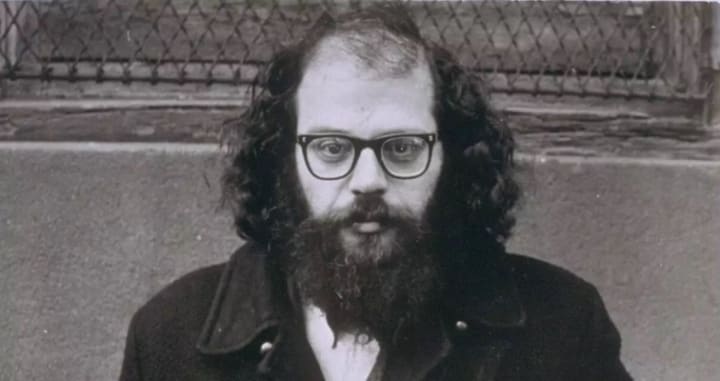
Personal History and Memory
Ginsberg often drew from his own experiences, writing candidly about his relationships, family, and struggles with mental health. Kaddish, a long elegy for his mother, is one of his most emotionally charged works. The poem weaves together memories, dreams, and reflections, creating a portrait of Naomi Ginsberg that is both intimate and universal.
The Beat Legacy
The Beat Generation, with Ginsberg at its center, was more than a literary movement—it was a cultural revolution. Alongside Kerouac’s On the Road and Burroughs’ Naked Lunch, Ginsberg’s Howl challenged conventional norms and inspired a new wave of writers, artists, and thinkers. The Beats rejected materialism, embraced spontaneity, and sought authenticity in art and life.
Ginsberg’s influence extended beyond the literary world. He was deeply involved in the countercultural movements of the 1960s, participating in anti-war protests, advocating for drug reform, and supporting civil rights. His commitment to social justice and his belief in the power of art to effect change made him a symbol of resistance and hope.
Later Life and Legacy
In his later years, Ginsberg continued to write, teach, and perform his poetry, often accompanied by music. He collaborated with musicians such as Bob Dylan and Patti Smith, further blurring the boundaries between poetry and other art forms. His later works, including Plutonian Ode and White Shroud, reflect his ongoing engagement with environmental issues, nuclear disarmament, and mortality.
Ginsberg passed away on April 5, 1997, leaving behind a body of work that remains as vital and relevant as ever. His fearless exploration of taboo subjects, his commitment to truth and justice, and his celebration of the human spirit have made him a towering figure in American literature.
Conclusion
Allen Ginsberg’s poetry is a testament to the power of words to challenge, inspire, and transform. As the voice of the Beat Generation, he captured the spirit of a turbulent era while addressing timeless questions about humanity, spirituality, and freedom. His legacy endures not only in his own work but also in the countless writers, artists, and activists he has influenced. In a world still grappling with many of the issues he addressed, Ginsberg’s vision of truth, love, and liberation remains as urgent and necessary as ever.
About the Creator
Mr Ali
Hello EveryOne..!!



Comments
There are no comments for this story
Be the first to respond and start the conversation.