
Ultimate Guide to 4x6 Photo Dimensions
Ultimate Guide to 4x6 Photo Dimensions

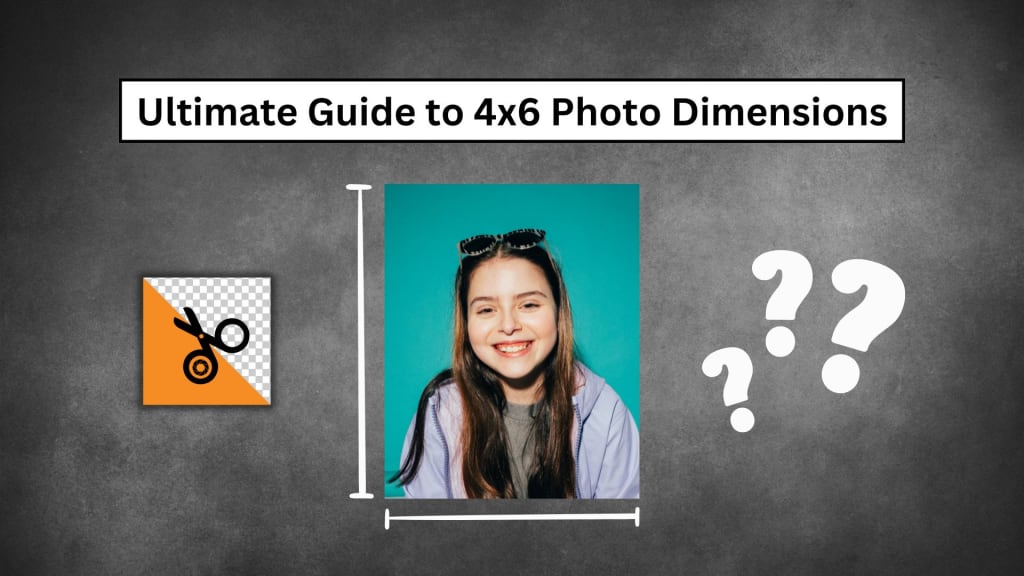
One of the most common and heavily used photo print sizes is 4x6. Being a photographer, graphic designer, or hobbyist who frames pictures in a particular dimension is a must-knowledge when printing photos at this scale, as accuracy in these units such as inches, pixels, centimeters, and millimeters units may ensure that those prints will be just exactly right. In this guide, we will dive deep into everything you need to know about the 4x6 photo size, from converting it between measurement systems to tips for resizing and cropping, and its application. PhotoCut also helps you crop images according to your needs.
What is a 4x6 Photo?
One of the most common photo print sizes is 4x6. Despite being the measurement that specifies an image that‘s 4 inches high and 6 inches wide, it is well-known for its adaptability. With a 3:2 aspect ratio, the image contains two height units for every three width units. These dimensions apply not only to printing photographs but also to digital photography, especially shots with DSLRs and more camera lenses on many hand-held devices.
A 4x6 photo is big enough to show detail but small enough to fit easily in albums, frames, and other displays. For that reason, it's often the default size for personal photographs, professional prints, and photo gifts. If someone talks about a "4x6 photo," they're usually talking about these dimensions. You can also learn about passport photo sizes and make them using PhotoCut.
How Big is a 4x6 Photo in Inches?
The most common description of the size of a 4x6 photo is in inches. As its name suggests, a 4x6 photo measures:
- 4 inches high (height)
- 6 inches wide (width)
These measurements are critical for anyone who plans to print or frame a 4x6 photo, as they determine the size of the frame or the photo album slot. These dimensions are usually the ones most photo printing services and home printers use for printing standard photographs, thus making it a good option for easy usage in displays.
Aspect Ratio of a 4x6 Photo
A 4x6 photo has an aspect ratio of 3:2; therefore, the width measures 1.5 times more than the height: 6 inches and 4 inches, respectively. The aspect ratio is standard for traditional 35mm film photography, digital photography, and smartphone camera settings. If one is cropping or re-sizing images, it makes the aspect ratio important as this is how to achieve no distortion in the proportions.
How Big is a 4x6 Photo in Pixels?
Digital images can be described mainly based on the pixel size of the photo. Its clarity and sharpness depend entirely on the pixel measurement, typically given in pixels per inch. The number of pixels contained within an inch describes PPI. The larger the number, the sharper an image will appear, primarily if it is printed out.
For a 4x6 photo, the pixel dimensions are dependent on the resolution (PPI) at which the image is created or printed. Let’s break down the common pixel dimensions at various resolutions:
- At 300 PPI (the recommended print resolution for sharp, high-quality prints), a 4x6 photo will have:
- 1200 pixels wide
- 1800 pixels high
When printed at 4x6 size, this resolution guarantees that the image is crisp and clear with no pixelation or blur. Professional photographers and others who need superior images for framing should pay particular attention to this.
- At 150 PPI (a lower resolution, suitable for standard prints), a 4x6 photo will have:
- 600 pixels wide
- 900 pixels high
This resolution can be used for personal prints, but the clarity won’t be as high as at 300 PPI. However, it might still be acceptable for casual viewing or prints that won’t be displayed close up.
- At 72 PPI (screen resolution, typically used for images viewed on a computer screen), a 4x6 photo will have:
- 288 pixels wide
- 432 pixels high
This resolution is not suitable for printing because it’s too low to produce a sharp, high-quality photo. It’s mainly used for digital purposes, such as sharing images on websites or social media.
How to Determine PPI for Printing
To get the ideal pixel dimensions for printing, you need to calculate the required PPI based on the print size. It often says for best print resolution quality set the target PPI at 300. To ensure that photos appear sharp, look at your image's pixel dimensions if you are printing it at that specific size.
For example:
- A picture that is at least 1200 × 1800 pixels is needed to print a 4x6 photo at 300 PPI.
- You need to adjust your image if it’s 600 x 900 pixels, since it may blur when printed as 4x6.
How Big is a 4x6 Photo in Centimeters and Millimeters?
One occasionally has to convert inches to other dimensions in millimeters or centimeters, particularly when working with various print requirements or international standards. If you convert inches to some other measure, use these conversion factors:
- 1 inch = 2.54 centimeters
- 1 inch = 25.4 millimeters
So, for a 4x6 photo:
In centimeters:
- 4 inches × 2.54 = 10.16 cm
- 6 inches × 2.54 = 15.24 cm
Therefore, the size of a 4x6 photo in centimeters is 10.16 cm by 15.24 cm.
In millimeters:
- 4 inches × 25.4 = 101.6 mm
- 6 inches × 25.4 = 152.4 mm
Hence, in millimeters, the size of a 4x6 photo would measure 101.6mm by 152.4mm.
These conversions come in handy if you work with international print services or require printing images in the metric system.
Common Uses of 4x6 Photos
The 4x6 photo is commonly applied in all sorts of different applications from personal use like photo albums to commercial purposes. You can also create PNGs using PhotoCut with your 4x6 photos. A few examples include:
1. Standard Photo Prints
One of the most common uses for a 4x6 photo is a standard print. It’s perfect for printing individual pictures, family portraits, and memories from holidays or special occasions. This size is widely used for home printing and professional photo services.
2. Postcards
4x6 photos are often used for postcards, especially for travel and holiday greetings. The compact size allows for both a photograph on one side and a message or address on the other.
3. Greeting Cards
Greeting cards use 4x6 size, which often has a personal photograph. The size is small in dimensions and can fit within envelopes, making it convenient as an invitation, birthday greeting, or thank-you card.
4. Framing
Many photo frames are made for 4x6 prints. It is the standard size of frames, whether you have one picture or a collage to display. This size will fit in small and large frames, making it easy to place on desks, mantels, and walls.
5. Scrapbooking
4x6 is the most commonly used size in scrapbooking since it fits the most common sizes of layouts in most scrapbooks. It is the perfect size to document memories, and the 3:2 aspect ratio fits well with the proportions of most scrapbook designs. Generate art using PhotoCut’s AI and print it in 4x6 size for your scrapbook.
Tips for Resizing and Cropping 4x6 Photos
If you have a photo that you want to print but its size does not exactly fit 4x6, there's an option of resizing it and cropping the image for its right dimensions. Tools that exist like PhotoCut come in handy when cropping or resizing your picture to size. You can also edit the text in your 4x6 photos using PhotoCut.
How to Resize and Crop Photos
- Resize: Your photo could be too big, therefore you can resize it so that the picture will find a proper fit in the dimension 4x6 without stretching the image or reshaping its aspect ratio.
- Crop: If your image does not have the perfect 3:2 dimension, the best solution is cropping because it removes pieces of an image but makes sure its central focus has been captured.
By using tools like PhotoCut, you can adjust your photo easily and ensure that it fits perfectly into the 4x6 format without losing image quality or detail.
Print Quality and Considerations
When printing a photo from a 4x6 ratio, print quality counts highly. Here are some steps taken for the best outcomes with such prints:
- Resolution: As far as the print resolution is concerned, have at least 300 pixels per inch. Then ensure the photo looks professional, shiny, and crisp after 4x6 sizes while printed.
- Paper Type: Use high-quality photo paper like glossy or matte for excellent printing. Glossy offers very bright colors, whereas matte gives a more classic, subtle look.
- Printer Settings: Make sure the printer is set to print in high resolution. For an online printing service, upload the photo at the right size and resolution.
Conclusion
A 4x6 photo is timeless and versatile for any personal print or professional photography work. Its measurements in inches, pixels, centimeters, or millimeters guarantee that your prints will look just as you had imagined. When it comes to scaling, cropping, or printing, understanding the dimensions of a 4x6 photo can help you produce flawless prints that showcase your favorite moments.
FAQs
Q1. What is a 4x6 photo's pixel count?
Ans. The dimensions of a 4x6 image at 300 PPI are 1200 pixels wide by 1800 pixels height. It would measure 600 pixels in width and 900 pixels in height at 150 PPI.
Q2. Can my 4x6 photo be resized without sacrificing quality?
Ans. Yes, but only if you start with a high-resolution picture. As long as the resolution is maintained, reducing a photo to 4x6 won't result in any quality loss.
Q3. What is a 4x6 photo's aspect ratio?
Ans. The width of a 4x6 picture is 1.5 times the height or a 3:2 aspect ratio.
Q4. For 4x6 photographs, what is the ideal paper size?
Ans. Use special 4x6 picture paper with glossy or matte finishes, depending on the image you desire, to get excellent photo-quality prints.
Q5 How would you convert 4x6 inches to cm?
Ans. A picture printed using 4 x 6 inches is around 10.16 centimeters and 15.24 cm.
About the Creator
PhotoCut
AI Photo Editing Tool - Remove or Change your Background & Enhance Product Photos
Keep reading
More stories from PhotoCut and writers in Photography and other communities.
Ultimate Guide to Mauve Color
A great hue that has caught the designers' eyes, artists' appreciation, and fashionistas' attention through centuries is Mauve. Soft and dreamy to say the least, it’s between purple, pink, and blue. It stands beautifully with its elegance and soothing color. Mauve goes for timelessness in fashion as well as in interior and digital art. We will cover all you need to know about mauve in this comprehensive guide, including its description, color combinations, tints, and its uses in fashion and design, among other areas. You can also learn about the tan color and use them in your designs.
By PhotoCutabout a year ago in Photography
Gold Chrysotype Photography Is Back and the Colours Are Breathtaking
There is a moment when a chrysotype print is lifted from its chemical bath and held up to the light stops people mid-breath. The colours that bloom across the surface — soft dusty pinks fading into deep magenta, rich cyans pooling at the edges, velvety blacks settling into the grain of the paper — look less like a photograph and more like something pulled from a dream.
By CurlsAndCommas3 days ago in Photography
Top tipple tricks
Been thinking a lot about drinking, lately. Not least because of a recent episode of over-indulgence and the inevitable after effects. Some readers may recall the earlier articles I wrote about beating the booze. Here I set out an experiment in techniques for cutting down on my alcohol intake. The experiment was successful, the techniques worked, and I have armed myself with an arsenal of weapons in the war against the demon drink. I have yet to fire the first round however. It's all a question of timing (perhaps procrastination).
By Raymond G. Taylor6 days ago in Psyche



Comments
There are no comments for this story
Be the first to respond and start the conversation.