
Is HDR Better for Real Estate Photography?
Exploring the Impact of HDR: A Comprehensive Guide for Real Estate Photographers
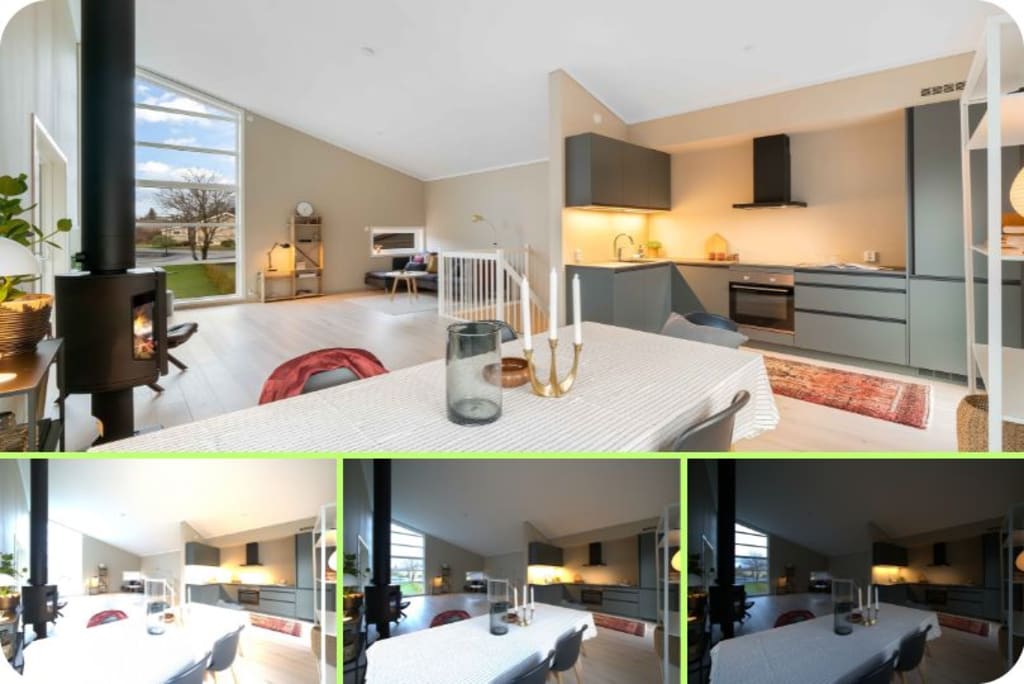
Hey there! If you’ve ever scrolled through real estate listings online, you’ve probably noticed some photos that just pop out at you – they’re crisp, bright, and you can see every little detail. Chances are, those photos were taken using High Dynamic Range (HDR) photography. But is HDR really the best choice for real estate photography? Let’s unpack this concept together and figure it out.
What is HDR Photography Anyway?
Alright, let’s start with the basics. HDR stands for High Dynamic Range. It’s a photography technique that helps you capture a scene with a range of light intensities that’s closer to what our eyes see in real life. Imagine you’re taking a photo of a room with bright windows and dark corners. Without HDR, the bright windows might be overexposed (too bright to see any details), and the dark corners might be underexposed (too dark to see anything). HDR fixes this by taking multiple photos at different exposures and then blending them together to create one image with a wide range of light and detail. Cool, right?
Why Use HDR in Real Estate Photography?
Let’s break down the reasons why HDR can be a game-changer for real estate photos.
One of the biggest perks of HDR is that it captures a lot more detail than a regular photo. Imagine you’re photographing a living room with big windows letting in natural light. Without HDR, you might end up with bright windows and dark shadows, missing out on all the beautiful details in the room. With HDR, you can see everything – the texture of the couch, the details in the curtains, and even the reflections in the windows. It’s like giving your photos superpowers!
Real estate photos often deal with tricky lighting situations. You might have a bright sunny day outside and dim lighting inside. HDR helps balance this out, so you get a photo that looks natural and well-lit. It’s like having a magic wand that makes sure every part of the photo is lit just right.
Let’s face it – we’re all drawn to pretty pictures. HDR photos usually look more vibrant and eye-catching. They have a depth and richness that can make a property look more inviting and attractive. This can be a huge plus when you’re trying to grab the attention of potential buyers online.
HDR is great for showing a property as it really is. It captures the full range of light, making the photos look more realistic. This can help buyers get a better sense of the space and feel more confident about what they’re seeing.
The Downsides: What You Should Know
While HDR has a lot of perks, it’s not without its challenges. Here’s what you need to be aware of:
HDR is all about blending different exposures, but if you’re not careful, it can look overdone. You’ve probably seen those photos that look a bit too surreal, with colors that are too bright or details that look a bit too sharp. It’s a fine line between a stunning HDR photo and one that looks like a cartoon. Getting the balance right takes some practice and a good eye.
Taking HDR photos isn’t as quick as snapping a single shot. You need to take multiple photos at different exposures, which means more time spent setting up and shooting. Plus, merging those photos in post-processing can take a bit of time too. So, if you’re in a rush, HDR might not be the best choice.
To get the best HDR photos, you need some specific gear. A tripod is pretty much a must because it keeps your camera steady while you take multiple shots. Also, a camera that supports bracketing (taking shots at different exposures automatically) is super helpful. So, while HDR can give you amazing results, it might mean investing in some extra equipment.
HDR vs. Traditional Photography: The Showdown
Let’s compare HDR with traditional single-exposure photography to see how they stack up.
This is your standard one-click shot. It’s simple, quick, and requires less setup. You just point and shoot. However, it can struggle with scenes that have a lot of contrast – like bright windows or dark shadows. You might end up with some parts of the photo that are too bright or too dark.
HDR is all about taking multiple shots at different exposures and combining them. This gives you a wider range of light and detail. It can be a bit more work upfront, but the results are often worth it. HDR photos are great for capturing the full spectrum of light and detail, making them look more vibrant and realistic.
When to Use HDR in Real Estate Photography
So, is HDR the right choice for every real estate photo? Not necessarily. Here’s when HDR really shines:
HDR is perfect for rooms with big windows and lots of natural light, or for outdoor shots with bright skies and dark shadows. It balances the light so you can see all the details without any parts being overexposed or underexposed.
If you want to show off the texture of the walls, the sparkle of the countertops, or the intricate details of the architecture, HDR is your best friend. It brings out all those little details that make a property special.
When you want your photos to stand out and look vibrant, HDR can add that extra “wow” factor. It makes colors pop and details sharp, which can be super appealing to potential buyers.
When to Skip HDR
While HDR is awesome, there are times when you might want to stick with traditional photography:
If you need to get photos done fast, HDR might slow you down. The process takes a bit more time, from taking multiple shots to merging them in post-processing. For quick listings or last-minute shoots, a single exposure might be faster.
For straightforward shots with even lighting, HDR might not be necessary. A single exposure can do the job just fine, keeping things simple and quick.
If you’re new to HDR, it can be easy to overdo it. If you’re not confident in getting that perfect balance, you might end up with photos that look too processed. In such cases, sticking with traditional photography might give you more natural-looking results.
Mastering HDR: Tips and Tricks
If you decide to give HDR a go, here are some tips to help you master it:
Keeping your camera steady is crucial for HDR. A tripod ensures that each shot is aligned perfectly, so the final image is sharp and detailed.
Most cameras have a bracketing mode that takes multiple shots at different exposures automatically. This saves you time and makes the process much easier.
HDR photography is all about patience. Take your time to set up each shot, make sure the lighting is just right, and don’t rush the process. The extra effort will pay off in the final images.
Don’t be afraid to play around with your camera settings. Adjust the exposure levels, try different bracketing intervals, and see what works best for your shots. Every scene is unique, so find what gives you the best results.
After taking your shots, use good editing software to merge them. Programs like Adobe Lightroom, Photomatix, or even the HDR feature in Photoshop can help you blend your exposures seamlessly. Adjust the settings to get that perfect balance of light and detail.
Conclusion
So, after all this, is HDR really better for real estate photography? The answer isn’t a simple yes or no. It depends on the situation, the property, and what you’re trying to achieve with your photos.
When to Use HDR: If you’re dealing with high-contrast scenes, want to highlight every detail, and aim to make your photos look vibrant and appealing, HDR is definitely worth considering.
When to Avoid HDR: For quick shoots, simple scenes, or when you’re not confident with HDR techniques, sticking with traditional photography might be the way to go.
Ultimately, HDR is a powerful tool in a real estate photographer’s kit. When used correctly, it can transform ordinary photos into stunning visuals that capture the true essence of a property. So, give it a try, experiment with different settings, and see how HDR can enhance your real estate photography game!
There you have it – a deep dive into HDR photography for real estate. I hope this gives you a good sense of whether HDR is the right choice for your shoots. If you have any more questions or need further tips, feel free to ask! Happy shooting!
About the Creator
Keep reading
More stories from Manav and writers in Photography and other communities.
How Do Real Estate Agents Use AI?
Hey there! You know, technology has come a long way, and one of the coolest developments in recent years is artificial intelligence, or AI for short. It's popping up everywhere, including in the real estate industry. You might be wondering, how exactly are real estate agents using AI? Let’s break it down and explore this fascinating topic together.
By Manav2 years ago in Photography
My Year, in Prattling and Photos
It's been a year since... last year. Ironically, it seems I've found myself a new tradition of getting sick during the New Year holidays. At least, this year (that is, this inter-year period remarkable for its shiny decorations in the streets and houses, and closed supermarkets and pretty much everything), I'm doubtlessly doing better: I've managed to come visit my friends in Germany for Christmas (which I failed to do last year) and—after having some good quality time eating machanka, playing Munchkin and swinging machetes (the last one obviously crept into this checklist only for the sake of the phonological form)—I came back home via proverbial Deutche Bahn and probably less known Schweizerische Bundesbahnen, my body hosting a family of viruses, virions and who knows what other tiny critters somewhere inside my chest.
By Andrei Z.20 days ago in Photography
How to Make Any Photo Square Online Without Losing Important Content
From Instagram posts and profile pictures to thumbnails and avatars, many platforms now require images to be in a 1:1 square ratio. While cropping is often the default solution, it’s rarely the best one—especially when image content matters.
By sam lee4 days ago in Photography



Comments
There are no comments for this story
Be the first to respond and start the conversation.