
How to Keep Going with Photography During Social Isolation
Things to do at home when you can’t get out and shoot

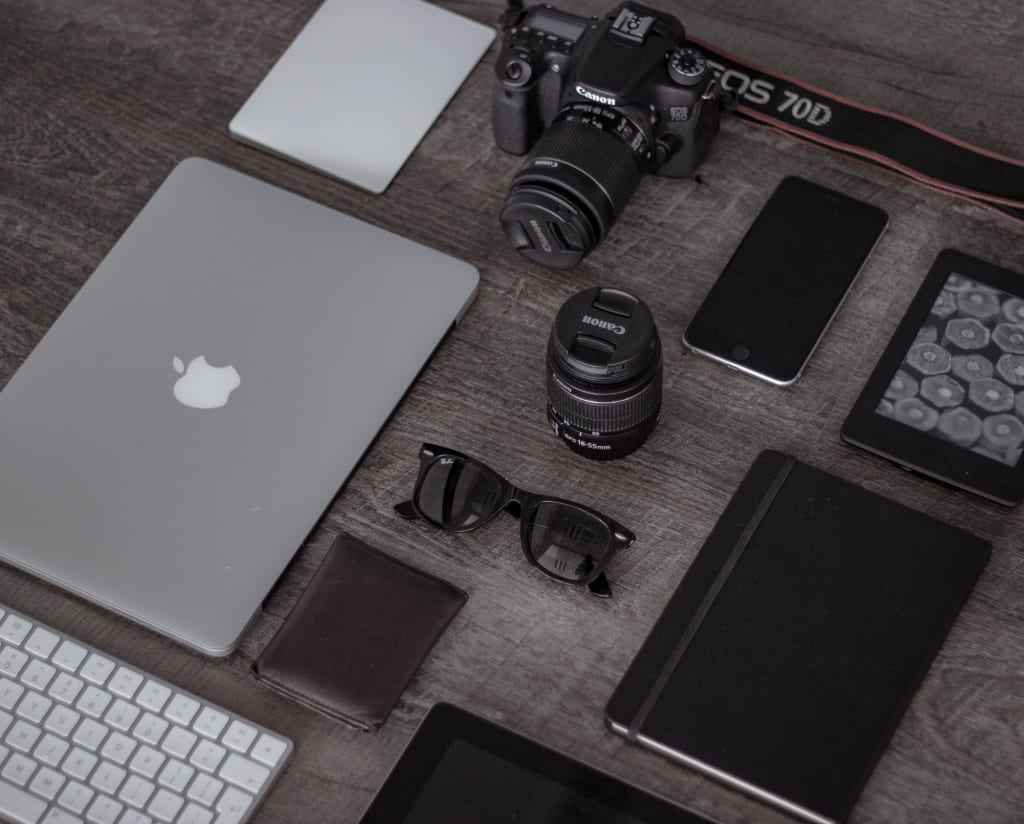
As a photographer, I try to get out every day and go someplace to shoot. Maybe it’s just a side-trip on my way back from lunch. Perhaps it’s an all-day excursion to the park.
Now, they tell us to stay home.
But, in photography, there’s always something to do.
Here are three things you can work on in your photography while being isolated at home.
Clean your gear
You should be doing this regularly anyway. I schedule a gear cleaning once a week.
Whether I need it or not.
And sometimes, I actually do it.
First, gather your cleaning supplies. There are kits you can order that contain everything you need, but you can assemble your kit from things you have around the home or quickly obtained.
Soft lint-free cloths
Cotton swabs (cotton, not nylon)
Squeeze bulb (Available in the baby section of drug stores)
A soft brush (Any small paintbrush will do)
Lens wipes (Available in the eyeglass section)
Start by blowing the outside of your camera and lenses to remove loose particles. Follow that by brushing gently with the brush. Finally, wipe everything down with the cloth.
Remove your lens or body cap from your camera. Hold it upside down and blow the inside thoroughly with the squeeze bulb to allow dust particles to fall out. (This article will not cover sensor cleaning). Replace the body cap. Use a cotton swab to clean the viewfinder. Wipe down the entire exterior and LCD panel with lens wipes.
For each lens, repeat the process used on the camera to clean the exterior and wipe the glass and contacts with a lens wipe. Make sure you blow and brush out the inside of the lens caps, so you don’t put dust back onto the lens.Set up a studio
If you’ve never done much photography inside, it can be enjoyable and rewarding. You don’t need a lot of expensive equipment. You can set up a space to shoot small objects or food with a minimal amount of space and almost no equipment.
Place a small table next to a window that doesn’t get direct sunlight. I have used something as little as a folding wooden TV tray. Hit up the dollar store for a few pieces of white poster board. You may want a few other colors for backgrounds. Using window light for your main lighting, use pieces of white poster board for your fill light. Cut one poster into different size pieces and fold them to create standing reflectors.
If you are primarily going to shoot food, try to find a window close to the kitchen. Keep a supply of props and decorative materials to dress up your table. I have bought placemats, dishes, glasses, and silverware all from the dollar store and keep a stack of this stuff in a cabinet ready to use.
Work on your portfolio
Yeah, I know, this one is boring, but you’ve put it off forever. It takes a lot of time, which you happen to have plenty of right now.
Organize your images into folders. You can use a subject matter hierarchy or date-based folders. I do both. My working directories are all subject-based, and my backup drives are date-based. Either way, I can find what I am looking for quickly.
Go through your images, clean things up, and enter metadata. First, use whatever software you use to catalog pictures to create a metadata template. This template will have your copyright and contact info in it. Select every image in your portfolio and apply this to it. No matter where your images end up, people need to know who owns the rights and be able to contact you if necessary.
Create some type of rating system. You can use numbers, stars, colors, whatever. Don’t overcomplicate things. You just need to be able to identify and find your best shots out of the mass of mediocre ones.
Enter titles, descriptions, and keywords to all of your images. This is a tedious task if you don’t start early. But when your portfolio grows to hundreds and then thousands of images, it will make finding any image quick and painless. I have over 50,000 images on my hard drive and four times that many on backup drives. Yet I can locate any image that comes to mind in seconds.
None of us like being cooped up, especially photographers that depend on locations to shoot. But for the time being, we are stuck with this situation, so we might as well make the best of it. Create and carry out indoor projects for your photography to keep it going during this time of social isolation.
If you enjoyed this article, please click the Heart, and if you really liked it, consider dropping me a tip below. Thanks for reading.
About the Creator
Darryl Brooks
I am a writer with over 16 years of experience and hundreds of articles. I write about photography, productivity, life skills, money management and much more.
Keep reading
More stories from Darryl Brooks and writers in Photography and other communities.
My Year, in Prattling and Photos
It's been a year since... last year. Ironically, it seems I've found myself a new tradition of getting sick during the New Year holidays. At least, this year (that is, this inter-year period remarkable for its shiny decorations in the streets and houses, and closed supermarkets and pretty much everything), I'm doubtlessly doing better: I've managed to come visit my friends in Germany for Christmas (which I failed to do last year) and—after having some good quality time eating machanka, playing Munchkin and swinging machetes (the last one obviously crept into this checklist only for the sake of the phonological form)—I came back home via proverbial Deutche Bahn and probably less known Schweizerische Bundesbahnen, my body hosting a family of viruses, virions and who knows what other tiny critters somewhere inside my chest.
By Andrei Z.18 days ago in Photography
The Devil's Cut
“Comrade, finally you’re awake.” The voice was smooth, sensual. A flickering incandescent bar was all that lit the white, sterile room. All Vladimir remembered was everything going black. He tried to move his arms and found them strapped to the gurney.
By Matthew J. Fromm5 days ago in Fiction


Comments
There are no comments for this story
Be the first to respond and start the conversation.