
How Indian Festivals Celebrate Nature and Harvest
Harvest and Harmony: Cultural Reflections in Indian Festivals
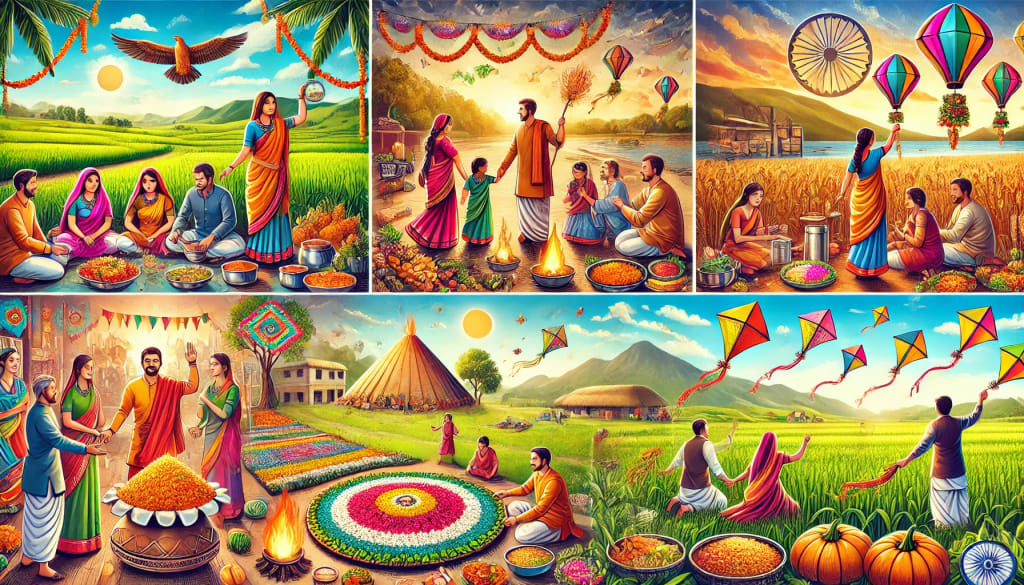
1. Introduction: Connection Between Festivals and Nature
India, a land of diverse cultures, has its festivals deeply rooted in its relationship with nature. For centuries, festivals have been a way to thank the Earth for its abundance, celebrate the changing seasons, and bring communities together in gratitude and joy.
In a small village in Tamil Nadu, a young boy named Arjun eagerly awaited Pongal, the harvest festival. His father, a farmer, often told him that this festival wasn’t just about feasting—it was a way to thank the Sun God for providing life to their crops. Together, they cleaned the courtyard, decorated it with colorful kolams (rangoli), and prepared sweet rice to offer to the gods.
2. Harvest Festivals of India: A Seasonal Celebration
Harvest festivals in India are striking illustrations of how people honor the abundance of the natural world. In Tamil Nadu, Pongal, which is devoted to the Sun God, signifies the conclusion of the harvest season. Similar to this, Punjab's Lohri festival honors the delight of harvesting winter crops, with bonfires serving as a symbol of coziness and camaraderie. Both Assam's Bihu and Kerala's Onam are significant harvest festivals that include traditional feasts, dance, and music.
The festivals of each area are a reflection of their distinct customs and farming methods. For instance, kite flying is a common way for Gujaratis to celebrate Uttarayan (Makar Sankranti), as they celebrate the end of winter and offer prayers for wealth.
3. The Role of Rituals in Honoring Nature
Numerous customs are intended to express gratitude to the natural world. As a token of appreciation, folks in Pongal cook sweet rice and present it to the Sun. Pookalam, or flower decorations, are created during Onam to celebrate the beauty of nature. Rivers are worshipped at festivals like Chhath Puja, which emphasize how vital they are to agriculture and life.
4. Cultural Significance Across Regions
These festivities promote cultural identity and community relationships in addition to celebrating nature. For instance, stories about the harvest are told through songs and dances at the Assamese festival of Bihu. People from different origins and beliefs come together during Onam's renowned boat races and lavish feasts.
5. Modern-Day Practices and Environmental Impact
Although these celebrations were once environmentally beneficial, contemporary methods have created difficulties. The ecology is frequently harmed by excessive pollution during celebrations and the overuse of synthetic materials in decorations. However, a lot of communities are increasingly adopting sustainable practices, like encouraging the planting of trees during festivals, avoiding trash, and using natural colors for Rangoli.
6. Conclusion: Reviving Eco-Friendly Traditions
Indian holidays serve as a reminder of the close ties that exist between people and the natural world. We can protect the environment and value our cultural heritage by reviving old, sustainable celebration practices. In addition to honoring the Earth's abundance, these festivities motivate us to preserve it for next generations.
Through these festivals, children like Arjun, Harpreet, and Meera learned to respect the earth, understand the rhythms of nature, and cherish their cultural roots. Whether it was Pongal, Lohri, Bihu, or Onam, each festival carried a universal message: Nature is life, and celebrating it ensures harmony and abundance.
About the Creator
Keep reading
More stories from Sugumar and writers in Photography and other communities.
Top 10 Most Unique Places in India
India is a country known for its diversity in culture, language, and landscape. It offers a myriad of unique destinations that go beyond the usual tourist spots. From hidden natural wonders to culturally rich towns, these places offer experiences unlike anywhere else. Here are the top 10 most unique places in India that you must visit.
By Sugumarabout a year ago in Photography
Gold Chrysotype Photography Is Back and the Colours Are Breathtaking
There is a moment when a chrysotype print is lifted from its chemical bath and held up to the light stops people mid-breath. The colours that bloom across the surface — soft dusty pinks fading into deep magenta, rich cyans pooling at the edges, velvety blacks settling into the grain of the paper — look less like a photograph and more like something pulled from a dream.
By CurlsAndCommas4 days ago in Photography




Comments
There are no comments for this story
Be the first to respond and start the conversation.