
How AI Video Generation Is Shaping the Future of Education
Exploring how AI-powered video tools are revolutionizing classrooms through personalization, accessibility, and immersive learning.
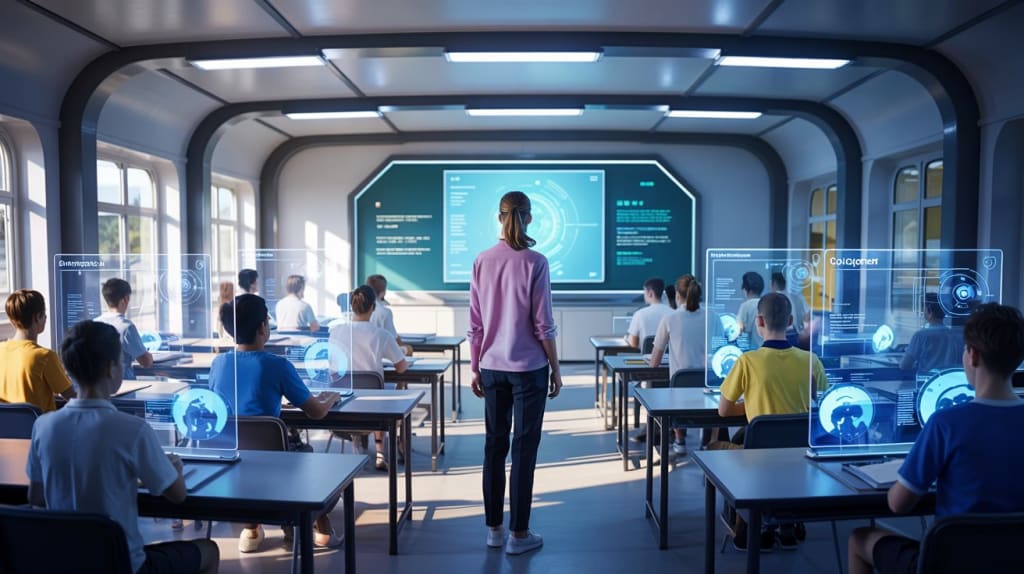
Artificial Intelligence (AI) is no longer just a futuristic concept; it is actively transforming industries across the globe. Among the sectors most significantly impacted is education. With the integration of AI video generation tools, learning environments are evolving in ways that are more engaging, inclusive, and accessible than ever before. This article explores how AI video generation is shaping the future of education and the key benefits and challenges that come with it.
1. Personalized Learning Experiences
One of the most transformative aspects of AI video generation in education is the ability to create personalized learning experiences. Traditional classrooms often struggle with addressing the varied learning speeds and styles of individual students. AI Video Generator tools can generate customized video content tailored to the specific needs of each learner, ensuring better comprehension and retention.
For instance, AI algorithms can analyze a student's learning history and create a video lesson that focuses on areas where the student needs improvement. The tone, pace, and visuals in the video can also be adjusted according to the learner's preferences, making the experience highly individualized.
2. Enhanced Accessibility and Inclusivity
AI video generators make educational content more accessible to students with diverse needs. For example, they can automatically add subtitles, translate content into multiple languages, or use sign language avatars for students with hearing impairments. These features break down language and ability barriers, allowing a broader audience to engage with educational material.
Furthermore, students in remote or underserved areas can access high-quality learning materials without relying on local infrastructure or specialized instructors. This democratization of education holds the potential to bridge significant educational gaps across regions and socioeconomic groups.
3. Time and Cost Efficiency for Educators
Creating educational videos traditionally involves scripting, filming, editing, and sometimes hiring talent—a process that can be both time-consuming and costly. AI video generation tools streamline this process by enabling educators to produce professional-quality videos with minimal resources.
Educators can input text or lecture notes into an AI platform, which then generates a video complete with visuals, narration, and animations. This efficiency allows teachers to focus more on curriculum development and student interaction rather than content production logistics.
4. Scalability of Quality Education
AI video generation allows educational institutions to scale their offerings without compromising on quality. Universities, online course platforms, and training organizations can create standardized yet personalized content that reaches thousands or even millions of learners.
This scalability is particularly useful for Massive Open Online Courses (MOOCs), where consistent quality across lectures is critical. AI-generated videos ensure uniformity while allowing room for customization based on user data and feedback.
5. Immersive Learning with AI Avatars and Simulations
Advanced AI video tools can create interactive avatars and virtual simulations, providing learners with a more immersive educational experience. For example, a history class might feature an AI-generated avatar of a historical figure narrating events from their perspective. Similarly, science students can watch 3D simulations of complex processes that would be difficult to demonstrate in a traditional classroom.
These immersive elements increase student engagement and understanding by making abstract or difficult topics more tangible and relatable.
6. Continuous Assessment and Feedback
AI video platforms can also integrate assessment tools that monitor student interactions with the content. These systems can track which parts of a video were replayed, skipped, or paused, giving educators insights into areas where students might be struggling.
In some cases, AI can even generate follow-up quizzes or supplemental videos based on individual performance, creating a feedback loop that enhances learning outcomes.
Challenges and Considerations
Despite its many benefits, the integration of AI video generation in education is not without challenges. One major concern is data privacy. AI systems require access to user data to personalize content, raising questions about how this data is collected, stored, and used.
There is also the risk of over-reliance on technology, which may lead to a reduction in human interaction—a critical component of effective learning. Additionally, not all educational institutions have the infrastructure or training required to implement AI tools effectively.
Finally, ensuring the accuracy and appropriateness of AI-generated content remains a challenge. Educators must review and approve materials to maintain educational standards and avoid misinformation.
The Road Ahead
The future of education lies in blending traditional teaching methods with cutting-edge technology. AI video generation is a powerful tool that, when used responsibly, can enhance the learning experience, broaden access, and improve outcomes.
As technology continues to advance, we can expect even more sophisticated AI tools that offer deeper personalization, better integration with learning management systems, and more natural interaction through voice and facial recognition.
By embracing these innovations, educators and institutions can build a more dynamic, inclusive, and effective educational landscape for the generations to come.
Conclusion
AI video generation is revolutionizing how we think about education. From personalized content and enhanced accessibility to time savings and scalability, its potential is vast. While challenges exist, the benefits far outweigh the risks when thoughtfully integrated. As we move forward, the key will be to balance technological advancement with the human touch that remains at the heart of meaningful education.
About the Creator
Keep reading
More stories from Mirza Seo specialist and writers in Photography and other communities.
10 Motion Graphics Services Every Brand Needs in 2025
Ever scrolled through social media and found yourself captivated by a quick animated snippet—so mesmerized you actually forgot to scroll? That’s the power of motion graphics. It’s not just about pretty visuals bouncing across your screen. It’s about storytelling that moves (quite literally) and transforms how we experience a message. People crave content that feels alive—content that sparks curiosity, creates an emotional pull, and highlights a brand’s vibe in a matter of seconds.
By Mirza Seo specialist9 months ago in Photography
My Year, in Prattling and Photos
It's been a year since... last year. Ironically, it seems I've found myself a new tradition of getting sick during the New Year holidays. At least, this year (that is, this inter-year period remarkable for its shiny decorations in the streets and houses, and closed supermarkets and pretty much everything), I'm doubtlessly doing better: I've managed to come visit my friends in Germany for Christmas (which I failed to do last year) and—after having some good quality time eating machanka, playing Munchkin and swinging machetes (the last one obviously crept into this checklist only for the sake of the phonological form)—I came back home via proverbial Deutche Bahn and probably less known Schweizerische Bundesbahnen, my body hosting a family of viruses, virions and who knows what other tiny critters somewhere inside my chest.
By Andrei Z.16 days ago in Photography
Prepare to Flash
I’ve learned to master the art of picking up cameras on a budget, I would like to say I do it now subconsciously out of a sense to capture the world in a not so perfect and more realistic point of view, but the reality is that I’m just too cheapskate to invest in a top of the line camera so I make do with what I can afford.
By Malachai Hough4 days ago in Photography




Comments
There are no comments for this story
Be the first to respond and start the conversation.