
Best Camera for Amateur Photographer
For an Amateur: Professional Camera Needed?

Photography is an exciting hobby and creative outlet. As an amateur photographer, choosing the right camera can be overwhelming. Currently, in the market, there are a vast number of options available everywhere.
The key is to choose the one that aligns with your interest, style, and budget. In the end, your photography journey must be enjoyable.
In this guide, we share expert-recommended cameras. Also, talk about factors when it comes to buying your first camera. Lastly, some photography tips to get you started.
Comparison Table
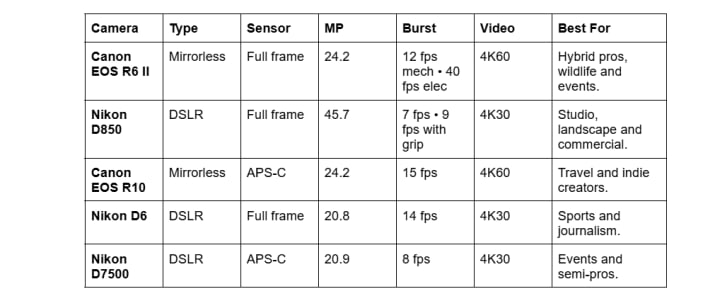
Best Cameras for Amateur Photographers
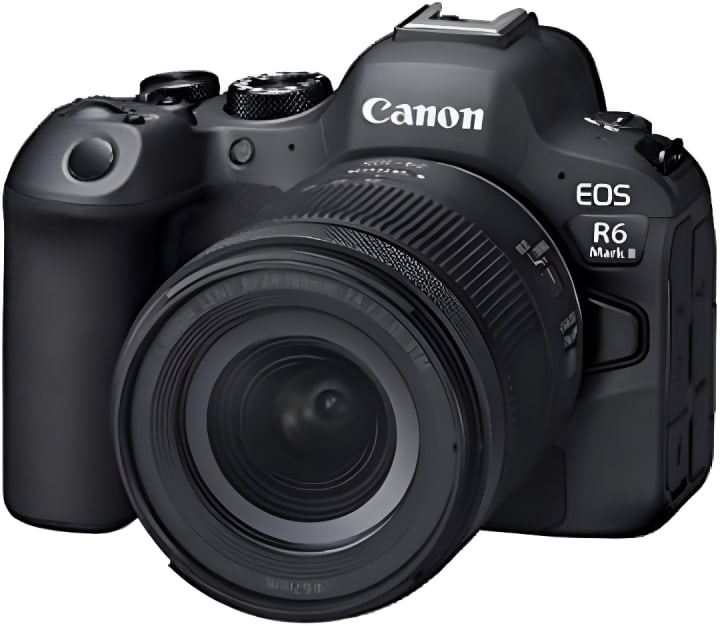
Canon EOS R6 Mark II
- Rating: 4.5/5 (Amazon)
The Canon R6 Mark II is a premium mirrorless camera. As an amateur photographer, if you want to explore fast-moving subjects, it is perfect. The camera consists of blazing 40 fps burst shooting. With its smart autofocus feature, you can track people, animals, and vehicles and capture live moments.
The EOS R6 Mark II requires a higher investment than typical beginner models. But its ease of use and fast speed make it worth it. Especially if you are serious about learning photography and video at the same time.
It also shoots 6k-sampled 4k videos with no time limits. Therefore, if you are shooting vlogs or YouTube videos, this camera will suit your process.
- Good: Beginners with a creative budget. Also, for fast action lovers and aspiring hybrid photo-video creators.
- Watch Out: It is not the cheapest starting option. Also, its resolution might not be suitable for ultra-large prints.
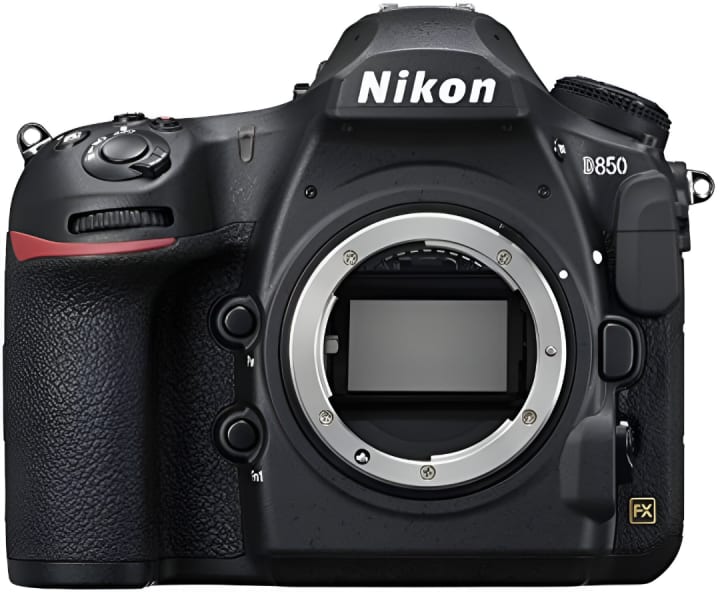
Nikon D850
- Rating: 3.9/5
The Nikon D850 is built for maximum detail and fidelity. It is an excellent choice for an amateur photographer if they are interested in fine art, portraits, product photography, or landscapes.
The camera consists of a massive 45.7MP resolution. It captures images with extreme detail and attention. Thus, it makes it an ideal choice for large print or commercial-style projects.
However, this DSLR camera is quite bulky. It does not have the modern video features that advanced mirror cameras offer. The Nikon D850 produces raw photo quality.
As an amateur, you are likely to experience a steep learning curve with this camera. If you can get along with it, it is a considerable long-term investment for your photography journey.
- Good: Detail-oriented beginners, landscape or still life enthusiasts.
- Watch Out: As mentioned, it is heavy. The controls might be overwhelming at the start.
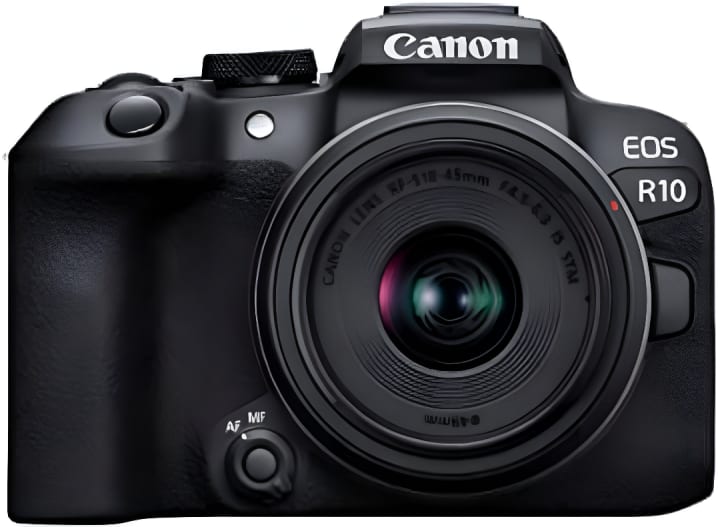
Canon EOS R10 with 18-45mm Lens
- Rating: N/A (Amazon)
The Canon EOS R10 is a lightweight and budget-friendly mirrorless camera. It is perfect for anyone just starting out.
It features a 24.2 MP APS-C sensor and a compact design. Thus, making it ideal for travel, vlogging, and everyday content creation.
Despite its small size, it offers impressive autofocus and 4K60 video. Therefore, beginners can experience pro-level features without the complexity. This kit includes a versatile starter lens, so you can get going right away.
- Good: Travelers, students, vloggers, first-time camera buyers.
- Watch Out: Smaller sensor means slightly less low-light control and background blur.
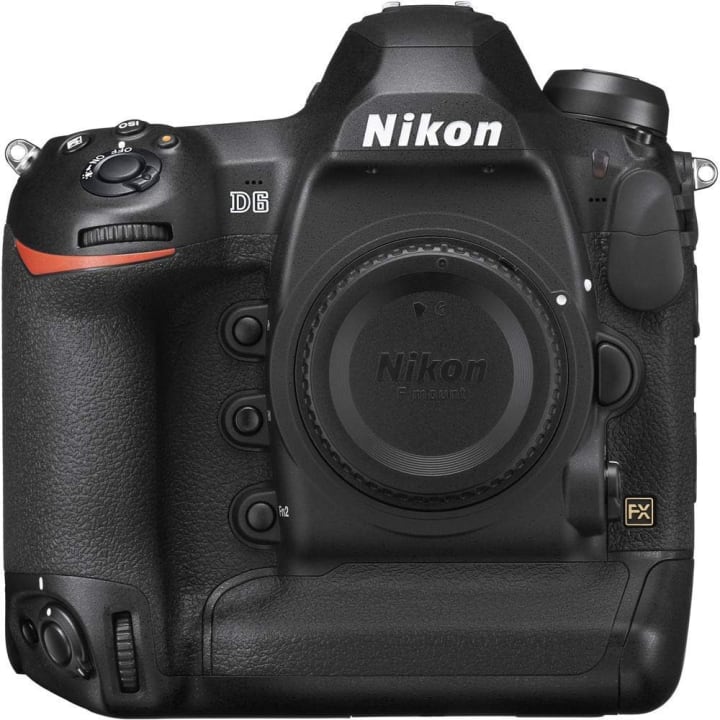
Nikon D6 with 200-500mm Lens
- Rating: N/A (Amazon)
The Nikon D6 is a professional sports and wildlife camera. This camera might be overkill for most amateur photographers. But it is worth mentioning for specific niches. For instance, bird photography, photojournalism, or sports.
This camera is rugged, fast (14 fps burst), and built to survive in most extreme environments. It consists of a 200-500 mm lens, which is ideal for capturing distant subjects. But, if you want to elevate your skillset from amateur to professional, it is an excellent choice. Considering that, it requires a substantial investment.
- Good: Beginners or amateurs with a wildlife and sports focus with a serious budget.
- Watch Out: Weight, price and lack of advanced features.
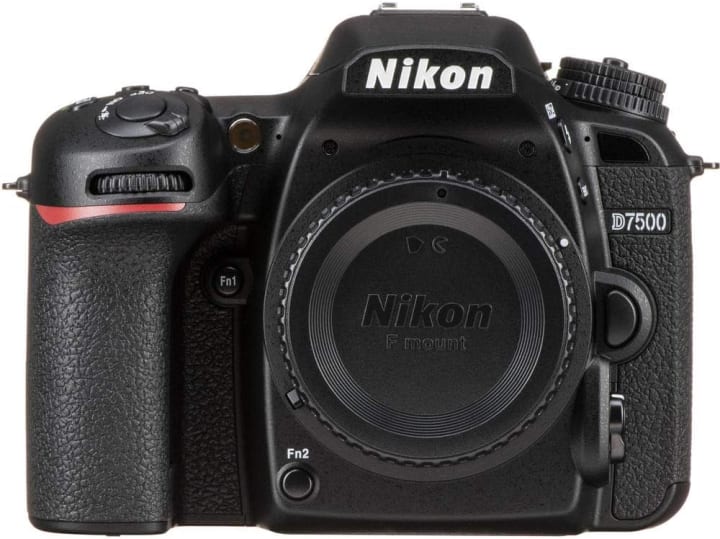
Nikon D7500
- Rating: 4.4/5
The Nikon D7500 strikes a balance between affordability and professional features. It is a fantastic DSLR for an amateur stepping into event, portrait, or commercial photography.
It consists of an 8 fps burst rate and solid ISO performance. Also, it is reliable in indoor or low-light situations like weddings or parties.
The camera lacks dual card slots. The professionals use it as backups. However, it is a decent choice for anyone growing their skills while staying on a budget.
- Good for: Beginner to intermediate users who are interested in event and portrait photography.
- Watch Out: The APS-C sensor limits depth-of-field and low-light slightly compared to full-frame.
Types of Cameras for Amateur Photographers
DSLR
DSLRs provide great image quality, optical viewfinders, and long battery life. Also, access to a wide range of lens ecosystems. DSLRs are suitable for a traditional shooting experience but come with an extra bulky weight. For a beginner or amateur, it is a solid choice.
Brands like Nikon and Canon have a mature DSLR lens lineup.
Thus, you can test and experiment with various formats. It includes portraits, landscapes, and macro and telephoto as you grow and develop your skillset.
Mirrorless
Mirrorless cameras are the new innovation of the industry. It is lighter and more compact. Also, it features faster autofocus and better video capabilities than DSLRs.
The mirrorless cameras lack a mirror mechanism. Thus, it allows more innovative designs and real-time exposure reviews.
Modern mirrorless systems like Canon RF, Sony E, and Nikon Z have a fast-growing ecosystem. It gives the creative flexibility to test or experiment with multiple formats.
Whether you want cinematic video lenses, ultra-wide glass, or telephoto zooms, the mirrorless space is filled with options.
Fun Fact: In 2020, mirrorless cameras outsold DSLRs for the first time globally, according to CIPA. It signals a significant industry shift toward more compact and modern camera systems.
Point-and-Shoot/Bridge Cameras
These are all-in-one solutions with fixed lenses. They are great for casual shooters who want simplicity. But these cameras lack the flexibility of interchangeable lenses. Only a few models have impressive zoom ranges. But, you will be limited when it comes to achieving distinct creative outcomes.
Smartphones
Today, smartphones are an excellent tool for photography as an amateur. Especially with computational photography. But, they are limited by sensor size and optical capabilities. Thus, smartphones are great companions, but not a substitute for a dedicated camera. The outcome of your work will largely differ in comparison of both.
What to Look for in a Camera for Amateur Photography
- Sensor Size: The full-frame sensors provide superior image quality. But they tend to be more expensive. Meanwhile, APS-C sensors are more affordable and compact. In my opinion, it is the most ideal option for most amateur photographers in terms of choosing sensors. But, if you have the budget, opt for full frame.
- Ease of Use: User-friendly interfaces and intuitive menus. Also, having auto mode features can help you accelerate your learning curve.
- Portability: Lightweight models are easier to carry. If you need to travel or use your camera every day, keep this factor in your mind before purchase.
- Autofocus and Burst Speed: They are essential for capturing moving objects. If your niche or industry revolves around sports or wildlife, it is a non-negotiable factor for your camera.
- Video Capabilities: Many amateur photographers also want to create video content. If that is the case, check whether or not your camera has 4k video options.
- Lens Ecosystem: A diverse lens range lets you experiment with different image and video formats. It will help you grow your skills and creativity by testing.
- Budget: As an amateur or aspiring photographer, you must balance features with your spending limit. Thus, it will help you to have enough room for purchasing additional items. It includes lenses, bags, stands, and other accessories.
Photography Tips for Amateurs
- Invest in Useful Accessories
- Tripod for long exposures or group shots
- Extra batteries and SD/XQD cards
- Lens cleaning kit
- Camera bag for protection and portability
- External mic if shooting video
Master the Basics with Auto and Semi-Auto Modes
As an amateur or beginner, do not dive straight into manual mode. I would suggest using Auto, Aperture Priority (Av/A), or Shutter Priority (Tv/S). These modes allow me to focus on composition and lighting first.
You have control over creative aspects such as background blur or motion freeze. Meanwhile, the camera takes care of the exposure. These are what professionals achieve with their cameras.
As you develop your skill and confidence, experiment more with full manual settings.
Focus on Composition, Not Just Equipment
Remember, great photography boils down to how you frame your subject. Therefore, practice using the Rule of Thirds. It is done by placing the subject off center for a dynamic look.
Also, use leading lines (like roads, fences, or shadows) to draw the viewer’s eye into the image.
These simple techniques are powerful. And it can completely transform ordinary scenes into compelling photography.
Understand How Light Affects Mood
In amateur or professional photography, light is everything. If you shoot during the golden hour (after sunrise or before sunset), it adds a warm and soft glow to the subject.
On the other hand, overcast days are perfect for portraits.
Here, the clouds diffuse harsh sunlight. I would suggest reading and learning to manipulate natural light first. Then, consider the external flashes or reflectors to access more creative control.
Experiment Frequently
To take the best shot, you have to go through the process of trial and error. You should try shooting the subject at different times of day. Also from different angles or varying focal lengths.
Do not delete your “bad” images right away. Take the time to review them. It can show you how an actual shot should look and where you need to improve.
Learn the Power of Post-Processing
Even the best photos taken on earth need some editing, love. There are plenty of tools available in the market to help you. It includes Lightroom or Snapseed.
You can adjust the exposure, contrast, color balance, and cropping. It helps you to understand how cameras view the images in comparison to your eyes. The editing process is where photographers find their personal style.
FAQs
- Which Camera Type is Best for Amateurs? DSLR or Mirrorless?
The mirrorless cameras offer several advanced features. It includes real-time previews, better video specs, and portability. Thus, making them a suitable option for modern beginners. At the same time, if you prefer a classic feel, DSLRs are a valid option. It provides excellent value for money, long battery life, and optical viewfinders.
- What Sensor Size Should an Amateur Aim for?
APS-C is the perfect middle ground. It is affordable, high quality, and widely supported. The full frame offers better performance in low light and dynamic range. But it comes with a higher cost.
- How Much Should I Budget for My First Camera?
The answer is it depends. I have seen people spending from $1,000 to $10,000+ for their first camera, including all the accessories. It includes memory cards, tripods, and editing tools. I would suggest checking out the B&H Beginner Camera Buying Guide.
- Can I Shoot Professional Work With an Amateur Camera?
Absolutely. In the current market, many modern entry-level cameras offer advanced features. It includes 4k video, fast autofocus, and RAW image capture. However, what matters the most is your skillset, lighting, and composition.
- Is Editing Necessary if My Camera Already Shoots Good Images?
For amateur photography, editing might be a second thought. But for professionals, it is a crucial part of the process. Regardless, editing can drastically improve your images. Even small changes in brightness, contrast, and sharpness can make a big difference.
About the Creator
Keep reading
More stories from Saif and writers in Photography and other communities.
My Year, in Prattling and Photos
It's been a year since... last year. Ironically, it seems I've found myself a new tradition of getting sick during the New Year holidays. At least, this year (that is, this inter-year period remarkable for its shiny decorations in the streets and houses, and closed supermarkets and pretty much everything), I'm doubtlessly doing better: I've managed to come visit my friends in Germany for Christmas (which I failed to do last year) and—after having some good quality time eating machanka, playing Munchkin and swinging machetes (the last one obviously crept into this checklist only for the sake of the phonological form)—I came back home via proverbial Deutche Bahn and probably less known Schweizerische Bundesbahnen, my body hosting a family of viruses, virions and who knows what other tiny critters somewhere inside my chest.
By Andrei Z.16 days ago in Photography
Acropolis and Its New Museum
The other day, my son and I went to the Acropolis and the new Museum at its foothill in Athens, Greece. The Museum opened in 2009 to house the collection of artifacts found at different times on the Acropolis Hill. On its own, the building is a masterpiece in architectural design not only because it has a great flow for following the history and evolution of Greek culture through the centuries as they were buried and found on the Acropolis, but also because it has a full-size replica of the Parthenon on the upper floor.
By Lana V Lynx6 days ago in Photography


Comments
There are no comments for this story
Be the first to respond and start the conversation.