
Why Lovebirds Shred Paper
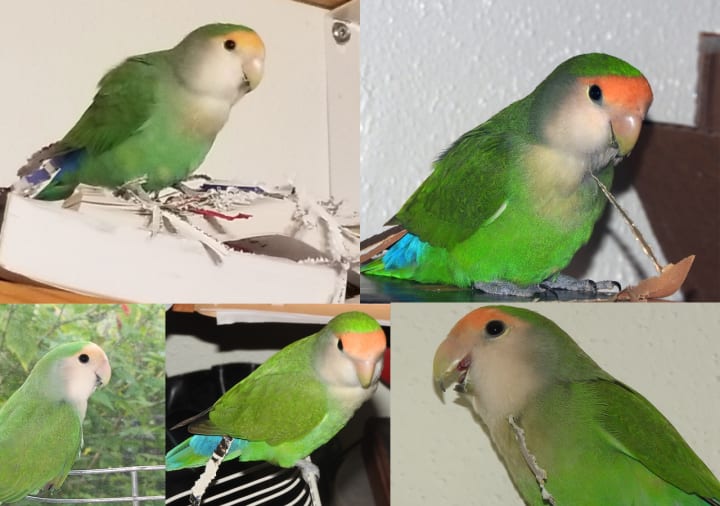
My Peach-faced Lovebird is throwing confetti and it's probably because I'm so cool, right?


And, yes, to answer your question about the model upfront, male Lovebirds shred paper too. My Peach-faced Lovebird could be a male. I’m just guessing. Since I don’t intend to breed her, I don’t need to know for sure.
This active little Lovebird has a wild origin story. In 2012, she was found after a hurricane swept through the Gulf Coast area. A traveling birder who chases storms in search of rarities spotted her scrapping with a Northern Mockingbird.
When he returned the next day, she was on the ground, so he performed a rescue and brought her to me. I posted this ad to Craigslist and some of the lost pet sites:
A Hurricane Isaac worker found a fully flighted, healthy SMALL parrot with no band in the Back Bay, Biloxi area. It is not the lost Sun Conure. If you think it might be your bird, please describe it. A photo would help since there is no band. I don’t want to drive a long way to return the wrong bird, so I’m requesting a clear description/and or a photo first.
A scary number of people who lost their Cockatiels got in touch with me. However, although this little cutie was already tame, I couldn’t find anybody looking for a lost Lovebird.
Well, heck, we’ve got plenty of room. She settled in and made my house her forever home.
So why do Lovebirds shred paper?
It’s pretty simple. In the wild, Lovebirds are one of the few parrots who can weave a nest. To do that, they need to collect lots of material to tear and shape to their liking.
In the wild, she would gather leaves — maybe palm fronds. In the home, no book or magazine is safe. I’ve banned her from flying free in the room with the collectible volumes.
The impulse to chew can never be denied. To keep from driving her mad with frustration, I supply her with paper from outdated computer books and magazines. You know the ones. The library and the secondhand bookstore stick them on a table outside in hopes somebody will make them go away.
Definitely a job for a Lovebird.
It’s so cute to watch her go to work. Often, she’ll tuck the ribbons she makes in her tail. Other times, she’ll wear one or two as a dapper necktie.
Wild Peach-faced Lovebirds do that too. It’s a way of flying the ribbons back to the nest area.
She can get camera-shy when she’s working on her art. Over the years, though, I’ve grabbed enough photos to whip up a cute collage.
If you want them to breed
If you have a tame pet Lovebird, you probably don't want her to breed. Egg binding is a real issue in this species. Other hormone issues, like feather-plucking, can be a problem too. On top of that, your lovable single pet can suddenly transform into a tiny terror once she's part of a breeding pair.
They're called Lovebirds for a reason-- and part of the reason is their attitude of, "It's you and me, babe. Us against the world."
For all these reasons, I don't advise anybody to start breeding Lovebirds on a lark. The changes in their personality and health can be real. Most people reading this story shouldn't breed their pets.
However, in the name of completeness, I'll mention a few materials Lovebird breeders often supply for the Lovebird nest-building project.
As I already mentioned, palm fronds are a good choice. Willow leaves and branches also make a good choice because they're easy to find and widely available. Your source must have never been sprayed with pesticides, yet it must be free of avian mites.
A newer chewable is commercial seagrass. I was recently introduced to this material and bought a couple of rectangular mats made of seagrass, and I can report that it's a huge hit. My Lovebird is having an absolute blast chewing through it like a buzz saw.
Other commercial sources like pet store generic “nesting material,” clean duck or goose down, or clean goat hair will also work just fine.
Again, a nice home with all the best nesting materials isn't all you need to keep breeding Lovebirds happy. It's mission-critical for breeders to make absolutely certain their birds are getting high-quality nutrition, including sufficient vitamin A and exposure to daylight or vitamin D, the sunlight vitamin.
The eyerings species do things a little differently
Fun factoid: The eyering species of Lovebirds also build nests and carry nesting-building material. However, they usually tote stuff around in a more traditional fashion-- that is, by simply picking it up in their bills.
The most popular eyering species are Masked and Fischer's Lovebirds. More rarely, you might encounter Nyasa or Black-cheeked Lovebirds.
If you enjoyed this article, I'd be thrilled if you gently tapped the <3 button down below. Tips graciously accepted.
About the Creator
Amethyst Qu
Seeker, traveler, birder, crystal collector, photographer. I sometimes visit the mysterious side of life. Author of "The Moldavite Message" and "Crystal Magick, Meditation, and Manifestation."
https://linktr.ee/amethystqu
Keep reading
More stories from Amethyst Qu and writers in Petlife and other communities.
Did A Yellow-Crowned Amazon Save a Lost Language?
A while back, I was listening to an audiobook biography of the life of explorer and prolific writer/naturalist Alexander von Humboldt, and I came across a mention of his talking pet parrot of 30 years. As a parrot owner myself, I was left wanting to know more.
By Amethyst Qu3 years ago in Petlife



Comments