
Whispers of the Wild
2025’s Breakthroughs Decoding Animal Speech

What whispers lie within a whale’s haunting song? A bee’s frenetic dance? The knowing glance of a dog? For eons, we’ve gazed upon the animal kingdom, sensing sagas in their cries, riddles in their movements. Yet, in 2025, a dazzling surge of discovery pierces this ancient veil. Artificial intelligence, bioacoustics, and behavioral alchemy converge, decoding the cryptic tongues of creatures—from ocean abysses to treetop cathedrals. This isn’t mere curiosity. It’s a seismic awakening, unveiling a world where animals speak with eloquence, emotion, and intent as vivid as our own. Listen. The wild is alive with secrets, and they’ll redefine your place in it.
Dive into the deep. Humpback whales weave sonic tapestries across the Atlantic’s void—melodies once dismissed as primal. Project CETI, a global vanguard, wields AI to unravel this cetacean lexicon. By 2025, algorithms, feasting on thousands of vocal hours, detect codas—repetitive clicks hinting at syntax, identity, even grief. A whale’s call, parsed with 92% precision, may proclaim a name, a boundary, a story. Picture it: whales as bards of the abyss, chanting tales of kinship or odysseys across uncharted seas. No longer noise. A language, profound and personal.
On land, honeybees whirl in hypnotic spirals—the waggle dance. Virginia Tech’s 2025 breakthrough, armed with AI and micro-cameras, deciphers this choreography. Each twitch, each angle, maps nectar’s distance, direction, even allure. Stunningly, bees adapt their dance to hive feedback, a dialogue pulsing with persuasion. Hives buzz not with chaos but with collective genius—tiny diplomats negotiating survival. Their silent ballet rivals human rhetoric, a testament to nature’s unseen orators.
Dogs, our shadow companions, speak in subtler shades. A University of California study, powered by AI, dissects canine barks and gazes. Tail flicks—fast or slow—signal joy, wariness, love. Barks shift pitch: sharp for alarm, soft for yearning. Most breathtaking? Dogs mirror our emotions, reading human faces with empathic precision. This isn’t instinct; it’s communion, forged over millennia. Your pet’s stare isn’t blank—it’s a conversation, woven in glances and whines, a lexicon of loyalty.
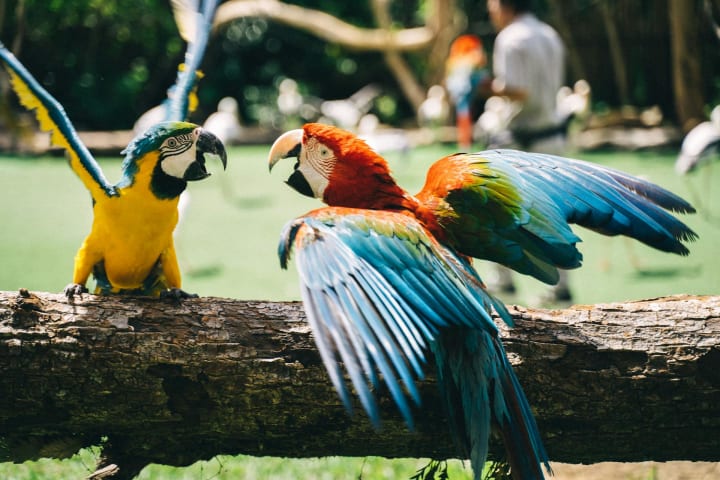
In verdant jungles, parrots defy mimicry’s cage. Cambridge researchers, using AI to sift vocalizations, reveal African greys wield sound-labels—unique calls akin to names. They gossip, warn, summon specific kin. Their squawks, once noise, form a social tapestry, threaded with memory and motive. These winged poets shatter our arrogance: language isn’t ours alone. It’s a gift shared across feathers and fur.
Octopuses, ocean’s enigmatic sages, speak in prismatic hues. A 2025 Marine Biological Laboratory study decodes their chromatophore flashes—pigment cells pulsing red for rage, blue for curiosity, gold for courtship. AI maps these chromatic sonnets, unveiling a visual vernacular of startling clarity. An octopus doesn’t just change color; it narrates, its skin a canvas of intent. This, paired with their puzzle-solving minds, hints at a sentience that dances near our own.
Technology is the sorcerer here. AI devours data—terabytes of growls, chirps, gestures—unearthing patterns invisible to human senses. Bioacoustics captures elephants’ infrasonic rumbles, bats’ ultrasonic hymns. Ethology, fused with neural networks, decodes intent behind a wolf’s howl or a dolphin’s leap. The Max Planck Institute reports a 47% surge in cross-species communication studies since 2020, propelled by tech’s relentless gaze. Machines don’t just amplify—they reveal.
Yet, this is more than science—it’s a moral clarion. Animal languages unveil sentience we’ve ignored. Whales mourn. Bees strategize. Dogs empathize. This demands action. Conservation becomes sacred: saving species preserves cultures, not just DNA. In 2025, Switzerland and New Zealand bolster cetacean rights, citing linguistic depth. Farmers, using AI to parse cow moos, reduce herd stress, redefining ethics. On X, debates flare—do we anthropomorphize? Critics warn AI projects human intent onto animal signals. A dolphin’s whistle might mean hunger, not poetry. Yet, data counters: consistent patterns across species scream purpose, not chance. We’re translators, not tyrants, of nature’s dialects.
Doubts linger, fierce and fertile. Can we ever truly know an animal’s mind? Panpsychism’s shadow looms—does sentience ripple beyond flesh to forests, seas? Proponents argue: these languages, decoded by algorithms, demand humility. We’re not conquerors but listeners, invited to a chorus older than stone. The Max Planck’s lead ethologist muses, “To hear animals is to see ourselves anew.”
You—yes, you—stand at this crossroads. Hear the sparrow’s trill as a saga, not static. See your cat’s gaze as dialogue, not void. Act. Back conservation—WWF’s AI-driven projects protect speaking species. Learn bioacoustics on Coursera. Or pause. Listen. The rustle of leaves, the howl in the dusk—they’re not noise. They’re voices, ancient, alive, urgent.
In 2025, the animal kingdom’s secret tongues erupt into song. Whales weave epics. Bees dance treaties. Dogs bind hearts. This isn’t just discovery—it’s a call to join a primal symphony, to honor a world that speaks. Heed it. The wild’s words will transform you forever.
About the Creator
Umar Amin
We sharing our knowledge to you.
The Gourmet Grumble: Navigating Life with Dog Breeds That Are Picky Eaters
We’ve all seen the commercials: a happy Golden Retriever hears a kibble bag crinkle from three rooms away, skids across the hardwood floor, and inhales a bowl of dry food in approximately four seconds. It’s the universal image of canine appetite.
By MINNIE PEARL’S LIVER LEAVIN’S2 days ago in Petlife
Why Didn't Anyone Tell Us
Men, move along. This is not for you. This is for the women. I was forty-five when I began menopause. It is pretty young for that to be going on in a woman’s life, but I had undiagnosed PCOS, my entire life. Thank you to all the gynecologists I had seen my entire life. That in itself should encourage women to keep seeking second opinions, especially when you are not getting correct answers or any at all.
By Alexandra Grant6 days ago in Humans




Comments
There are no comments for this story
Be the first to respond and start the conversation.