
Whiskers and Wounds
A Cat's Love Can Heal More Than Silence

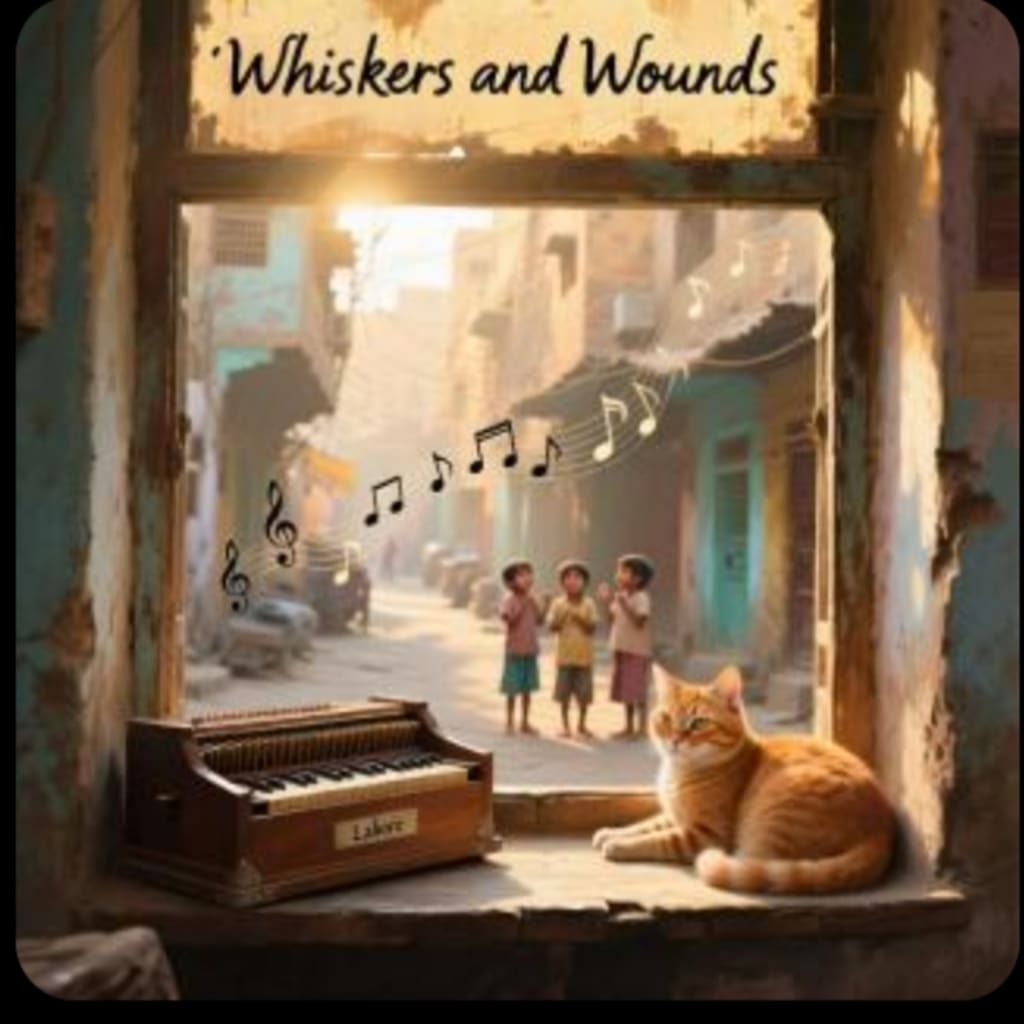
Ayesha was once the melody in a quiet neighborhood of Lahore—the woman whose voice floated through jasmine-scented evenings like a gentle breeze. She taught music at the local school, her laughter ringing out as children fumbled with harmonium keys and off-key scales. Her home, small but warm, used to hum with life: the strum of strings, the soft clink of teacups, and songs passed down from her mother.
But grief has its own rhythm—one that drowns out even the sweetest tunes.
When her younger brother, Imran, died in a car accident on his way home from university, something inside Ayesha broke. He wasn’t just family; he was her confidant, her duet partner, the one who’d call just to hear her sing a line from an old film song. After the funeral, she stopped answering calls. She stopped teaching. The harmonium gathered dust in the corner, covered by a faded shawl.
Her world became small—just walls, silence, and the daily ritual of tending to a single jasmine plant on the porch. Neighbors would pass by and glance at her window, hoping for a sign. But Ayesha only looked out, never in.
Then, one cold December evening, she heard it—a fragile meow beneath the rustle of dry leaves.
At first, she ignored it. But the sound came again, weaker this time, like a whisper afraid to be heard. She stepped outside, wrapped in a worn shawl, and found a tiny orange kitten curled beside the gate, trembling. One ear was torn, her fur matted with dirt, but her eyes—wide and golden—held a quiet plea.
Ayesha hesitated. She hadn’t touched anything fragile in months. Not emotionally. Not physically.
But something in that gaze reminded her of Imran—the way he used to look at her when he was scared, seeking comfort without words.
Without speaking, she knelt, wrapped the kitten in her shawl, and carried her inside.
“I’ll call you Suroor,” she murmured—the Urdu word for ecstasy, for rapture. A feeling she thought she’d forgotten.
Suroor wasn’t gentle at first. She knocked over a glass of water, batted books off the shelf, and hid under the bed for hours. But she was alive—wild, messy, and full of motion. And slowly, her presence began to fill the silence.
She followed Ayesha like a shadow. When Ayesha made tea, Suroor sat by the stove, tail flicking. When she sat on the floor staring at old photos, the kitten climbed into her lap, purring as if to say, I’m here. You’re not alone.
One morning, Ayesha caught herself humming while folding laundry—just a few notes of a lullaby Imran used to love. Suroor’s ears perked up. She stretched, then pounced playfully at a sock. Ayesha laughed—softly at first, then fully, the sound surprising even herself.
It was the first real laugh in over a year.
From then on, the house changed. The shawl came off the harmonium. Ayesha played a note, then a chord. Then, one rainy afternoon, she sang—quietly, painfully, beautifully. Suroor jumped onto the instrument, sat beside her, and purred in rhythm.
The neighbors noticed. Children passing by would pause when they heard music again. One day, a little girl knocked on the door, eyes wide. “Aunty, is that you singing? Will you teach us again?”
Ayesha looked down at Suroor, who blinked up at her as if to say, Go on.
She nodded. “Yes,” she whispered. “Yes, I will.”
Her home became a classroom once more. Children came with notebooks and shy smiles. Suroor ruled the windowsill like a tiny queen, watching with calm dignity as voices rose in harmony. Ayesha didn’t just teach notes and scales—she taught patience, presence, the courage to begin again.
Years passed. Suroor grew slower, her fur turning silver at the edges. She slept more, moved less, but still curled in Ayesha’s lap every night, as if guarding her heart.
Then came the morning she didn’t wake up.
Ayesha held her gently, tears falling silently. No words came. But then, softly, she began to sing—the same lullaby from that first day. The room felt still, but not empty. It felt full—of memory, of love, of quiet gratitude.
At the funeral, the children placed small flowers by the jasmine plant. One asked, “Will you keep singing, Aunty?”
Ayesha smiled through tears. “Yes. Because someone taught me how.”
When people later asked how she found her voice again, she’d pause, look out the window, and say, “It wasn’t me who healed her. It was her who healed me.”
And in the quiet of her home, where music now lives again, there’s always a space on the windowsill—where sunlight falls, and memories purr.
About the Creator
meerjanan
A curious storyteller with a passion for turning simple moments into meaningful words. Writing about life, purpose, and the quiet strength we often overlook. Follow for stories that inspire, heal, and empower.
Reader insights
Outstanding
Excellent work. Looking forward to reading more!
Top insights
Compelling and original writing
Creative use of language & vocab
Easy to read and follow
Well-structured & engaging content
Excellent storytelling
Original narrative & well developed characters
Expert insights and opinions
Arguments were carefully researched and presented
Eye opening
Niche topic & fresh perspectives
Heartfelt and relatable
The story invoked strong personal emotions
Masterful proofreading
Zero grammar & spelling mistakes
On-point and relevant
Writing reflected the title & theme




Comments (1)
Nice