
When Loyalty Turns Tragic: The Heartbreaking Reality of Pets and Their Deceased Owners
Reality of pets

Pets are often celebrated for their loyalty, unconditional love, and the profound bond they share with their human companions. Dogs and cats, in particular, have long been considered integral parts of our families, offering companionship and comfort through thick and thin. However, there's a darker, more unsettling side to this bond that emerges in the tragic circumstances where pets are left alone with their deceased owners. It's a topic that tugs at the heartstrings and challenges our perceptions of animal behavior, revealing a complex interplay of instinct, distress, and survival.
The Disturbing Phenomenon
When pets like dogs and cats are left alone with their deceased owners, there have been instances where these animals resort to eating the bodies. This behavior, while deeply distressing to consider, is thought to stem from the animals' confusion and distress at seeing their owners unconscious or unresponsive. Initially, pets may lick and nip at the owner's face or hands, behaviors typically associated with seeking attention or comfort. However, if these actions result in drawing blood, it can trigger a natural, albeit gruesome, instinctual response in the animals.
Understanding the Instincts
At the core of this behavior are primal survival instincts. Animals, including domesticated pets, possess a range of innate behaviors that, in the wild, would contribute to their survival. For instance, the scent and taste of blood can trigger feeding behaviors in dogs and cats. In a distressing situation where a pet is left alone with a deceased owner, these instincts can override the animal's usual behaviors. It's crucial to understand that this isn't an act of malice or a reflection of a pet's relationship with its owner; rather, it's an unfortunate consequence of the animal's instinctual response to a highly abnormal situation.
The Role of Distress and Confusion
Pets, particularly dogs and cats, are highly perceptive creatures. They are attuned to their owner's emotions and physical states, often providing comfort during times of illness or sadness. When a pet encounters their owner in a state of unconsciousness or death, their initial response is typically one of confusion and distress. Dogs might bark, whine, or paw at their owner, while cats might meow or nudge with their heads. These behaviors are attempts to elicit a response, to understand what is happening to their beloved human.
In the absence of a response, pets may become increasingly anxious and desperate. The distress caused by their owner's unresponsiveness can lead them to escalate their attempts to wake them, which can include licking or nipping at the owner's face or hands. If these actions result in drawing blood, the pet's natural predatory instincts can be triggered, leading to the unfortunate behavior of consuming parts of the body.
Historical and Psychological Perspectives
Historically, the phenomenon of pets consuming their deceased owners has been documented in various cultures and periods. Ancient Roman records, for example, noted instances of dogs eating their deceased masters during times of famine. These accounts, while rare, underscore the complexity of the human-animal bond and the powerful influence of survival instincts.
From a psychological perspective, this behavior can be understood through the lens of attachment and loss. Pets form strong attachments to their owners, often viewing them as sources of security and care. When this primary attachment figure suddenly becomes unresponsive, it can cause significant psychological stress for the animal. In the absence of understanding or alternative sources of comfort, pets may revert to instinctual behaviors that, while shocking to us, are rooted in their evolutionary history.
Case Studies and Real-Life Instances
There have been numerous documented cases where pets have consumed parts of their deceased owners' bodies. One well-known case involved a woman in England whose pet dog was found feeding on her body after she had been dead for several days. The dog, a loyal companion, had likely been trying to wake her before resorting to this behavior. Similarly, cases involving cats have also been reported, where the animals have been found feeding on their deceased owners after a period of isolation.
These cases, while rare, highlight the importance of understanding the full spectrum of animal behavior and the conditions that can lead to such outcomes. They also serve as a poignant reminder of the responsibilities we hold as pet owners, including considerations for what might happen to our pets in the event of our sudden death.
Preventative Measures
To prevent such heartbreaking scenarios, it is essential for pet owners to take proactive measures. Establishing a support network for your pets is crucial. Ensure that friends, family, or neighbors are aware of your pets and are willing to check on them regularly, especially if you live alone. Providing clear instructions in your will or living arrangements about who should take care of your pets can also help ensure their well-being in the event of an emergency.
Additionally, pet owners can invest in technology such as automated feeders and water dispensers to ensure their pets have access to food and water in case of an unforeseen absence. Regularly updating your emergency contact information and sharing it with trusted individuals can also be a safeguard for your pets' safety.
Conclusion
The phenomenon of pets consuming their deceased owners is a deeply unsettling topic that challenges our understanding of the human-animal bond. It is a stark reminder of the powerful instincts that drive animal behavior and the profound impact of distress and confusion on our beloved pets. By understanding these behaviors and taking proactive steps to ensure our pets' well-being, we can honor the loyalty and love they give us and prevent such tragic outcomes.
Ultimately, our pets rely on us for their care and security, and it is our responsibility to consider their needs even in the most unforeseen circumstances. In doing so, we can continue to cherish the bond we share with our pets and ensure their safety and well-being, even in our absence.
About the Creator
Keep reading
More stories from Deji Akomolafe and writers in Petlife and other communities.
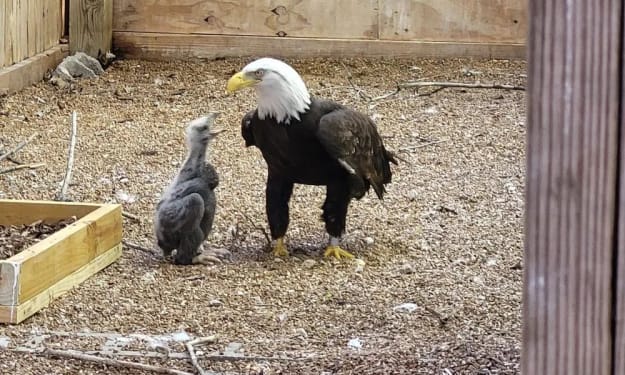
Murphy’s Unusual Journey to Parenthood: The Disabled Bald Eagle Who Hatched a Rock
In the world of wildlife sanctuaries, stories of resilience and adaptation abound, but few are as heartwarming and unique as that of Murphy, a disabled bald eagle. In 2023, Murphy captured the hearts of many when he made headlines for attempting to hatch a rock, a symbol of his deep parental instincts. His story took an even more touching turn when sanctuary keepers replaced his rock with an orphaned eaglet, allowing Murphy to finally become a real parent. This extraordinary tale is a testament to the incredible bonds that can form in the animal kingdom and the compassionate efforts of those dedicated to wildlife conservation.
By Deji Akomolafe2 years ago in Petlife
A Dart at Dusk
Seconds ago, the sullen sun set on the two of us… my exuberant furry companion and me. A fresh breeze embraces us, delivering welcome relief from the day’s oppressive heat. His typical stumbling and staggering along — apace with a sloth — has turned into trip-trapping, high-stepping, almost skipping along.
By Angie the Archivist 📚🪶6 days ago in Petlife
Your Puppy Can Feel Your Stress Instantly
The Incredible Science Behind How Puppies Sense Your Emotions and React Before You Even Realize It --- You walk into the room, shoulders slumped, jaw tight, heart racing from a stressful day. Before you even speak, your puppy is there—tail tucked, eyes alert, nose nudging your hand. Almost magically, they know something is wrong.
By Ahmed aldeabella3 days ago in Petlife


Comments
There are no comments for this story
Be the first to respond and start the conversation.