
Top Signs Your Pet Needs More Mental Stimulation
Understanding behavioral cues that signal your pet needs more enrichment


Mental stimulation is just as important for pets as physical exercise. Every pet, whether it is a dog, cat, rabbit, guinea pig or ferret requires mental stimulation to overcome stress, anxiety, or behavioral problems.
While many pet owners primarily focus on pet walks, their feeding schedules, and vet visits, instead they should shift their focus on cognitive enrichment which is often overlooked. This enrichment plays a crucial role in the long term emotional well being of your pet.
If you are looking for signs to understand if your pet is lacking mental enrichment. Here are the top signs along with simple activities that you can start today to regulate your pet’s emotional imbalance.
1. Your Pet Is getting Bored or Disinterested too often
Even healthy pets can show some signs of boredom such as ignoring toys, scrolling less, or sleeping too often despite having an active routine.
- Cats can seem to lack the interest to be engaged in the play process and seek solitude in the corner. Structured Cat enrichment gives them an opportunity to be interested in things naturally.
- Guinea pig enrichment with foraging and digging behavior should be applied to small pets like rabbits and guinea pigs, not based on food bowls only.
Try this:
Offer a Cat Sniffing Mat or place hidden treats under fleece for rabbits and guinea pigs to find. These kinds of games resemble a natural form of exploration and can be used to break the monotony.
2. Your Pet Ask for Attention Excessively
Restless pacing, demanding attention, or whining throughout the day are negative signs that your pet’s brain isn’t occupied enough. After being inactive for a while, dogs may constantly start to bark or shadow you from room to room.
- Cats might make sounds more frequently asking for interaction.
- Ferrets may bite your hands when play isn’t mentally stimulating for them.
In these moments, a dog enrichment mat or a Pet Sniffing Mat keeps your pet engaged independently while allowing them to use their senses creatively.
3. Your Pet Cheats on Feeding Time
When your dog eats meals in a few seconds or your cat or little creature runs to the food bowl much later than normal, this is a possible indication that mealtime has become their stimulating factor. In such situations, food might become the most entertaining activity of the day for them, in the absence of mental stimulation toys.
Here are some toys you can inculcate in your pet’s routine:
- Dogs: A puzzle mat for dogs can slow down fast eaters by turning feeding into a rewarding challenge.
- Cats: Slow feeding helps regulate appetite and introduces feline play instincts during mealtime.
Animals evolved to work for their food; enrichment feeding tools recreate that opportunity safely.
4. Change in Your Pet’s Behaviour
Emerging or aggravated behaviors like over-chewing, digging, scratching, tunneling or pacing back and forth may indicate mental restlessness but not disobedience.
Dogs would destroy the house property, and cats will scratch the vertical surfaces rather than the scratching posts. There can be over-grooming and obsessive burrowing behaviors in small animals.
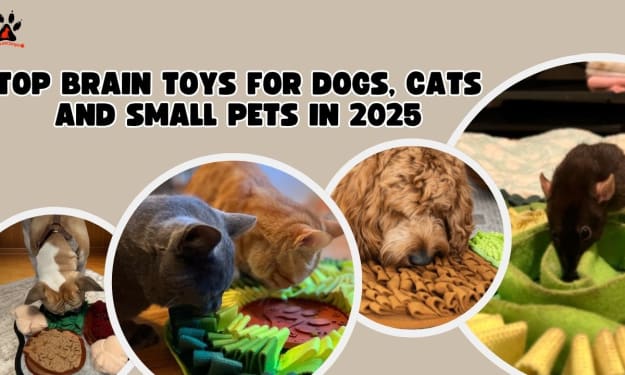
Such actions are usually reduced when pets are assigned structured activities that would satisfy their instincts. In the case of dogs, Snuffle mats provide matting, sniffing and foraging. In case of smaller animals, natural exploration is simulated by safe and supervised play tunnels, treat hunters, and supervised free-range time.
5. Your Pet Seems Anxious or Restless
Unexplained anxiety such as trembling during quiet hours, repetitive yawning, or avoidance signals that your pet’s brain isn’t being used enough. Small mammals like ferrets are especially sensitive: lack of appropriate stimulation can lead to repetitive or stressed behaviors more quickly than in dogs or cats.
Ferret enrichment ideas include custom play spaces with tunnels, scent games, and rotations of rotational toys. For cats, small bursts of structured play and a Cat Sniffing Mat satisfy feline predatory instincts. For dogs, engaging with a Lick Mats session or scent challenge improves calmness and engagement.

Why Mental Enrichment Matters for Every Species
Pets aren’t passive creatures, they are problem-solvers by nature. Mental enrichment:
- Mimics natural instincts like foraging, hunting, and sniffing
- Strengthens cognitive skills and focus
- Reduces stress, boredom, and behavioral issues
- Improves confidence and emotional resilience
For dogs, enrichment tools like dog enrichment mats, Dog Sniffing Mat, and puzzle mat for dogs build confidence and reduce destructive behaviors. For cats, indoor stimuli and scent games tied to Cat enrichment and Feline Enrichment keep them curious.
For rabbits and guinea pigs, snuffle mats for rabbits, hay puzzles, and play tunnels add depth to enrichment routines. And small predators like ferrets benefit from customized ferret enrichment ideas that encourage exploration and problem solving.
How to Start Simple
Here are a few enrichment strategies to introduce gently:
- Snuffle Time: Sprinkle treats or kibble in a Snuffle mat and let your pet explore.
- Slow Feeding: Use puzzle feeders instead of bowls to make meals last longer.
- Rotation Play: Change toy types weekly to keep novelty high.
- Scent Trails: Hide treats under cups, boxes, or cloth mats to encourage investigation.
- Supervised Exploration: Allow safe, monitored free-range time outside the regular cage or room.
Start with short sessions and observe your pet’s response. Some will be instantly curious, while others may need encouragement. Patience and consistency increase engagement and help your pet associate enrichment with positive feelings.
Final Thoughts
Mental enrichment isn’t a luxury. It's a necessity. Just as pets benefit from physical walks or exercise, their brains need nourishment too. If you see signs of boredom, behavior changes, or restlessness, introducing enrichment activities tailored to their species and instincts can dramatically improve their mood and overall quality of life.
About the Creator
Keep reading
More stories from Alice Adams and writers in Petlife and other communities.
Lion vs. Hyenas
The struggle between lions and hyenas is one of the most fascinating rivalries in the African wilderness. These two powerful predators share the same habitats, hunt similar prey, and constantly compete for food and territory. Their conflict is not just about strength but also about strategy, teamwork, and survival. Observing a confrontation between them reveals much about the balance of nature on the African savannah.
By Abubakar2205 days ago in Petlife
HTMA Hair Test: Understanding Hair Tissue Mineral Analysis and the Role of Interpretation
Hair Tissue Mineral Analysis (HTMA) refers to a laboratory method used to evaluate mineral content and patterns through a small hair sample. The analysis is often associated with identifying longer-term trends in mineral balance rather than short-term fluctuations.
By CEO A&S Developers5 days ago in Petlife
Review of 'Man on the Run'
My wife and I saw Man on the Run, a nearly 2-hour documentary on Amazon Prime, about Wings, Paul McCartney's group that flew around the world from shortly after The Beatles broke up in early 1970 to shortly after John Lennon was murdered at the end of 1980, making a Beatles reunion forever impossible.
By Paul Levinson5 days ago in Beat


Comments
There are no comments for this story
Be the first to respond and start the conversation.