

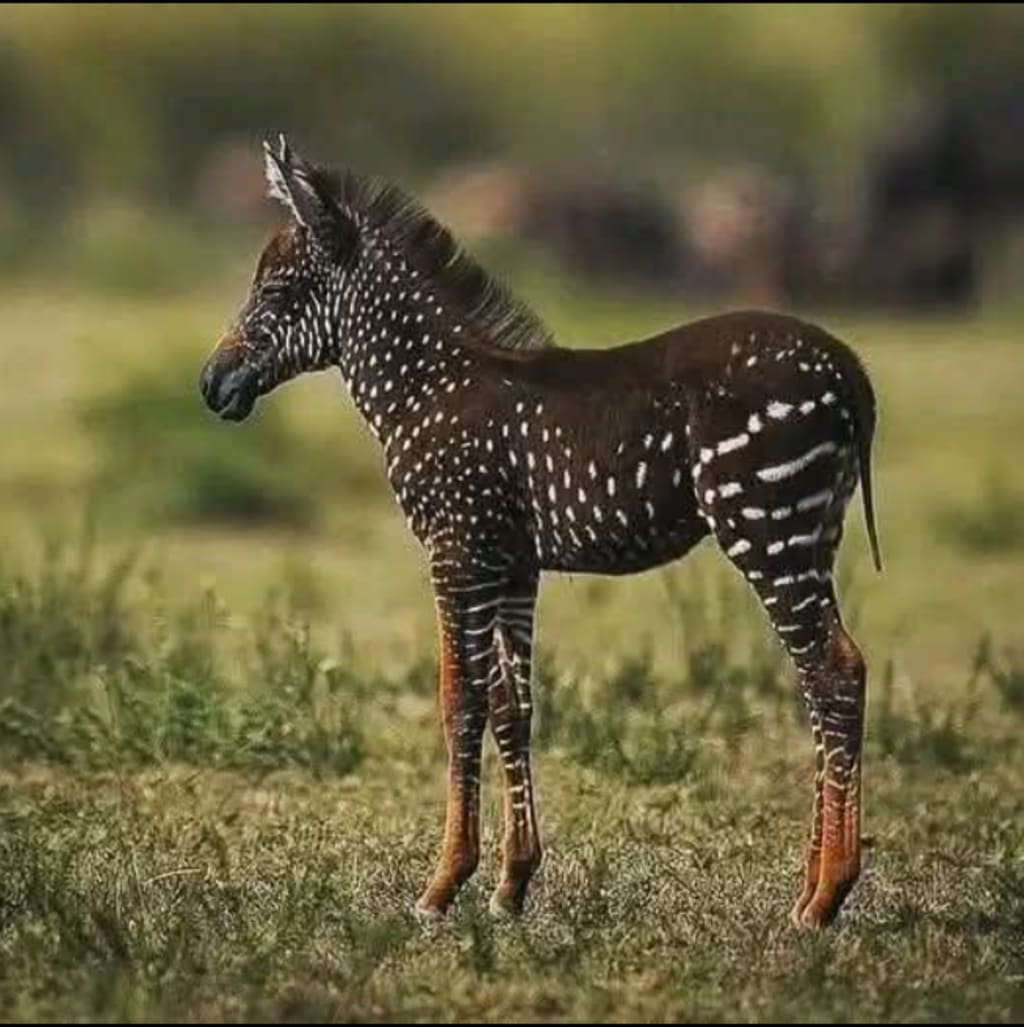
A one in a million Zebra has been spotted in Masai Mara had polka dots instead of stripes.
Even rare species have their outliers that make them stand out even more. Tira is a unique Zebra with an amazing genetic marking.
In the sprawling savanna of Kenya's famed Masai Mara National Reserve, a boy's unique offspring has won the affection of nature lovers and wildlife observers alike. This zebra, known as Tira, is no ordinary member of its species.
Tira is a unique phenomenon, a polka-dot zebra, and the first of its kind ever recorded in the Masai Mara, creating a novel sensation that has generated interest both within and beyond the borders of Kenya,
It's unique appearance, covered in unusual white spots on black fur, is due to a very, very rare genetic mutation that alters its pigmentation.
Tira's distinctive pattern provides a peek into the unknown mysteries of nature's diversity and the delightful randomness found throughout the animal kingdom.
How Tira Came to Look the Way She Does

While zebras are usually known for their distinctive black-and-white striped coats, they serve multiple functions, such as camouflage and social recognition. But Tira has a striking black coat speckled with irregular white spots - a variation for which there are few examples.
This uncommon look comes from a genetic condition connected to melanin, the pigment that gives color to the skin, hair, and eyes in animals and humans. In Tira's case, an unusual genetic mutation interrupted the normal pattern of striping and resulted in the random white spots on its body.
This genetic abnormality has turned Tira into a source of fascination among both scientists and the public. Such variations have been seen in zebras elsewhere, but Tira's distinctive markings are a reminder of the artistry of nature and the complexity of genetics.
For anyone studying animal genetics and the numerous ways environmental factors and genetic mutations can shape physical characteristics, it provides an intriguing case.
Tira's Rise to Fame and Discovery

Tira was found in the Masai Mara, a region known for its diverse range of species and the Great Migration of wildebeests and zebras. It was in the open grasslands that a local guide, Anthony Tira, first saw this extraordinary zebra. Tira's discovery was historic- the first-ever documented sighting of a polka dot zebra in the area.
Soon after it was discovered by its namesake, Tira became a neighborhood sensation. It was not just a striking visual spectacle, its rare genetic feature also made it an object of scientific intrigue.
Anthony Tira's discovery was more than a typical wildlife sighting, this one spectacular animal captured the majesty of the Masai Mara and that no matter the familiarity, the natural world has a way of taking your breath away with its variety.
All the World Wants Tira
The polka-dot pattern is rare, but similar markings have been spotted elsewhere in zebras.
In pictures taken in Botswana, another wildlife-rich area of Africa, a handful of foals with similar markings were also observed, But Tira's case is all the more notable given the prominence of the Masai Mara as a refuge for wildlife and a major area for safari tourism.
The award-winning zebra, who was even photographed by famous photographer Ashish Parmar, was put into the center of the world by the famous photo of Tira.
This image showcases Tira's beauty at best, black and white spots of the zebra and the black coat of Tira complimenting each other perfectly.
Images like these are not only a testament to the uniqueness of the animal, but also a reminder of the incredible amount of variety that exists in the world of animals, where even the most common of creatures can hide unexpected beauty and wonder.
How Tira Influenced Conservation Awareness
Tira's discovery and the subsequent media attention have had a huge impact in raising awareness about wildlife conservation.
The Masai Mara, like much of the world, is under severe threat from human pressure such as poaching, habitat destruction and climate change.
By highlighting the extraordinary creatures living in the reserve, Tira's presence has served to remind the need to protect such natural marvels for generations to come.
Additionally, Tira's success on social media and wildlife platforms has drawn more interest to the area and more tourists and conservationists to the Masai Mara.
This increase in visibility can lead to increased funding for conservation programs, allowing the unique ecosystems and species within the reserve to be preserved.
About the Creator
Keep reading
More stories from Rohitha Lanka and writers in Petlife and other communities.
Understanding the Difference Between F1 and F1B Goldendoodles
For families considering a Goldendoodle, one of the most common points of confusion is the difference between F1 and F1B generations. At first glance, the labels can sound technical or even overwhelming. But once you understand what they actually mean, the decision becomes much clearer. While both generations are popular, loving family companions, knowing how they differ can help you choose a dog that truly fits your home, lifestyle, and long-term expectations.
By Addison Hulse6 days ago in Petlife
When the Shelter Closes
Across the street from my house, a man slept under a tree, his dog by his side. My first, naive thought: he must be traveling through. But he kept coming back, often sleeping there during the day. Then it hit me—that person might not have a home.
By Bride of Sound4 days ago in Humans




Comments (1)
Omg how beautiful. Excellent story 🙏