
The Elephant Who Couldn’t Forge
A Tale of Memory, Loss, and the Strength to Move On


In the heart of the Savannah, under the endless stretch of golden skies, lived an old elephant named Baku. His tusks were long and worn, and the lines in his grey skin told stories of many seasons. Among his herd, Baku was known as the Wise One—not just for his age, but for his memory. Elephants never forget, they say, but Baku remembered more than most.
He remembered the dry season of his youth when water was scarce and the herd walked for days to find a shrinking river. He remembered the laughter of his mother, the warmth of her trunk wrapped around him. And he remembered the day the poachers came—how the gunshot shattered the silence, how his mother fell without a sound, and how he stood beside her for three days before the rangers found him.
Years passed, and Baku grew large and strong. He became a leader, guiding the herd across plains and valleys. He knew every watering hole, every hidden path, and every rhythm of the land. But he also carried his memories like a shadow. Even in peace, he could hear echoes of the past—the cries, the loss, the pain.
His herd respected him, but they also whispered. "Baku is stuck in the past," they would say. "He stares at the horizon too long. He speaks to ghosts." And it was true. Sometimes, when the moon was full and the wind gentle, Baku would wander away from the others, standing beneath the acacia tree where his mother once played with him, and remember.
One day, the herd came across a young elephant calf, no older than a few months, alone near a dry riverbed. She was weak, trembling, and had a deep scar along her side. The others hesitated—there was danger in helping strays, especially during drought. But Baku stepped forward.
He gently touched the calf with his trunk, feeling her tremble. "Where is your herd, little one?" he asked.
The calf didn’t speak. She only leaned into him, and something inside Baku shifted. He saw a reflection of himself in her wide, frightened eyes—the same pain, the same abandonment. Without waiting for approval, Baku lifted her gently onto his back and brought her to the herd.
The others murmured, uncertain. “She could bring trouble.” “We have little water.” But Baku was firm. “If we turn away from those who suffer,” he said, “we forget who we are.”
They named her Nia, meaning "purpose." And slowly, she began to heal.
Nia became Baku’s shadow, following him everywhere. She asked him endless questions—about stars, trees, old battles, and dreams. For every memory Baku had tried to bury, Nia was a seed of new life.
But memory still haunted him.
During a seasonal migration, the herd passed by the same acacia tree where his mother had once fallen. Baku froze. The air around him thickened. He stood silently, staring at the dusty ground.
“What do you see?” Nia asked, stepping beside him.
“A place I wish I could forget,” he whispered.
Nia placed her small trunk on his leg. “But if you forget, how will I ever understand you?”
The words stunned him. He realized that memory, no matter how heavy, was also a bridge. In remembering his sorrow, he could teach others to be kind, to be brave, and to love fiercely in a world that could be cruel.
That night, as the herd rested under a starlit sky, Baku gathered them around. For the first time in years, he told them the full story—of his mother, of the poachers, of the long, lonely days after. He wept as he spoke, and none mocked him. Even the youngest were silent, listening to the rhythm of grief and strength woven through his tale.
When he finished, Nia curled beside him, resting her head against his chest.
“You didn’t forget,” she said softly. “You carried it all this time.”
“I thought it was a burden,” Baku replied. “But maybe it was a gift.”
As seasons passed, Baku grew slower. His steps were not as sure, his tusks chipped, and his hearing faded. But his heart remained open. He became the storyteller of the herd, the guardian of memory. And Nia—now strong, curious, and wise beyond her years—walked in his path.
One morning, beneath the same acacia tree, Baku lay down and didn’t rise again. The wind was still. Birds circled above. Nia stayed by his side for a full day, silent, just as he had once done for his mother.
When she finally rose, she looked around at the others. “He never forgot,” she said. “And because of that, we’ll always remember him.”

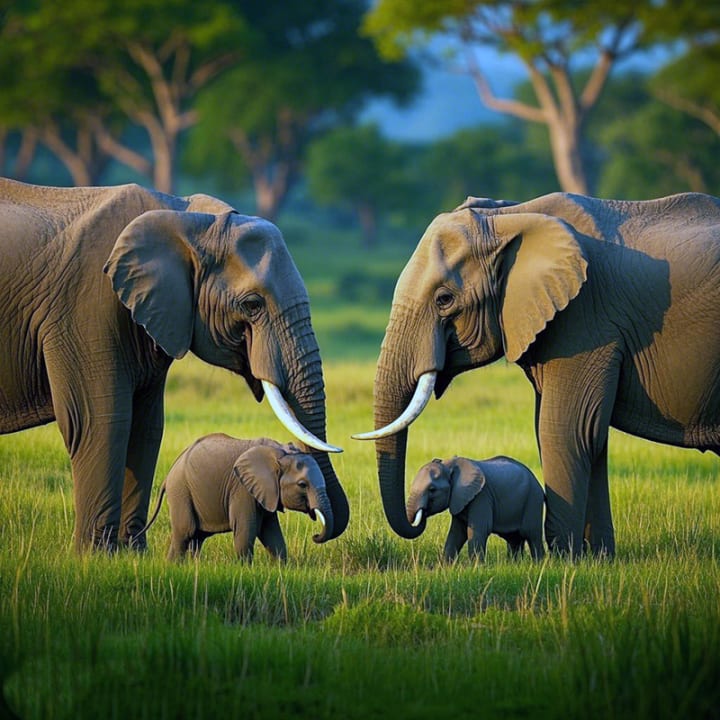
Years later, when Nia became the leader, she told young calves the story of Baku—the elephant who couldn’t forget. She taught them that memory is not a chain, but a compass. It guides, protects, and connects. And in remembering, we honor the ones who shaped us.
Moral:
Sometimes, the past feels too heavy to carry. But in remembering, we find strength, wisdom, and the courage to help others heal. Memory, when shared, becomes legacy.
About the Creator
Only true
Storyteller | Explorer of ideas | Sharing thoughts, tales, and truths—one post at a time. Join me on Vocal as we dive into creativity, curiosity, and conversation.




Comments
There are no comments for this story
Be the first to respond and start the conversation.