
Sussex Ornithological Society Conference
The Birding Straits of Gibraltar and More
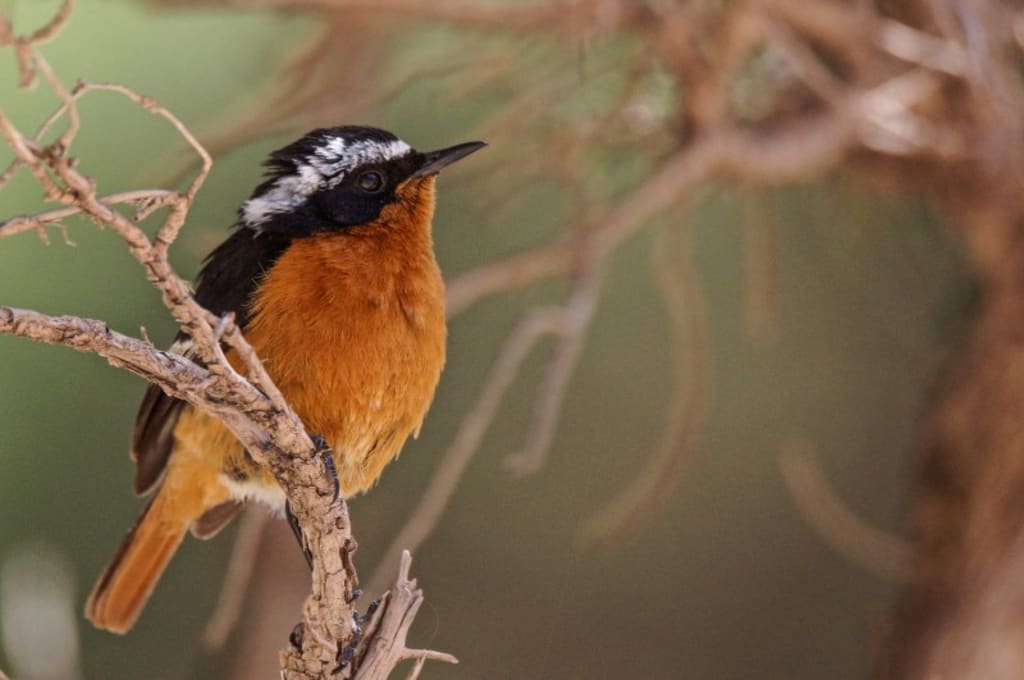
Four hours dedicated to the birds! Covering curlews, birding in Spain, migratory birds, engaging youth, and inclusivity in the world of birding.
One of the benefits of living in a time when the world is on lockdown is the many virtual events that suddenly become available that would normally take place live in other countries around the world. This weekend (Jan 30 & 31/2021) I had the pleasure of attending the 42nd Conference for the Sussex Ornithological Society (SOS). The SOS is one of the largest bird clubs in Great Britain. The club is actively recording and studying wild birds in Sussex, assisting with conservation, and encouraging others to protect feathered beings and their habitats.
Curlews in Crisis
On Saturday, the conference kicked off with a presentation about Curlews in Crisis, presented by Samantha Franks, a senior research ecologist at the British Trust for Ornithology (BTO). For the non-birders reading this, a curlew is a group of wading birds characterized by crescent-shaped bills, much like a new moon, and long legs. Around the world there are nine known curlew species:
- Eurasian whimbrel, Numenius phaeopus – Least concern but populations decreasing.
- Hudsonian whimbrel, Numenius hudsonicus – Least concern.
- Slender-billed curlew, Numenius tenuirostris – Critically endangered, locally extinct populations.
- Eurasian curlew, Numenius arquata – Not threatened but populations decreasing.
- Long-billed curlew, Numenius americanus – Least concern but decreasing.
- Far Eastern curlew, Numenius madagascariensis - Endangered
- Little curlew, Numenius minutus – Least concern with stable populations.
- Eskimo curlew, Numenius borealis – Critically endangered, locally extinct populations.
- Bristle-thighed curlew, Numenius tahitiensis – Not threatened but populations decreasing.
According to the IUCN Red List, two species are critically endangered and at least four other species are in decline. In the past 20 years, the UK has lost half of its breeding curlew population. The contributing factors for this steep decline are increased predation pressures, continued habitat degradation, and climate change. To learn more about what the BTO is doing to reverse the decline visit their website.
The Birding Straits of Gibraltar
The next presentation was by the Inglorious Bustards, a company that offers flyway birding and wildlife adventures in Andalucia, Spain. It is considered the epicenter of migration, the straits providing a critical crossover for birds seeking passage from Africa to Europe. Migration rarely stops as thousands of birds take advantage of the winds to cover the fourteen kilometer gap. It sounds like a birder's dream and I can only hope to visit sometime in the future!
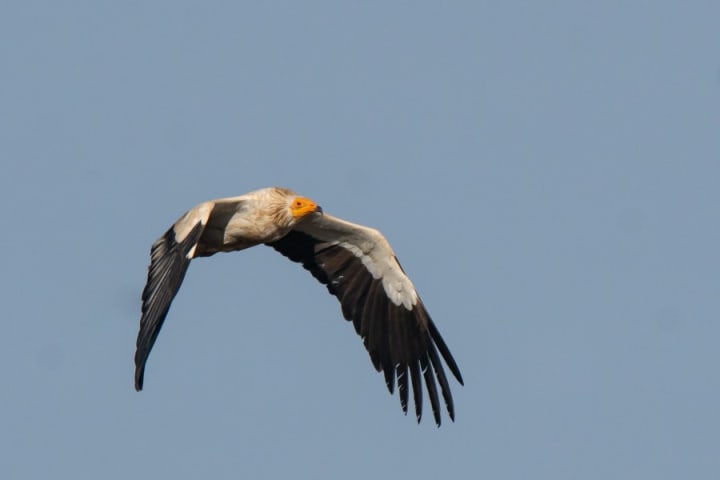
Attendees were treated to a number of incredible photos and video clips of the birds that migrate over the straits, including the endangered Egyptian vulture. The list of species you may get to spot while on tour there is long! Including black kites, European bee-eaters, storks, ospreys, and sparrows just to name a few. Visit the Inglorious Bustards website to see more photos and learn more about them.
Engaging Youth
The second day of the conference started with a presentation from Mya Bambrick, an 18-year-old working to engage other youths in the natural world. She is an ambassador for Cameron Bespolka Trust, the British Trust of Ornithology’s Garden Birdwatch Survey, and Birds on the Brink.
Her presentation focused on the work that Cameron Bespolka Trust is doing, engaging youth through many projects like wildlife and bird camps, scholarships, talks, art competitions, and photography competitions. There is a program that connects UK students to the Cornell Lab of Ornithology giving them a chance to travel to New York.
To get others engaged in nature Mya recommends reaching out on social media, engaging schools and university groups—don’t forget to make things fun and competitive. Visit the Cameron Bespolka Trust website to learn more.
Inclusivity in Birding
Nadia Shaikh was the final presentation of the conference and was well worth watching. Nadia works for the Royal Society for the Protection of Birds (RSPB) and has personally had to often deal with the feeling of being different due to her family heritage. Especially in her journey to find a career and interacting with birders she found herself at odds with delighting in nature versus being considered a “serious” birder.
It is a statistical fact that the world of birding, conservation, and the sciences in general lack diversity especially in developed countries like the UK. People of colour and ethnic minorities often face many barriers that prevent them from doing something that I, as a white Canadian woman, have the pleasure of enjoying on a daily basis. Some of these barriers are related back to economic costs, lack of accessible green spaces in urban areas, the need to have a car if you wish to enjoy national parks and green spaces, the lack of familiarity with doing things such as hiking or bird watching and ultimately the feeling of being unwelcome or thought of as “the other”.
Nadia beautifully illustrated the deeply seated issue of systemic racism. First, looking at systems, she used a cuckoo to illustrate the complexity of the word. Cuckoo populations have declined for a number of reasons—loss of food sources, intensification of agricultural practices, loss of habitat, use of pesticides. The list of factors affecting the cuckoo population continues on and on in a deeply complex manner. Much how systems and systemic racism works.
She continued on with the oak catkin, symbolizing privately held beliefs and the unconscious bias that all of us have. A thought as simple as, “Bird watching is free for everyone,” is an example of a privately held belief that can alienate and discourage those that do not hold the same belief. Moving from the catkin to an entire tree, this symbolizes interpersonal racism like how people behave with others and discrete microaggressions that people may not even be aware of. Next, the roots of the tree as the foundation of institutional racism. An institution could be the government making policies that do not reflect marginalized groups. It could also be a conservation charity with a board that only consists of older white males—they make the policy and may unintentionally exclude others due to the lack of diversity reflected on the board. Lastly, the forest represents structural racism, an old system that has existed for hundreds of years. The problem is that this structure cannot be a true reflection of society.
The last lesson Nadia illustrates is with a chaffinch. Many birds inherently know their song as it is embedded in their DNA but chaffinch must learn their song from the adult birds just as children learn from their parents. Nadia recommends learning as the start of a solution—learn the language and the terms and how your words have an effect. Connect with people that are not like yourself—people of colour (POC), black, Asian, minority ethnicities (BAME), people with disabilities or mental health issues, and LGBTQIA.
Many people have an inherent emotional reaction to the term racism. Nadia encourages everyone to be aware of your reactions, consider why you feel that way, sit with it and take the time to understand where other people are coming from.
I highly encourage everyone to watch the full conference on Youtube. Thank you for hosting such an enjoyable event SOS!
Click to learn more:
- Watch the conference on YouTube! Day 1 and Day 2.
- Sussex Ornithological Society (SOS)
- British Trust for Ornithology (BTO)
- Inglorious Bustards
- Cameron Bespolka Trust
- Royal Society for the Protection of Birds (RSPB)
- IUCN Red List
---
Thank you so much for reading. If you enjoyed this or learned something new please support my work with a heart, maybe even a tip, and check out my other articles! Everything is connected.
Written by Kelsey Reich on Jan 31/2021 in Ontario. Edited on Feb 12/2021.
About the Creator
Kelsey Reich
🏳️🌈 Life-long learner, artist, creative writer, and future ecologist currently living in Ontario.
Find me on Instagram, and buy me a coffee @akelseyreich!
Your support is appreciated!
Keep reading
More stories from Kelsey Reich and writers in Petlife and other communities.
Ontario Backyard Bird ID 101-1
Who is visiting your back yard? Find out with this list, broken down into five parts with five birds per article. Whether you have a bird feeder or not you have likely asked yourself, “What bird is that?” Maybe this list will be helpful! Visiting species will be dependent on the types of bird feeders (platform, tube, suet) you use, range of the species, time of year, and available habitat nearby. This series of articles includes abundant backyard birds that frequently use feeders in Ontario, listed alphabetically. I listed only the most common calls and some of the key id features. The similar species only apply to other birds within Ontario as many birds have look-alikes in different regions.
By Kelsey Reich5 years ago in Petlife
A Dart at Dusk
Seconds ago, the sullen sun set on the two of us… my exuberant furry companion and me. A fresh breeze embraces us, delivering welcome relief from the day’s oppressive heat. His typical stumbling and staggering along — apace with a sloth — has turned into trip-trapping, high-stepping, almost skipping along.
By Angie the Archivist 📚🪶4 days ago in Petlife
Center Stage with Paul Stewart
*** I'm keen to republish the interviews I did for my series with Vocal creators. It's been a few years and I thought it might be nice to revisit these wonderful conversations. I'll be releasing them one at a time for a few weeks/months.
By Heather Hubler2 days ago in Interview



Comments
There are no comments for this story
Be the first to respond and start the conversation.