

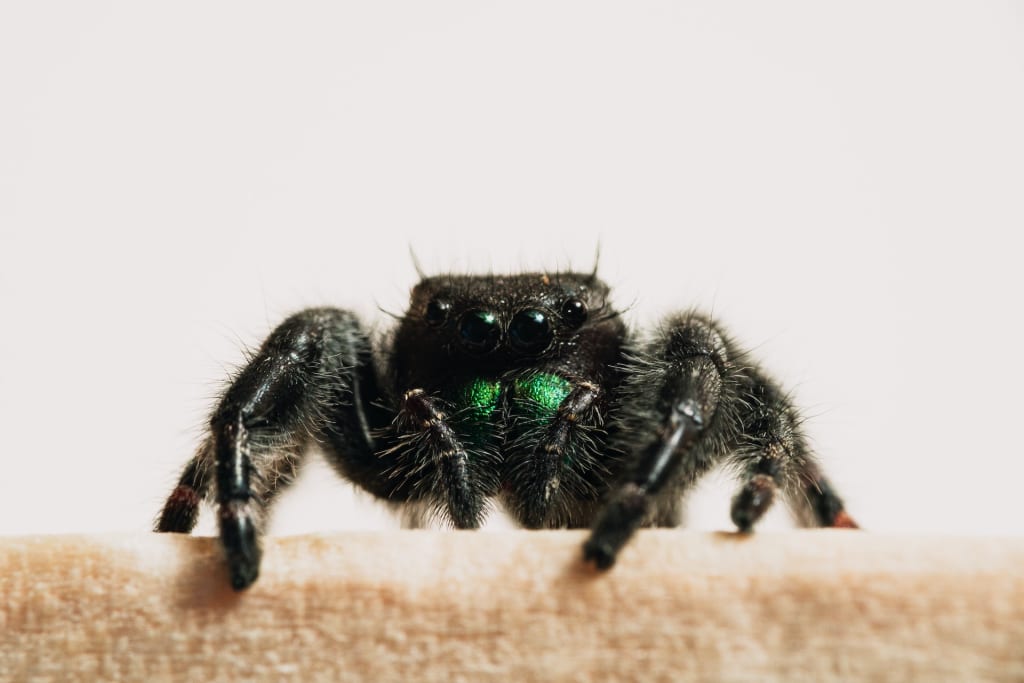
Sexual cannibalism is a phenomenon where the female of a species consumes the male after mating. It is a relatively rare behavior but one that has been observed in several spider species. Sexual cannibalism in spiders has been the subject of much scientific study, as it raises interesting questions about sexual selection, reproductive strategies, and the evolution of behavior.
The most well-known example of sexual cannibalism in spiders is the praying mantis. Female praying mantises consume their male partners after copulation, and this behavior has been widely documented in popular culture. However, praying mantises are not spiders, and sexual cannibalism is much more common in spiders than in mantises.
One of the most famous examples of sexual cannibalism in spiders is the black widow spider. Female black widows are notorious for consuming their mates, and this behavior has been observed in the wild and laboratory settings. The male black widow spider approaches the female cautiously during mating. Sometimes, he will even offer a nuptial food gift to appease her before attempting to copulate. However, even with these precautions, the female may still attack and consume the male during or after mating.
So why do female spiders engage in sexual cannibalism? One theory is that it is a way for the female to gain additional nutrients that can help her produce more eggs. The male spider is a convenient source of protein, and by consuming him, the female can replenish her energy reserves and increase her chances of successfully reproducing. This theory is supported by the fact that sexual cannibalism is most common in species where the female requires a lot of energy to produce eggs.
However, sexual cannibalism is not always advantageous for females. In some cases, the male may be more valuable alive than dead. For example, some male spiders will mate with multiple females, and by remaining alive, they can mate with more partners and increase their chances of passing on their genes. Additionally, in some spider species, the male may be needed to help care for the offspring, and by consuming him, the female would be jeopardizing the survival of her young.
Despite the potential drawbacks, sexual cannibalism is a behavior that has evolved in many spider species, and it raises interesting questions about the evolution of behavior and the forces that drive sexual selection. Some scientists believe that sexual cannibalism is a form of female mate choice, where the female selects the male most likely to provide her with the nutrients she needs to reproduce successfully. Other scientists argue that sexual cannibalism is driven by male competition, where males compete with each other to mate with the female and avoid being eaten by her.
Regardless of the underlying causes, sexual cannibalism is a fascinating behavior that has captured the attention of scientists and the public alike. It is a reminder that nature can be beautiful and brutal and that the drive to reproduce can lead to unexpected and gruesome outcomes.
Sexual cannibalism is not a behavior that is unique to spiders. It has also been observed in other animal species, including insects, amphibians, and mammals. However, spiders are particularly well-known for engaging in this behavior, and several factors may make sexual cannibalism more common in spiders than in other animals.
One possible explanation is that spiders have a relatively high metabolic rate and require a lot of energy to produce eggs. Female spiders are often much more significant than males and must consume much food to support their reproductive efforts. By consuming the male after mating, the female can gain an additional source of nutrients that can help her produce more eggs.
Another factor that may contribute to sexual cannibalism in spiders is the high competition between males for access to females. In some spider species, the male actively seeks out the female and tries to mate with her, even if it means risking his life. This competition can lead to aggressive behaviors and sometimes sexual cannibalism, as the female may attack and consume the male to eliminate competition and gain additional nutrients.
Interestingly, not all spider species engage in sexual cannibalism. In some species, the male may avoid being eaten using various strategies. For example, some male spiders approach the female from a distance or wait until she is distracted before attempting to mate. Others may offer the female a nuptial gift of food or silk to distract her and reduce the risk of being attacked.
Disclosure: This post includes content written by AI
About the Creator
Amir Hossain
I blog on everything and anything— hoping my blogs will make your days a bit happier!
Keep reading
More stories from Amir Hossain and writers in Petlife and other communities.
Velveteen Lop Rabbit Lifespan Size Color Diet and Interesting Facts
As we know when people assume Velveteen Lop Rabbit many time the sweet story of the Velveteen Rabbit comes to mind. The name of this breed is not taking from any rabbit, but the book The Velveteen Rabbit have a very cute, sociable, and friendly nature.
By Rabbits Advisor4 days ago in Petlife
Helping Your Elderly Cat Who's Going Blind
When Your Cat Loses Its Sight It can be heartbreaking to watch your beloved kitty go blind. When my cat started to go blind, it was really hard to watch her bump into walls, not to mention the constant loud meowing, which made her sound like she was in excruciating pain. She wasn't. However, she was very confused and scared.
By Janis Masyk-Jackson6 days ago in Petlife
A Transparent Look at Vocal Challenges and Top Stories
Almost three years ago, we shared a resource article that served as a place for people to suggest new challenge prompts. We thought it would be a good idea to refresh that thread, and take the opportunity to answer a few common questions about top stories, how challenges are judged and how submissions are reviewed.
By Vocal Curation Team3 days ago in Resources



Comments
There are no comments for this story
Be the first to respond and start the conversation.