
Introduction
In the vast, arid landscapes of South Asia and parts of the Middle East, where the sun blazes over sandy plains and the terrain is unforgiving, a curious and resilient creature scurries between crevices and underbrush. This is the Sanda lizard, a reptile both enigmatic and culturally significant. Known scientifically as Saara hardwickii, and commonly referred to as the Hardwicke’s spiny-tailed lizard, it is affectionately called “Sanda” in Urdu and Hindi.
To the average observer, the Sanda may appear as just another lizard. But to those familiar with it—be it herpetologists, local desert dwellers, or traditional medicine practitioners—it is far more than that. It is a marvel of adaptation, a symbol of folklore, and a misunderstood reptile that walks the delicate line between myth and science.
This article explores the ecology, behavior, cultural context, and conservation issues surrounding the Sanda lizard, presenting an in-depth and original look at this desert-dwelling reptile.

1. Taxonomy and Classification
The Sanda lizard belongs to the genus Saara, within the family Agamidae, which includes a variety of spiny-tailed lizards. Saara hardwickii is native to the Indian subcontinent, particularly the dry areas of Pakistan and northwestern India, where there are several species. • Scientific Name: Saara hardwickii
• Family: Agamidae
• Common Names: Spiny-tailed lizard, Sanda, Hardwicke’s spiny-tailed lizard
• Distribution: India, Pakistan, parts of Iran and Afghanistan
Unlike many lizards which are swift and predatory, the Sanda is primarily herbivorous and has a bulky, almost prehistoric appearance. Its spiny tail, from which it derives its common name, is one of its most distinguishing features—used for defense against predators and rival lizards.
⸻
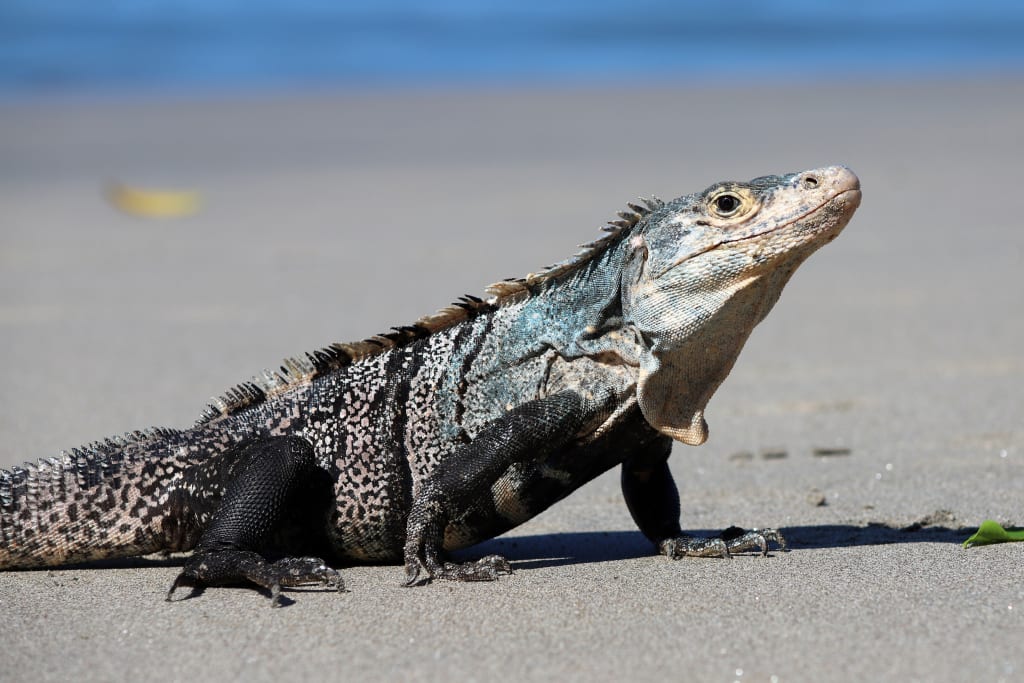
2. Physical Properties The Sanda lizard is medium to large in size, with adults reaching up to 40 cm (16 inches) in length. Its appearance is rugged, a testament to its desert-dwelling nature.
• Body: Squat and thickset, covered in rough scales that help retain water and conceal the body. • Coloration: Generally grayish-brown or sandy, sometimes with darker patterns. The coloring helps it blend seamlessly into desert terrain.
• The tail is muscular, broad, and covered in concentric spine rows. It is not only a defense tool but also a key feature for temperature regulation.
• Limbs: Strong and adapted for digging, allowing the lizard to create burrows to escape extreme heat or cold.
Interestingly, its spiny tail also plays a role in communication and dominance displays among males during the breeding season.
⸻
3. Habitat and Range
The Sanda is an extreme creature. It thrives in semi-arid to arid environments, preferring sandy or rocky deserts, open scrublands, and grasslands.
Preferred Habitats:
• Sandy plains and dunes
• Rocky plateaus
• Agricultural lands in dry regions (occasionally)
Its natural distribution covers large parts of Rajasthan, Gujarat, Punjab, and Sindh, stretching into arid regions of Baluchistan and Khyber Pakhtunkhwa. It is a creature well-adapted to a life of solitude under the blistering sun, and can survive temperatures that would drive most creatures into hiding.
⸻
4. Diet and Feeding Behavior
One of the most unique aspects of the Sanda lizard is its diet. Unlike most lizards, which are insectivorous or omnivorous, the Sanda is primarily herbivorous. It feeds on a variety of desert plants and vegetation.
Diet Includes:
• Leaves of desert shrubs
• Flowers
• Succulent stems
• Occasionally insects (especially during juvenile stages)
Its digestive system is adapted to extract maximum moisture and nutrients from fibrous, dry plant material. This ability to survive on minimal water and thrive on hardy vegetation makes it incredibly suited for desert life.
⸻
5. Behavior and Ecology
The Sanda lizard is diurnal, meaning it is active during the day, especially in the early morning and late afternoon when the temperatures are more tolerable.
Notable Behaviors:
• Burying: It spends a lot of time down below ground. These burrows are not only shelters but also temperature-regulated safe zones.
• Basking: Like all cold-blooded reptiles, it relies on external heat sources. You’ll often find Sanda lizards basking on rocks or flat earth.
• Territorial: Males are known to defend their territory, especially during mating seasons. They may engage in tail-waving, head-bobbing, and physical confrontations.
Socially, Sanda lizards tend to live in small clusters where multiple burrows exist close to one another, forming what some researchers call “lizard villages.” However, each lizard maintains its own burrow.
⸻
6. Reproduction and Life Cycle
Mating typically occurs during the warmer months, often triggered by seasonal changes in temperature and light. Males become more aggressive during this time and engage in combat to win access to females.
Reproductive Facts:
• Mating Season: Late spring to early summer
• Egg-laying: Females lay eggs in burrows, where they remain undisturbed until hatching.
• Clutch Size: 5 to 20 eggs, depending on the size and health of the female.
• Incubation Period: Around 50–60 days
• Hatchlings: Miniature versions of adults, independent from birth.
Juveniles are more vulnerable to predation and tend to remain hidden more than adults.
⸻
7. Threats and Predators Despite its rugged defenses, the Sanda lizard faces numerous threats in the wild.
Natural Predators:
• Birds of prey (e.g., eagles, hawks)
• Snakes
• Wild canids like jackals and foxes
However, humans pose the greatest threat to this species. In rural South Asia, Sanda lizards are hunted extensively—not for food, but for the so-called “Sanda oil,” which is believed to have aphrodisiac properties. This oil, derived allegedly from the lizard’s fat or tail, is sold in traditional markets despite there being no scientific evidence of its efficacy.
⸻
8. Folklore, Myths, and Illusions Sanda lizards are deeply embedded in rural South Asian folklore. In villages across Pakistan and India, stories of its “magical” properties are common. Many people believe that Sanda oil can make men more powerful, which has led to a black market industry that eats reptiles. In reality, most of these claims are based on myths. Scientific studies have consistently debunked the notion that Sanda oil has any medicinal value. Nevertheless, the belief persists, causing a sharp decline in Sanda populations in many regions.
Additionally, some people fear the Sanda due to its appearance—mistaking it for a venomous or dangerous creature. This often leads to unnecessary killing, despite the fact that the Sanda is completely harmless to humans.
⸻
9. Conservation Status
The Sanda lizard is not yet listed as endangered globally, but local populations are under severe pressure. Over-hunting, habitat destruction, and illegal wildlife trade have all contributed to its decline.
Key Conservation Challenges:
• Poaching for traditional medicine
• Agricultural expansion reducing natural habitat
• Lack of awareness among locals
Conservationists argue that the Sanda lizard must be protected through stricter enforcement of wildlife laws, public education campaigns, and habitat preservation efforts.
Some sanctuaries and desert national parks—such as the Desert National Park in Rajasthan—have started monitoring Sanda populations as part of broader conservation efforts.
⸻
10. The Role of Sanda in Ecosystem Balance
Despite being overlooked, the Sanda lizard plays an important role in its ecosystem. As a herbivore, it helps in controlling desert plant growth and contributes to the health of the soil through its burrowing behavior. Its burrows also provide shelter for other small desert animals like insects and rodents.
Moreover, as prey for larger predators, it forms a vital link in the desert food web. The extinction of the Sanda would ripple through the ecosystem, affecting both predators and plant life in these delicate habitats.
⸻
11. Future Outlook
The future of the Sanda lizard depends on a combination of science, policy, and education. If public perceptions can be shifted—if people begin to see the lizard as a valuable part of the desert landscape rather than a “living potion”—there’s hope for its long-term survival.
Key Strategies Moving Forward:
• Implement anti-poaching units in high-risk regions
• Regulate and ban the sale of Sanda oil
• Promote eco-tourism to create value around live wildlife
• Engage with local communities to replace harmful myths with scientific knowledge
⸻
Conclusion
The Sanda lizard is a creature that thrives quietly in some of the most extreme environments on Earth. It doesn’t boast flashy colors or a ferocious nature. It doesn’t make headlines or dominate sports arenas. Yet, it embodies something far more profound—the art of survival in balance with nature.
By understanding, respecting, and conserving the Sanda, we do more than protect a species. We preserve a part of our natural and cultural heritage, reminding ourselves that every creature, no matter how small or misunderstood, has a place in the tapestry of life.
About the Creator
Keep reading
More stories from writers in Petlife and other communities.
MY CREW
My service dog Keva died and my kids told me to go find another dog but my heart wasn't in it until I went to the shelter and our eyes met and you were big black with brown on the edges but I knew you were more than the shelter said. those big brown eyes and that happiness as we met. It wasn't just a flicker; it was a beacon. A warmth that seeped into the hollow space Keva had left behind. You wagged your tail, not with the anxious desperation of a dog eager to please, but with a confident, knowing joy, as if you'd been waiting for me all along. The volunteers kept calling you "Colin" a generic name for a dog who was anything but. I saw a soul in those eyes, a silent understanding that transcended the sterile environment of the shelter.
By Vera Myles7 days ago in Petlife
MY CREW
shared affection. "Welcome home, my boys," I murmured, my voice thick with emotion, as I watched you two navigate your burgeoning friendship. The late afternoon sun cast long shadows across the living room, illuminating the dust motes dancing in the air, and for the first time in a long time, my heart felt truly, completely at ease. The journey from the ache of loss to this vibrant, hopeful present had been unexpected, profound, and undeniably beautiful, all thanks to the silent language of love spoken by these magnificent creatures who had found their way into my life.
By Vera Myles7 days ago in Petlife
"Scream 7" (2026): Running out of Fresh Screams
This is the seventh time we’ve had a Ghostface crisis. Scream 7 is the latest edition of the Scream franchise. Sydney Prescott and her family are under attack by another anonymous killer dressed in a Ghostface costume. While having issues with her daughter, Tatum, they run from the bloody murders, trying to determine who is behind it all.
By Marielle Sabbaga day ago in Horror



Comments
There are no comments for this story
Be the first to respond and start the conversation.