
Prehistoric Shark - Megalodon
Oceans largest shark

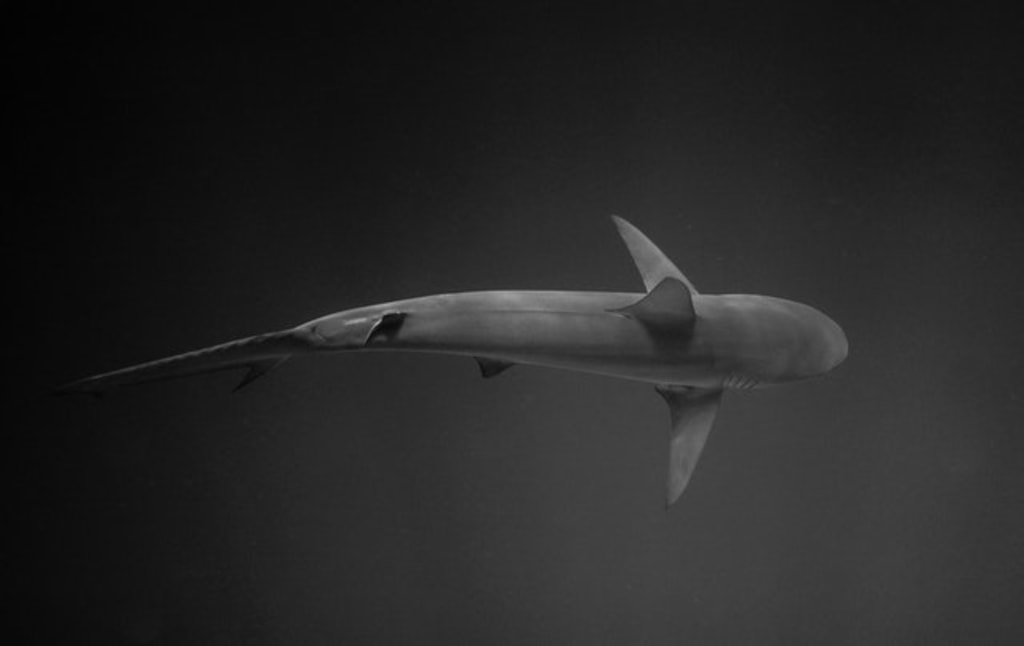
Approximately 23.5-36 million years ago, Megalodon’s roamed our vast oceans and is considered to be one of the most feared creatures of all time. With the name translating to ‘Big Tooth’ these creatures could grow 47-67ft long, over double to triple the size of our current Great White Sharks.
The Otodus Megalodon (also priorly known as Carcharocles Megalodon) had cosmopolitan distribution, meaning they could be found in all the seas across the globe, excluding the colder waters of the Arctic and Antarctic; Megs were known for preferring tropical, warmer waters.
Their jaw span was as wide as 6ft, with rows of over 270 serrated teeth, which have been found to be between 3-7inchs long; a human today, could very easily be swallowed whole. Scientists use the measurements of the creatures fossilised teeth to estimate its size, as most of its body was made up of cartilage and thus harder to become fossilized.
Big creature like this, required a bigger appetite. Due to the distinctive bite markings these teeth could leave on bone, its be figured the animal’s diet would usually consist of larger prey, such as whales, large fish and even other sharks. Being this high in the food chain, most of the creatures in the sea were seen as a dinner option.
There is still some mystery and debate as to how these magnificent creatures were able to grow so large. One theory may have been in relation to how warm the oceans of the time would have been in comparison to today’s freezing temperatures, which would encourage growth. Another could be a correlation to infants eating each other whilst in the womb – what a way to get a head start.
Megalodon pups would hatch whilst still in the womb and grow further by eating their unborn siblings in utero. By the time they came to be birthed, these pups would be over 2 meters in length – day 1, and already bigger than a grown human. Mother Megs would actively move towards coastal areas with more shallow waters, which they’d use as nurseries. There their pups would be safer from other predators in the water.
Being a descendant of Lamniformes, Meg’s are classed as mackerel sharks and generally thought of being direct relatives of our current Great White. This is, however, a misconception, as it’s been found that Meg’s are of a different lineage of shark, moreover, the last of this line; therefore making them more distant relatives. From this, most today believe Megalodon’s look similar to Great Whites, but on a much larger scale. In fact, Meg’s would have had a much shorter nose, and a flatter, square-like jaw.
Eventually, the massive shark ultimately became extinct. Most theories of why revolve around the planet going into a state of cooling. As the ocean temperature cooled, most of the Meg’s prey either died off or adapted to parts of the ocean the shark could not follow. Further this, with the temp dropping, many of the creature’s nurseries for birthing were destroyed, making it harder for the creature to reproduce safely.
Many wonder today of the chances of a Megalodon being still alive in our waters. Due to the temperatures of our current climate, this is more than unlikely. Furthermore, it be hard for something so big, to go unnoticed for so long in our oceans. That is unless you're taking a Jonas Taylor approach to the possibility; a concept from Steve Alten's novel series 'The Meg' in which Taylor believes the creature to be surviving at the bottom of the Mariana Trench.
It’s been stated as highly unlikely by scientists, but it’s a thought that may cross your mind next time you take a swim out in the middle of the ocean.
About the Creator
Elizabeth Perks
A handful of words written by me in an attempt to better my work.
Keep reading
More stories from Elizabeth Perks and writers in Petlife and other communities.
Tatt~Master
— Assembly Line Tatt Machine ~ Impressions to Impress — As I begin to understand more about the Tattoo Phenomenon. I've written silly, yet verbatim, dating site anecdotes in 'Frazzled.' So let me ask you: Would you be More attracted to someone slathered with tattoos, or Less?
By Jay Kantor6 days ago in Humor



Comments
There are no comments for this story
Be the first to respond and start the conversation.