
Paragard Broad Spectrum Wormer for Large Dogs 20Kg: The Ultimate Guide
Read this blog to know - Paragard Broad Spectrum Wormer for Large Dogs 20Kg: The Ultimate Guide

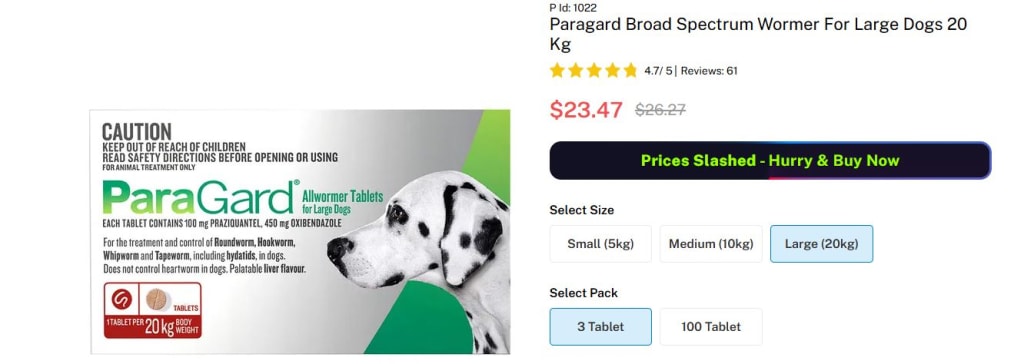
Every pet parent wants their furry companion to live a long, healthy life. But hidden dangers like intestinal worms can harm your dog’s health without you even realizing it. That’s why a trusted worming treatment is essential—and for large breeds, Paragard Broad Spectrum Wormer for Large Dogs 20Kg is one of the best solutions available.
Why Worming Is Essential for Dogs
Dogs are naturally curious and often sniff, lick, or even eat things they shouldn’t. This behavior puts them at risk of contracting worms.
Common Intestinal Worms in Dogs
Roundworms – common in puppies and can spread to humans.
Hookworms – cause anemia and serious illness.
Whipworms – lead to chronic diarrhea and weight loss.
Tapeworms – often carried by fleas.
Risks of Untreated Worm Infestations
If left untreated, worms can cause:
Malnutrition
Weak immune system
Poor growth in puppies
Lethargy and digestive issues
What Is Paragard Broad Spectrum Wormer?
Paragard is a broad-spectrum worming treatment designed to protect dogs from multiple types of intestinal worms. For large dogs weighing 20Kg and above, Paragard provides an effective and easy-to-use solution.
Key Benefits of Paragard for Large Dogs
Broad Protection – Targets four major types of intestinal worms.
Vet-Trusted – Recommended by veterinarians for reliable worm control.
Easy to Give – Comes in tablet form, can be given directly or mixed with food.
Active Ingredients in Paragard Wormer
Praziquantel – Highly effective against tapeworms.
Oxibendazole – Eliminates roundworms, hookworms, and whipworms.
Together, these ingredients provide full-spectrum coverage for your dog.
Which Worms Does Paragard Treat?
Roundworms (Toxocara canis, Toxascaris leonina)
Hookworms (Ancylostoma caninum, Uncinaria stenocephala)
Whipworms (Trichuris vulpis)
Tapeworms (Dipylidium caninum, Taenia spp.)
Why Paragard Is Ideal for Large Dogs (20Kg and Above)
Large dogs require stronger doses for effective worming. Paragard’s 20Kg+ formulation ensures accurate dosing, making it ideal for breeds like Labradors, German Shepherds, Golden Retrievers, and other big dogs.
When to Give Paragard Broad Spectrum Wormer
Puppies – every 2 weeks until 12 weeks of age, then monthly until 6 months.
Adult Dogs – every 3 months for ongoing protection.
Breeding Dogs – consult your vet for tailored guidance.
How to Administer Paragard to Your Dog
Paragard is available as a flavored tablet. You can:
Give it directly by mouth.
Crush and mix with your dog’s food.
Hide it in a treat like cheese or peanut butter.
Signs Your Dog Might Need Worming
Visible worms in stool or vomit
Diarrhea or bloating
Weight loss despite eating normally
Dull, rough coat
Scooting behavior (dragging rear on the ground)
How Often Should You Worm Your Dog with Paragard?
Adult dogs – every 3 months.
Dogs in high-risk environments (hunting dogs, farm dogs, dogs in multi-pet homes) – may need monthly treatments.
Safety and Side Effects of Paragard
Paragard is generally safe, but some dogs may experience:
Mild vomiting
Temporary loss of appetite
Soft stools
If severe reactions occur, contact your vet immediately.
Combining Paragard with Other Treatments
For complete parasite control, pair Paragard with:
Flea and tick preventatives (to avoid tapeworm reinfestation).
Heartworm medication (since Paragard does not cover heartworms).
Storage and Handling of Paragard
Store in a cool, dry place.
Keep tablets in their original packaging.
Do not use after expiry date.
Conclusion
Worm infestations can cause serious harm to your dog’s health, but with the right preventive care, they’re easy to manage. Paragard Broad Spectrum Wormer for Large Dogs 20Kg provides reliable, broad coverage against intestinal worms, keeping your dog healthier, stronger, and happier. With regular worming, you’re not just protecting your pet—you’re protecting your entire household.
FAQs
1. How often should I give Paragard to my large dog?
Every 3 months for adults, more frequently for puppies or high-risk dogs.
2. Does Paragard protect against heartworm?
No, you’ll need a separate heartworm preventative.
3. Can Paragard be given with food?
Yes, it can be crushed and mixed into meals or given as a treat.
4. Is Paragard safe for pregnant dogs?
Consult your vet before administering to pregnant or lactating dogs.
5. What if my dog vomits after taking Paragard?
If vomiting occurs within an hour of dosing, contact your vet about re-dosing.
About the Creator
Thomas Muller
VetSupply is a leading online pet store in Australia with a comprehensive range of products that cater to all your pet care needs.
Keep reading
More stories from Thomas Muller and writers in Petlife and other communities.
Ilium Ear Drops: A Complete Guide for Pet Owners
If your furry friend has ever scratched at their ears nonstop or shaken their head like they’re at a rock concert, chances are ear trouble is to blame. Ear issues are one of the most common problems in both dogs and cats, and that’s where Ilium Ear Drops come to the rescue. This ear treatment is trusted by vets and pet parents alike for keeping ears clean, comfortable, and healthy.
By Thomas Muller5 months ago in Petlife
Cleo's First Puppy Show
"How would you feel about doing the Corsicana show in November?" Kathleen asked me last September. Dog exhibitors speak in shorthand that way. It's easier to say "the Corsicana show" than it is to say the "North East Texas American Eskimo Dog Association Show." And yes, "North East." I guess "Northeast" shortened the name too much for some people's taste . . . But I digress. In response, I asked two of the three important questions that every exhibitor thinks, first thing.
By Kimberly J Egan9 days ago in Petlife
Your Cat Is Not Ignoring You… Here’s the Truth
Have you ever called your cat, only to get a slow blink or a flick of the tail in response? Maybe you’ve thought, “Why does my cat always ignore me?” It can be frustrating, confusing, and sometimes even heartbreaking. But here’s the truth: your cat is not ignoring you. Not really. In fact, their behavior is a fascinating mix of instincts, emotions, and subtle communication that most humans completely misunderstand.
By Ahmed aldeabella4 days ago in Petlife
Violence Begets
"Any last words, cowboy?" "None you'd understand, sodbuster." "Funny. That's Marshall Sodbuster to you. But I meant some last nugget that would help us in the adjudication of the myriad offenses counted against you and your gang. I wasn't asking for penitence."
By Adam Diehl5 days ago in Fiction




Comments
There are no comments for this story
Be the first to respond and start the conversation.