
My Dream? Walk to Success
Disabilities and Dog Sports

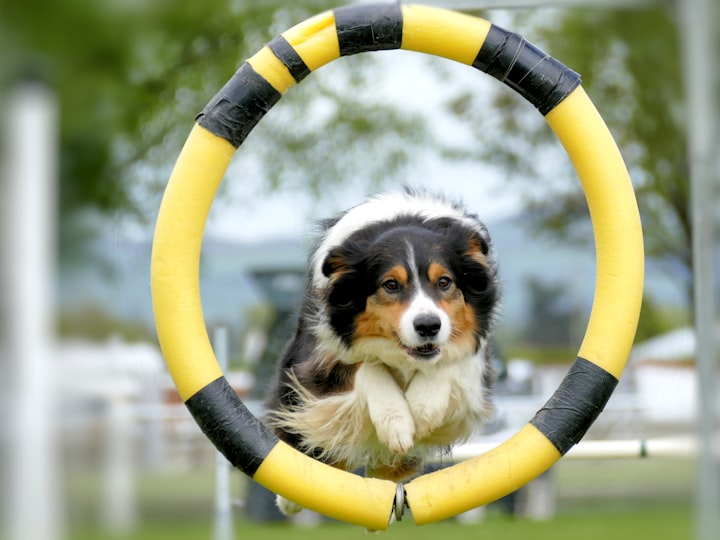
I have a dream. It is not world-changing, at least not for the majority, but perhaps this dream will change some lives for the better. Even if it only changes one, then I have done something. My dream? To encourage those who are less physically able to participate in dog sports, specifically dog agility.
As I say, it is maybe not the biggest of dreams, but for those who I am trying to help, I think it is significant.
I am not someone who deliberately pushes themselves forwards to inspire others. I am not looking for people to recognise me for doing things differently. In many regards, I am quite happy to carry on in the background, doing what I feel is best.
Somehow, this seems to have the opposite effect to what I intend. Over the years my ‘getting on with things’ attitude has led to people seeking me out, asking me to come give a talk, or do a demo, or just show others how and why I am doing what I am doing.

What am I doing? Well, I just go about being me and doing what I feel is right. That means kindness, inclusivity and trying to see things from others’ perspectives. I hate seeing people put into a box and defined by what they can or cannot do. I have had plenty of struggles in my life, from mild learning disabilities and mental health challenges to physical challenges. There is nothing that frustrates me more than seeing people side-lined because some ‘teacher/coach/trainer/educator’ has decided they are impossible to teach anything to.
Quite frankly, I have been that person who was side-lined, made to feel useless and stupid because I was incapable of doing things like the other students.
This sense of being ‘useless’ dogged me through my childhood as I tried to do the things other kids did without a second thought. I struggled with sports, and though I loved to dance, I found learning the moves and perfecting them very hard. Progress for me in these disciplines was slow and it was all too tempting to give up.
I came to believe there was something wrong with me, that I was incapable of doing the things others did. Maybe I was stupid, or just not trying hard enough?
Actually, it turns out I have hypermobility, which means my joints are looser than they should be. It doesn’t sound dramatic, until you come to appreciate the impact it has on the body’s ability to move. To just keep my body upright, my muscles have to work several times harder than a regular person’s because the connective tissue that should hold me together is too loose and allows for excessive flex. Translate that to doing things like running or dancing, and the problem is exasperated.

Hypermobility (which comes in a number of forms and varieties of severity) affects coordination, spatial awareness, and proprioception, to name just a few things. All of these make doing certain activities difficult, even frustrating.
Back as a kid, this was not appreciated, and so I ended up leaving school with a hate for sports and a sense of self-loathing.
Years later, I discovered dog agility, a sport involving sending your dog around an obstacle course. While the dog does the obstacles, the handler is expected to run with them to guide them around. I quickly developed a passion for this sport, but my old childhood issues resurfaced. This time, I was determined not to let that stop me, so I went all out to improve my body and I found I enjoyed the exercise. It was not easy, but I liked the boost of endorphins from a fitness session, and I liked how I was improving. I was beginning to run better, and my coordination did seem improved.
Just as things seemed to be going well, the pain hit. It started with cramps when I was exercising, but was followed by chronic pain in my back, hips, knees, and feet. On top of that I began experiencing frightening episodes where I would come close to passing out. But you know the saying, no pain, no gain. I figured it was just a barrier I had to break through, right?
Wrong. In my efforts to be healthier, fitter, stronger, I was jeopardising my body.
Ignoring the situation did not make things better. I still exercised but now I was in constant pain and a new symptom was chronic fatigue which was debilitating. My body was yelling at me to stop what I was doing, and still I refused to listen, because if I could not run, then how could I do my favourite sport?
Most people will tell you that if you want to do dog agility you need to be able to run. If you can’t then you can still ‘have fun’ but you will never be truly successful, competing in the upper ranks of the sport. I loved the sport, but I wanted to succeed too. Was it truly impossible to accommodate both my passion and my body’s needs?

I found myself at one of those turning points life sometimes throws at you. I had to make a decision, but the scary part was if I went down this new route my body needed, I was going to find myself in the minority. I was going to have to face new hurdles, perhaps a lack of understanding and I had a lot of challenges ahead.
But I could not go on like this. Too much pain. Too much fatigue. Too much risk.
I at last listened to my body. I talked to a fitness specialist who is also a hypermobility sufferer and we discussed at length my needs. Hypermobility means it is easy to over-reach and strain muscles. It means joints can spontaneously dislocate. It means cramps and injuries that never fully heal. It means chronic physical exhaustion because your body is having to work so much harder to keep itself stable than a regular person.
But that is just the tip of the iceberg. Hypermobility is linked to autoimmune problems, including an increased risk of developing arthritis. It is not just a problem with the connective tissue of the joints, but with the tissues throughout the body. It affects the heart, the lungs, the digestive system. It can cause my blood pressure to drop dramatically when I am running, leading to the fainting episodes. It can also cause dizziness and headaches.
The list, in fact, goes on and on.
When I at last decided to listen to my body, I knew I would have to change the way I ran agility. Or rather, I would not run, but I would walk, and I would have to distance handle my dogs. Now, many people did not appreciate this change and the reasons why I was doing it. People thought I was being ‘lazy’ or that I thought it was ‘cool’ to not have to run.

The hurt this caused emotionally was immense. It reminded me of those problems back when I was at school, problems I now knew I could not help. Even explaining my issues did not always work because people could not see my pain, or my fatigue. I was ‘too young’ to be having mobility issues. The spiral of negativity went on and on.
People told me I was failing my dogs, that I would never get the best from them without running. People questioned everything I did, and it was hard, so very hard.
I was very lucky to have a handful of ardent supporters. People who encouraged me, told me to do what I had to and prove the others wrong. They are my back-up when things are rough, when I am being hard on myself, when the nerves and anxiety are kicking in, when the doubts raise their heads. And they have inspired me to be the back-up for others, for those who don’t have support networks like mine.
I have become an advocate for those who train and compete in dog sports with disabilities. Not just agility, but all sports, and not just physical disabilities, but helping those who are neurodivergent. I have discovered a close, soft-spoken community within the dog world who are doing their best to battle prejudice and to be the best dog guardians they can be.
Some of these people have been told by trainers that disabled people cannot meet the needs of dogs, or should not have high drive breeds for sports, or that if they are having a bad day, they are letting down their canine companions.
The prejudice is very real, and it makes people want to hide away, to avoid being seen doing dog sports because of the potential for criticism.
I want to change that. I want people to see there are many ways to train dogs, and many ways to compete in dog sports. I want people who feel they can never compete with their dogs, to see there is a way and to be empowered to try.
I am not alone in this movement, but we are a small community, and our voices are not always heard. Recently, discussions have been raised about hosting special ‘walking agility’ qualifiers. This requires the handlers to compete at a walking pace, whether they are using their own legs or some sort of mobility device. The initial suggestions were onset with problems, it seemed they might falter before they began. The original organiser of the heats dropped them, feeling they were too controversial. Luckily the idea was taken on by someone else and I am supporting them by hosting three heats through my training club, the club that has supported me so much.
There are other things I am doing. I post videos of my dog training showing how to distance handle and discussing how we can overcome physical and mental challenges on our personal journeys. I freely give my time and advice to others just starting on this path. I have always been the sort of person who witnesses a good run on a course and walks up to a total stranger and tells them how well they did. Words are powerful, and they need to be used wisely. I like to use mine to inspire someone.
I am constantly learning because I know I have limitations and potential prejudices too. How can I help dog handlers with vision issues? How can I make my education more accessible to those with diverse learning needs? How can I keep breaking down those barriers so that more people can enjoy their dogs and enjoy training them?
For me, dog training should always be about fun, about developing a bond with our dogs. I believe dogs are amazing creatures, so full of acceptance and love. They do not judge a person if they are in a wheelchair or have panic attacks. I love sharing my life with such wonderful animals and I want others to feel the same and to know that a disability does not make you a bad dog owner.
I know I am playing just a small role in this change, but a journey consists of a thousand steps, and if I make just one person feel better about themselves or inspire one handler to get into dog sports despite their limitations, then I am achieving something.
This was not what I expected when I began my agility journey. It is something that has become much bigger than me. It is a little daunting at times, a little scary, but I am not going to stop, not when there is so much still to do.
About the Creator
Sophie Jackson
I have been working as a freelance writer since 2003. I love history, fantasy, science, animals, cookery and crafts, (to name but a few of my interests) and I write about them all. My aim is always to write factual and entertaining pieces.
Keep reading
More stories from Sophie Jackson and writers in Petlife and other communities.
Off the Leash: The Essential Gear Guide for Adventurous Dogs
There’s something wildly freeing about unclipping the leash and letting your dog move the way they were built to. If you’re hiking in areas that truly allow off-lead exploration, your gear list shifts. No harness. No leash dragging through dust. Instead, it’s about smart, lightweight essentials that keep your dog safe, hydrated, and easy to manage when adventure gets messy. Long walks off lead are less about control and more about preparation.
By Shabbir Ahmad5 days ago in Petlife


Comments
There are no comments for this story
Be the first to respond and start the conversation.