
How To Train Your Dog
Basic Steps on how to train your dog

How to train your Dog
Did you know dogs can be trained to select the Of two amounts? Pieces of cheese were placed Two see-through Cans. The Dogs were asked to select theCan that contained the most cheese. They were able toSelect the correct one! This is basically done by periodic traininggiven to the Dogs
The fact remains that not all Dogs can follow or Listen to all commands given to them base on what they are used to.
Now if you want to successfully train your puppy very well you need to approach them with the right mind-set and steps, firstly you need to learn how your puppy reacts and think to some certain actions. Thereafter you can find a positive ways to motivate him or her to respond to your commands, for example commands like “Go”, “Sit” and “Come”
THE RIGHT TIME TO START TRAINING YOUR PUPPY
Basically it will be very difficult for dogs to adapt to new commands when they are already advanced in age. So the best time to start training your puppy is around 6 or 8 weeks old. At this age puppies are likely adapt to training given to them, because their brains are rapidly developing therefore such commands given to them will be easy for the puppy respond accurately.
You have to Keep training sessions short avoid giving your dog strenuous command, make them fun, and also reward your pup with treats or praise. Make timeout at least up to 10 to 15 minutes throughout the day to make sure your puppy doesn’t get bored of the same routine commands every day. Target a minimum of 5 to 10 sessions daily in the beginning, for a minimum.
Give your puppy a safe place in your home that you can designate as your own, let them have special time for themselves when they need time away from their family. Definitely this will help to prevent any destructive behaviors while they are advancing in age.
Some mistakes people can make while training their do is being not consistent in the training. It is very important that you are consistent with commands and rewards.
Rewarding your puppy with praise for good behavior and stop bad behavior by ignoring it or giving a command to stop the undesirable behavior.
Why not Consider taking your dog on walks, trips to dog parks and hike. An exhausted puppy will not have the tendency to misbehave.
It will be advisable to always start with small tasks and build up to multiple tasks, such as teaching them not to pull on their leash when you take them for a walk.
Avoid giving Physical punishment to your puppy it has a negative impact on them. Like the use of an electric shock collar please don’t used it, as the dog may associate the pain with the wrong actions and develop fear-biting. Positive reinforcement is a better option to train your puppy.
HOW TO CRATE TRAIN A PUPPY
Crate training your puppy is one of the most best decisions you make for both you and your puppy because crating your puppy will keep him/her safe when no one is around, and also it helps in potty training and give your dog a place to retreat when he’s stressed or scared or something.
Sometimes crate training may seem discouraging at first, it’s actually very easy once you learn the basics steps and once you know how to crate train your puppy, you won’t find it difficult to back out.
Putting something special inside the crate is advisable, such as some blankets to make it fluffy and toys or bedding that makes it smells like home. When you take your puppy outside, try to make sure he doesn’t pee or poop in his crate before he goes in. When he’s done reward the puppy with praise and nice treats, then let him come out of the cage when he’s ready.
Firstly try to familiarize your puppy with the crate so that he or she is not afraid to go in. The best way to do this is by putting his rewards inside the crate and giving him a command to go get it inside the crate, you can also give the puppy another command for him to come out of the crate after taking the reward You can as well feed him in his if you want. You can also feed him or her in the crate if you want. When it’s time for bedtime, put the pup in their bed and close the door.
Crate training is an important part of dog ownership and training. A crate is a safe place for your puppy to stay while nobody is around or at night when you’re sleeping, as well as a good place for him to go when he misbehave, most times when puppies are scared the run into their crate is a safe heaven for them.
Crate training is not something that is tedious as one may think. All you need isan appropriate-sized crate and some treats. To start, introduce your pup to the crate by opening it up and letting them go on and feel at home and at its leisure.
Put the the crate in an area of your house where it will be safe and comfortable for your puppy, the crate should be at a well ventilated area and should be made spacious. If you want to crate train your puppy at night, place the crate in your bedroom or next to it. This way, you can keep an eye on them while you sleep and help them feel comfortable and secure by being close to them. Place the crate in a location where they’ll be able to see their love ones if they have any.It is important that you choose the right size of crate. A dog should have enough space in his or her crate so it can stand up and turn around. If they are too big, they might not feel comfortable or safe in the crate. A puppy will feel more secure if it has its own space and isn’t put into congested crate.
Make sure the door of the crate has an easy opening so as to help the puppy exit and enter while no one is around, most puppy has the ability to open their crate by themselves that is another aspect of which you can train your puppy on.
HOW TO STOP PUPPY BITING
The aspect of you training your puppy on how to follow command is very important but most times your dog can be very fast in take such action before you could give a command for them to stop the incident most have occurred.
Some of the reasons why dogs bite even when is not really necessary for them to do so which is likely not. Keeping your dog in isolated place for a long time not taking them for a walk prevent them from knowing how to control themselves when ever they meet with strangers outside this will make them feel threatened whenever someone come close to them, although some puppies are naturally friendly when they meet with people for the first time so far the person does not impose fear on them.
You should avoid using physical punishment on them always, like using electronic shock device, yanking on a choke collar, or a prong collar, intimidation with a finger and physical corrections such as lifting, kneeing, pushing, jabbing or pinning, doing so you are imposing fear on them thereafter making them feel threaten also which can result to them wanting to defend themselves by biting at the slightest provocation, you can read this (BOOK) to get more tips on how to train your dog.
About the Creator
Keep reading
More stories from writers in Petlife and other communities.
The Summer I Was Chosen by a Northern Mockingbird
During the long, suspended days of the pandemic, a wild mockingbird began visiting my driveway and chose me, again and again. What started as a strange encounter became a brief, meaningful connection that I still carry with me.
By Erica Roberts 13 days ago in Petlife
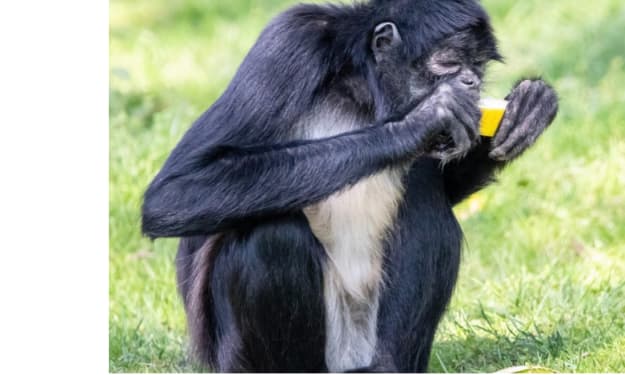
To locate food, spider monkeys employ collective intelligence.
It's difficult to find fruit in a tropical forest. Throughout the seasons, fruit trees come and go, and their places frequently shift. Due to their heavy reliance on fruit, spider monkeys must search wisely in order to succeed.
By Francis Dami5 days ago in Petlife



Comments
There are no comments for this story
Be the first to respond and start the conversation.