
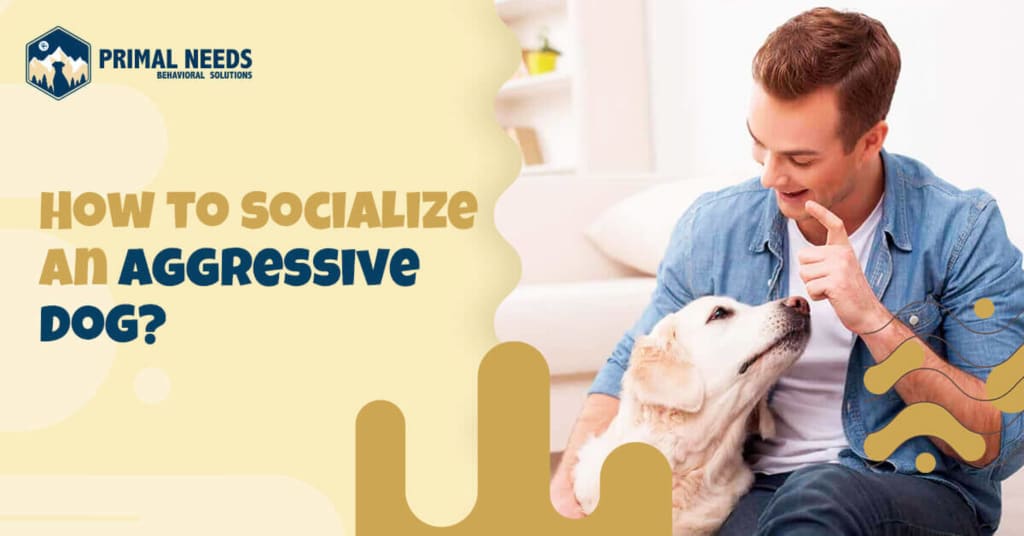
There are many triggers present that can exaggerate dog behavior. Dogs might experience sexual, territorial, possessive, fearful aggression due to a variety of factors. To socialize an aggressive dog, the first step is to analyze what they are aggressive towards, what are their triggers, and whether they show aggression to only a particular human or object. The next step is to take them to the vet to figure out their exact issue.
It often happens that even a trained dog also starts showing aggression. This mostly happens if the owner or the caretaker is incapable of managing the dog and his commands are ignored by dogs. Dogs might be aggressive due to some pain or trauma which the vet can easily analyze. If the dog doesn’t cure even after that, it is advised to take professional training to help socialize an aggressive dog. So, if you are looking for dog trainers then you can count on Primal Needs dog behavioral solutions, they provide the best aggressive behavior dog training in Sacramento, California.
Some Of The Common Behaviors Aggressive Dogs Have Shown
Below are some of the common behaviors that an aggressive dog shows:
- Growling, snarling, or teeth-baring
- Standing rigid, not willing to move on command
- Lunging at humans, other dogs, and external triggers specific to the dog
- Mouthing or, biting without pressure
- Aggressive biting that causes bruises and skin tears.
- Ways To Socialize An Aggressive Dog:
Habituation:
This is a no reward method that decreases or ends the response to prolonged exposure to a particular situation. For example, a dog might get triggered by some movements. Creating resistance or the ability to ignore the situation can help the dog in the long run. This method helps in spontaneous recovery. For example, consistent barking after getting triggered by an unharmful object can be ignored by the owner to teach the dog that it will get no attention.
Conditioning and desensitization:
Positive and negative conditioning can be used to calm aggressive dogs. For example, dogs can get triggered by listening to the doorbell. To teach a dog not to be afraid of such a situation, a voice recording of the bell can be played regularly in front of it. Appropriate conditioning can make the dog stop reacting to the bell.
Counterconditioning:
This method teaches the dog to replace bad behavior with a more favorable response. This is done by relaxing the dog during the triggers and making its body posture and expressions submissive.
Positive Reinforcement:
This method allows an optimistic approach for training such dogs. It helps create a positive and healthy relationship between the dog and the owner. For example, disciplining dogs by saying command words like ‘no’ or ‘stay’ can prevent them from reacting negatively to another animal’s presence.
Negative reinforcement:
Often mistaken as punishment, this method instills discipline in the dog through strict methods. For example, keeping the dog on a leash or holding it tight when it wants to attack something can be examples of negative reinforcement. Though these methods are unpleasant, it protects others and the dog from harm.
Second-order reinforcement:
These are signals that pair rewards like food or petting with good behavior. This includes clicker training which rewards dogs when they are well behaved even during triggers.
Overlearning:
Useful for treating fear aggression, this method increases resistance and delays forgetting. Automatic responses like the ‘knee-jerk’ reaction in humans are taught to overcome anxiety.
Harsh tools:
For overly aggressive dogs, tools like pinch collars, muzzles, e-collars have to be used. Prong collars, for example, can cause a slight discomfort of the neck showing it that it’s behaving badly. To socialize an aggressive dog, muzzles can be used to train shy dogs. Some dogs are nervous in normal social situations. Putting them on a muzzle before fun activities like playtime can make them associate it with enjoyable social situations.
Medication:
Combined with the above-stated methods, medications prescribed by vets can be used to train aggressive dogs. Despite the negative side effects, drugs have been useful to treat fear aggression, compulsive behaviors, reduce anxiousness, and normalize their emotions.
Primal Needs is Aggressive dog trainers in Sacramento who have experience in training a large variety of dogs and are the best dog obedience trainers in Sacramento. They train dogs manners, obedience, and deals with behavioral issues in a dog. They easily adapt to any dog and create a relationship with the dog. The training varies within dogs and their comfort level. Trainers follow balanced dog training methods to teach obedience, manners and cure mental problems of dogs. They ensure that dogs develop a mindset synonymous with their owners so that both can live in harmony and have an enjoyable time. They also help dog owners who want more impulse control on their dogs in a home environment.
More than training, aggressive dog trainers in Sacramento educate the dog so that owners can have a successful bond with them. They have been successful in stopping behaviors like nipping, leash pulling, and separation anxiety. For young pups, they introduce basic commands like sit, stand, offer crate training, and increase the socialization of the dog. For dogs lacking control, trainers provide muzzle conditioning and build confidence through restraining training.
Many dogs suffer from fear, OCD, anxiety that might lead to veterinary noncompliance. These trainers teach dogs inside the home environment and the outside world. They do this by teaching leash obedience like loose leash walking, introductions, and increasing socialization. By doing this, they train the dog to live freely without a leash obediently and without distractions.
About the Creator
Mehak Kapoor
Dog Trainer in Sacramento, California
Keep reading
More stories from Mehak Kapoor and writers in Petlife and other communities.
Primal Needs – Best Dog Obedience Trainers in Sacramento
Dogs can be really friendly, comforting, and obedient. After you buy or adopt a dog, you will have to train the dog with the best manners. You can help them learn tricks and skills, and make sure they obey you so that you can maintain peace with each other. Dogs can be trained easily by their owners, but you can also hire independent trainers, training schools, and websites to train them better with professionals. Dog training professionals can help you train your dog into making them a better dog with good obedience and manners. Among various trainers found in the world, obedience trainers are much sought after by owners of dogs of all breeds. And if you are looking for the best place to find obedience trainers, Primal Needs Behavioral Training stands at the top of the list, as they provide the best dog training in Sacramento. This write-up will tell you all you need to know about dog obedience trainers in Sacramento and the services they provide.
By Mehak Kapoor4 years ago in Petlife
A Dart at Dusk
Seconds ago, the sullen sun set on the two of us… my exuberant furry companion and me. A fresh breeze embraces us, delivering welcome relief from the day’s oppressive heat. His typical stumbling and staggering along — apace with a sloth — has turned into trip-trapping, high-stepping, almost skipping along.
By Angie the Archivist 📚🪶2 days ago in Petlife


Comments
There are no comments for this story
Be the first to respond and start the conversation.