
Every cat owner is acquainted with their cat's 'horking' sound, which culminates in a compact fur sausage being deposited on the floor every week or two. After cleaning up a few hairballs, most owners lose interest, but you should be aware of how they form, how to avoid them from occurring as often, and the difficulties that might occur.
Unlike most dogs, who would take a lick or two at their paws and consider themselves groomed, cats are grooming machines. Even small kittens will begin grooming at a young age, and this will continue throughout the cat's life.
When a cat licks herself, her tongue is coated with little hooks that readily pick up dead and loose hairs. Cats spend a significant amount of time cleaning throughout the day, therefore the potential to gather hair is excellent. The hair that the tongue picks up is eventually ingested and enters the digestive system. The majority of the hair consumed goes harmlessly through the stomach and intestines and ends up in the litter box. However, some always stays and will eventually grow into a hairball.
Apart from being nasty, most hairballs are harmless to your cat. Unfortunately, a hairball obstruction may arise in the stomach or intestines — in the stomach, a mega-hairball can grow that takes up the whole area of the organ. There are certain indicators that your buddy may be suffering from a hairball:
• Your cat may become constipated because the hairballs block regular stool passage; conversely, your cat may have diarrhea because the hairballs' intestinal irritation causes food to travel too fast through the system. • Cats suffering from a blockage have little energy and will just lay about. • If your cat tries to vomit (dry heaves) but is unable to do so, the hairball may be too huge to release normally. • When a blockage develops, appetite plummets rapidly. • A huge hairball might push on the cat's lungs, causing him to cough and wheeze.
At this time, you must visit your veterinarian to have him or her fix the hairball issue. The abdomen of the cat will be palpated first, followed by an x-ray. If a significant hairball is found anywhere in the gastrointestinal tract, it must be removed surgically. This may be quite costly, therefore owners should make every effort to avoid hairball formation in the first place.
It would be entirely absurd to believe that you can fully prevent your cat from ingesting hair, but there are certain things you can do to help reduce hairball issues to a minimal.
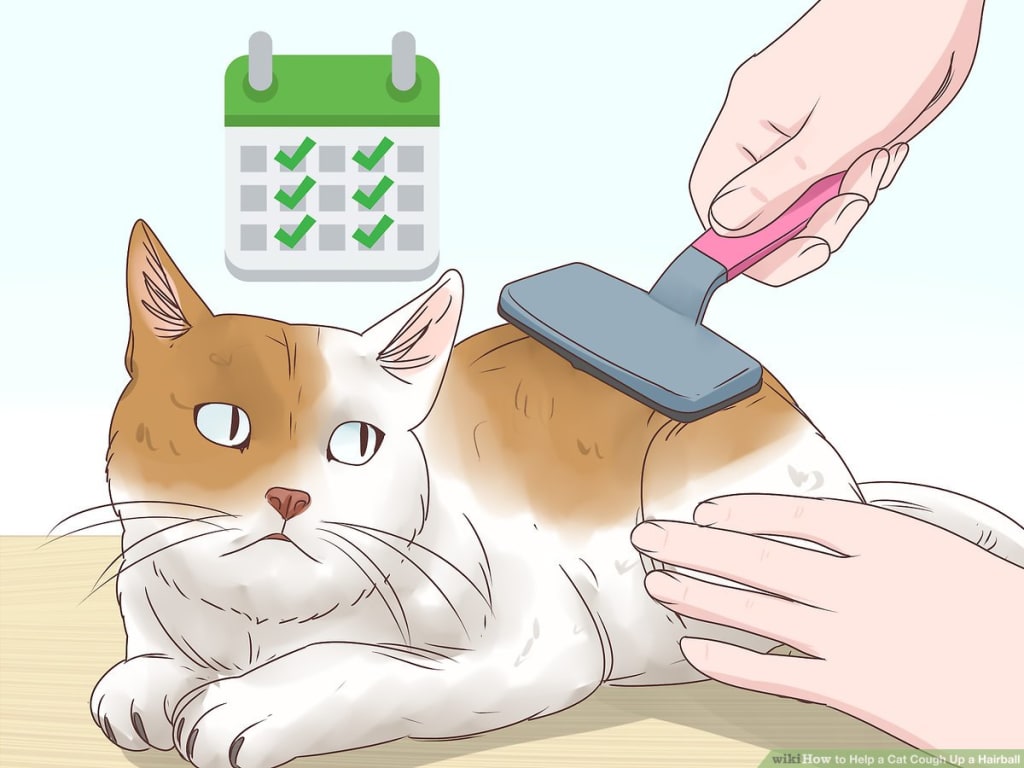
Brush your cat's fur. Unsurprisingly, long-haired cats are much more prone than short-haired cats to produce issue hairballs. A regular brushing of your cat, on the other hand, can assist remove the majority of the loose hairs before they form a ball. Starting this while your cat is young is an excellent idea not just to help avoid hairballs, but also to give you and your cat a chance to connect. After you've finished brushing, rub a moist towel over the fur to pick up any loose hairs. Brushing is essential if your cat sheds on a regular basis.
Some cats are more committed to grooming than others, and these super-groomers are more prone to hairball issues. You may assist the cat maintain his or her tongue in his or her mouth by giving it a new toy or two and playing with it - both of you will probably have a good time.
Oral lubricants may be purchased at pet supply shops or via your veterinarian. These aid in the movement of materials through the digestive tract, and removing the hair out of the system prevents the creation of hairballs.
Fiber-rich cat meals have been shown to help reduce hairballs. However, like with any new meal, introduce it gradually to avoid stomach distress.
When cats groom, they may pick up human hair off the floor, which can be a problem, particularly if the people in the home have long hair - it will fall down with the cat hair. Vacuuming on a regular basis might help keep these hairs out of your cat's stomach.
Finally, don't allow your cat get overweight; obese cats are more prone to be constipated, which delays the natural transit of stuff through the intestines and contributes to hairball formation.
About the Creator
Off the Leash: The Essential Gear Guide for Adventurous Dogs
There’s something wildly freeing about unclipping the leash and letting your dog move the way they were built to. If you’re hiking in areas that truly allow off-lead exploration, your gear list shifts. No harness. No leash dragging through dust. Instead, it’s about smart, lightweight essentials that keep your dog safe, hydrated, and easy to manage when adventure gets messy. Long walks off lead are less about control and more about preparation.
By Shabbir Ahmad6 days ago in Petlife




Comments
There are no comments for this story
Be the first to respond and start the conversation.