
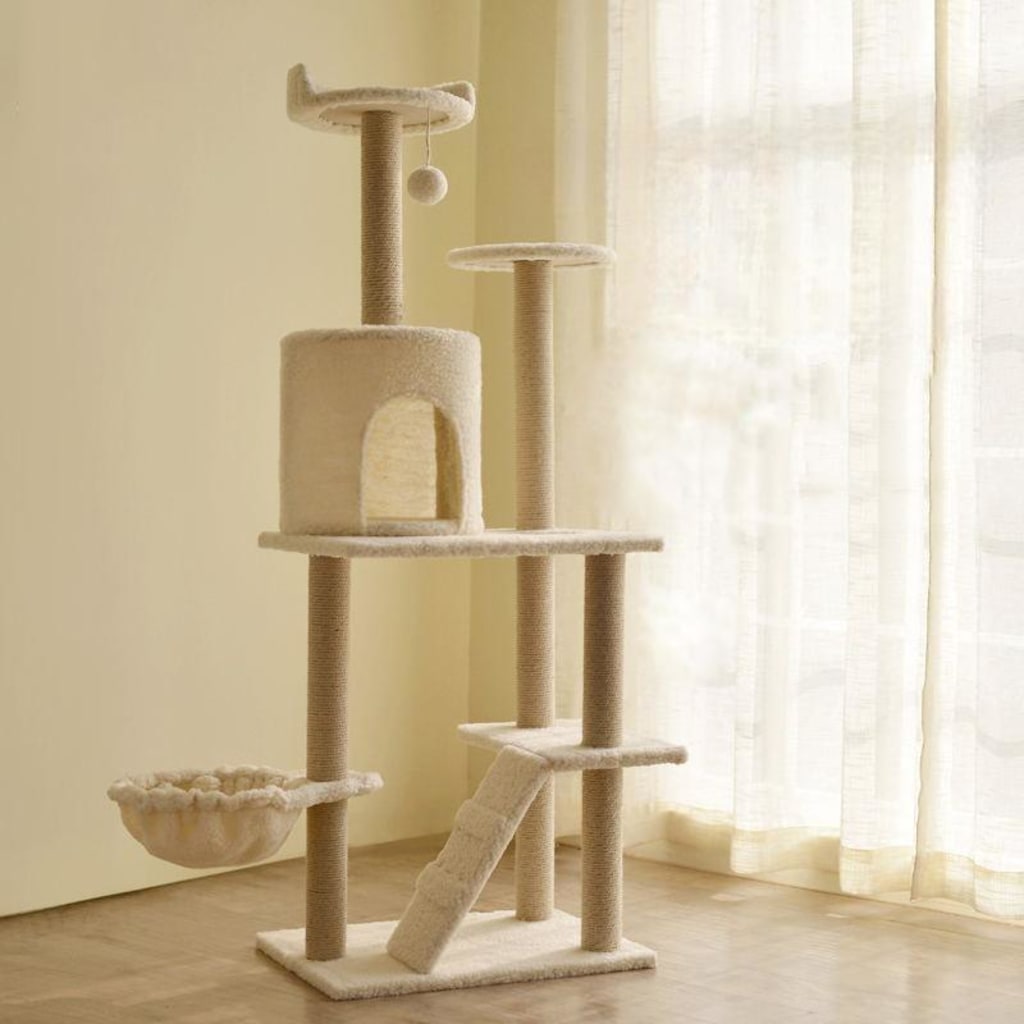
In today’s busy world, more and more cats live indoors with their humans. While indoor living can keep them safe from dangers like traffic and predators, it also comes with challenges. Many cats experience boredom, frustration, and anxiety when they don’t have enough stimulation or safe spaces to retreat to. One simple yet powerful solution to this problem is the cat tree.
A well-designed cat tree is more than just a piece of furniture — it can transform a cat’s environment and significantly reduce stress and anxiety. In this article, we’ll explore how cat trees help support feline emotional health and why they’re a must-have for any cat owner or retailer.
1. Creating a Safe Territory
Cats are territorial animals by nature. In the wild, they mark and control spaces to feel secure. Indoor cats, however, often have limited areas to claim as their own. A cat tree offers them an elevated and defined territory.
Unlike floors or beds that humans and pets share, cat trees belong solely to the cat. This exclusive space allows them to retreat whenever they feel stressed or overstimulated. Having their “own” vertical zone gives cats a sense of control and ownership — two key elements in reducing anxiety.
Retailers and wholesalers who offer cat trees are not just selling pet furniture; they’re offering cat owners a way to create harmony at home.
2. Supporting Natural Instincts
Cats have strong instincts to climb, scratch, and observe their surroundings from high places. Without an outlet for these natural behaviors, they may become restless or even destructive. A cat tree satisfies these instincts in several ways:
Climbing: Cats feel safer when they can survey their environment from above. A tall cat tree gives them this elevated perspective, easing stress and promoting calm.
Scratching: Scratching posts built into cat trees allow cats to release tension, stretch muscles, and mark territory in a healthy way.
Hiding and perching: Multi-level designs often include cubbies or hammocks that give cats quiet spaces to rest and recharge.
Meeting these instinctual needs helps prevent anxiety before it even starts, leading to happier, more balanced cats.
3. Reducing Conflict in Multi-Cat Homes
Anxiety often increases in households with more than one cat. Competition for territory can lead to fights, tension, or behavioral problems. A cat tree can help solve this by creating vertical space that expands the “territory” without taking up extra floor space.
Multiple perches and platforms allow each cat to find their own comfort zone, reducing face-to-face conflicts. When cats can climb and choose their levels, they’re less likely to feel trapped or threatened, which directly lowers stress levels.
For retailers, highlighting these benefits can be a powerful way to market cat trees to multi-cat families.
4. Offering a Predictable Routine
Cats thrive on routine and stability. Sudden changes in their environment — new people, loud noises, moving furniture — can trigger stress. A cat tree can act as a stable anchor in their world.
Even if everything else changes, their cat tree remains their safe place to climb, sleep, or observe. This familiarity gives them comfort during transitions such as moving homes or introducing a new pet.
5. Encouraging Healthy Activity
Lack of physical activity can contribute to anxiety and other health problems in cats. A cat tree encourages movement by giving cats opportunities to jump, climb, and play.
This regular exercise helps release built-up energy and tension. A calm, physically stimulated cat is less likely to display anxious behaviors such as over-grooming, hiding, or aggression. Many modern cat tree designs also include interactive features like hanging toys to keep cats mentally engaged as well.
6. Supporting Emotional Regulation
Just like humans, cats need spaces where they can regulate their emotions. A cat tree offers a retreat where they can decompress and self-soothe.
For example:
If a cat feels overwhelmed by guests, it can retreat to the top perch.
If a loud noise occurs, it can hide inside the cubby hole.
If it wants quiet time, it can observe from a safe height.
This autonomy over their environment is essential for emotional well-being and significantly lowers stress.
7. Ideal for Cats of All Ages
Stress and anxiety can affect cats at any age, but their needs change over time. A cat tree can adapt to different life stages:
Kittens: They love to climb, explore, and play. Cat trees provide safe climbing opportunities that build confidence.
Adult cats: They benefit from elevated perches and scratching posts to maintain physical and emotional health.
Senior cats: A cat tree with gentle ramps or lower platforms allows older cats to retreat and relax without overexerting themselves.
This versatility makes cat trees an excellent investment for long-term emotional health.
8. Easy Way to Enrich Indoor Environments
Many indoor cats experience environmental stress because their surroundings lack stimulation. Enrichment is key to preventing this. A cat tree adds vertical space, textures, and climbing challenges — transforming a simple room into an engaging playground.
Even in small apartments, a single cat tree can give a cat more options for exploration and rest. This is why many behaviorists recommend cat trees as one of the easiest and most effective ways to improve indoor cat well-being.
9. Why Retailers Should Care About This Trend
From a business perspective, the emotional and behavioral benefits of cat trees make them one of the most in-demand products in the pet furniture market. As more cat owners focus on their pets’ mental health and comfort, demand for functional and stylish cat trees is growing globally.
Wholesalers and retailers who highlight stress-reducing features — such as multiple levels, soft materials, eco-friendly wood, or built-in hideouts — can position themselves at the forefront of this trend.
10. Choosing the Right Cat Tree to Maximize Benefits
Not all cat trees are created equal. To truly help reduce stress and anxiety in cats, the design should include:
Multiple levels to offer choices and vertical space
Sturdy structure for safety and confidence
Comfortable surfaces for resting and sleeping
Scratching posts to support healthy habits
Safe hiding spots for emotional regulation
For retailers, offering a variety of cat tree designs ensures they can meet the emotional needs of different cats and attract a wider customer base.
Final Thoughts
A cat tree is more than just an accessory — it’s a powerful tool for improving a cat’s emotional health. By giving cats a safe space, satisfying their instincts, and encouraging physical activity, cat trees can significantly reduce stress and anxiety.
For cat owners, investing in a quality cat tree means creating a happier, more secure environment for their feline friends. For retailers and wholesalers, it’s an opportunity to offer a product that supports both pets and their humans.
As the awareness of feline emotional well-being continues to grow, cat trees are set to remain a cornerstone of modern pet care.
About the Creator
yunyun Li
Labubu obsessed.
Designer toy collector.
Kawaii chaos is my aesthetic.
Don’t ask how many figures I have — I stopped counting 😎
#ArtToys #LabubuLife #ToyAddict #CoolAndCute
Velveteen Lop Rabbit Lifespan Size Color Diet and Interesting Facts
As we know when people assume Velveteen Lop Rabbit many time the sweet story of the Velveteen Rabbit comes to mind. The name of this breed is not taking from any rabbit, but the book The Velveteen Rabbit have a very cute, sociable, and friendly nature.
By Rabbits Advisor4 days ago in Petlife


Comments
There are no comments for this story
Be the first to respond and start the conversation.