
Exploring Different Colors and Patterns in Cat Coats
Cat Coat Colors: Unveiling the Palette of Feline Beauty
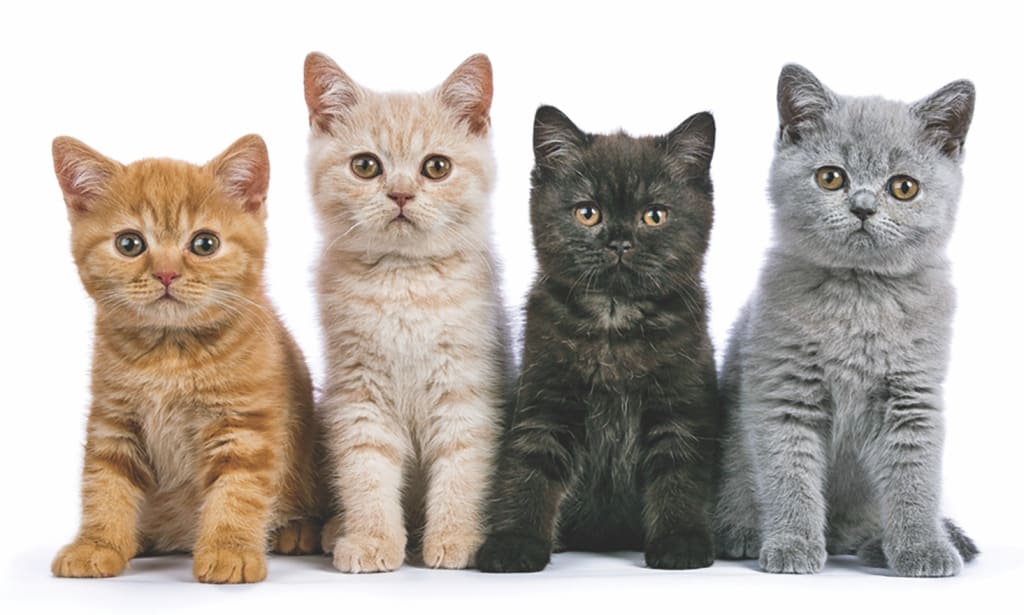
Cats come in a remarkable variety of colors and patterns, each contributing to their unique charm and beauty. From solid colors to intricate markings, feline coats exhibit a fascinating array of combinations. In this article, we will delve into the various types of cat coat colors and explore the science behind these captivating patterns.
Solid Colors:
Solid-colored cats possess coats that are entirely uniform in color, without any visible patterns. Some common solid coat colors include black, white, gray, chocolate brown, and ginger. Solid-colored cats are often associated with specific breeds, such as the Russian Blue or the Chartreux.
Tabby Patterns:
Tabby cats are characterized by distinctive striped, spotted, or marbled patterns on their fur. Tabby patterns can be further divided into four main types:
a. Classic Tabby: Also known as blotched tabby, this pattern features bold swirls and circular patterns on the cat's body. Classic tabbies often have a striped "M" shape on their forehead.
b. Mackerel Tabby: The most common tabby pattern, mackerel tabbies display thin, parallel stripes that run vertically along their bodies. These stripes resemble fishbones, hence the name "mackerel."
c. Spotted Tabby: This pattern features circular or oval-shaped spots instead of stripes. The spots may be evenly distributed or concentrated along the cat's body.
d. Ticked Tabby: Also known as agouti or Abyssinian tabby, this pattern gives the illusion of a solid coat from a distance. Up close, however, you can observe multiple bands of color on each hair shaft.
Tortoiseshell and Calico:
Tortoiseshell and calico cats exhibit a mix of two or more colors, often including black, red, cream, and sometimes white. Tortoiseshell cats have a brindle-like pattern, while calico cats have large patches of these colors. The majority of tortoiseshell and calico cats are female due to the genetics involved.
Colorpoints:
Colorpoint cats, also known as Siamese-type cats, have a light-colored body with darker shades on their extremities, including their ears, face, paws, and tail. The color points can come in various hues, such as seal, chocolate, blue, and lilac. This pattern is a result of temperature-sensitive pigmentation, with cooler body areas exhibiting darker colors.
Bicolor and Tricolor Cats:
Bicolor cats have coats that consist of two primary colors, such as black and white or orange and white. The color distribution can vary, ranging from solid patches to a more intricate pattern. Tricolor cats, commonly referred to as calico cats, feature three distinct colors—usually black, orange, and white—in irregular patches.
Pointed Patterns:
Pointed cats, such as the popular Siamese breed, have a distinct color distribution. Their body is lighter in color, while the ears, face, paws, and tail exhibit darker shades known as "points." The points can come in various colors, including seal, chocolate, blue, lilac, and more.
Smoke and Shaded Coats:
Smoke cats have a solid-colored undercoat with a mantle of silver or white tipping on the top, giving them a smoky or frosted appearance. Shaded cats, on the other hand, have a similar silver or white tipping but with a greater concentration, creating a more pronounced contrast between the colored base and the lighter topcoat.
Tipped Coats:
Tipped cats, also referred to as chinchilla or shaded silver, have a predominantly white or pale base color with darker tips on their fur. The tips can be black, gray, chocolate, or other hues, creating a striking contrast and a shimmering effect.
Van and Harlequin Patterns:
Van pattern cats have a mostly white coat with color limited to specific areas, such as the tail and ears. The colored patches are usually seen on the head and tail, while the rest of the body remains white. Harlequin pattern cats have larger patches of color on the body, often resembling a patched or checkerboard-like appearance.
Color Changes and Variations:
In addition to the various coat patterns, it's important to note that some cat coat colors can change over time. Kittens, for instance, may exhibit different coat colors from their adult counterparts. Some cats may also undergo seasonal color changes, where their coats appear lighter or darker depending on the amount of sunlight they receive.
Dilute Colors:
Dilute cats have colors that appear more muted or diluted compared to the standard versions. For example, a dilute version of black is blue, and a dilute version of red is cream. Dilute colors occur due to a genetic mutation that affects the production of pigment.
Odd-Eyed Cats:
While not specifically related to coat color, odd-eyed cats possess eyes of different colors. One eye may be blue while the other is green, gold, or amber. This unique feature adds to their allure and is often associated with certain breeds, such as the Turkish Van.
About the Creator
The Pet Hub
Pets bring immense joy and companionship to our lives.
Keep reading
More stories from The Pet Hub and writers in Petlife and other communities.
Types of cats as kittens
The world of kittens is a realm of enchantment, where fluffy paws and mischievous antics capture our hearts. Among these adorable bundles of joy, there exists a mesmerizing array of cat breeds, each with its own unique characteristics and irresistible charm. In this article, we will embark on a delightful journey, exploring some of the most popular cat breeds as adorable kittens, showcasing their distinct traits and endearing qualities.
By The Pet Hub3 years ago in Petlife
Off the Leash: The Essential Gear Guide for Adventurous Dogs
There’s something wildly freeing about unclipping the leash and letting your dog move the way they were built to. If you’re hiking in areas that truly allow off-lead exploration, your gear list shifts. No harness. No leash dragging through dust. Instead, it’s about smart, lightweight essentials that keep your dog safe, hydrated, and easy to manage when adventure gets messy. Long walks off lead are less about control and more about preparation.
By Shabbir Ahmada day ago in Petlife
Wisteria Woo RIP
Wisteria Woo Silver~Rhodesian Ridgeback Cane Corso mix~ 7.19.15-3.2.26 My service dog, Wisteria, had been slowing down, having mysterious health symptoms like severe hives and unexplained injury. She went to the vet last month, but unfortunately, not all tests detect all problems. When we returned to the vet yesterday, upon much more concerning symptoms suddenly appearing, we learned she had a very large mass (10inx10in) likely the very aggressive hemangiosarcoma, and that we would only be buying a few months if we went through with treatment.
By K.B. Silver 7 days ago in Petlife


Comments
There are no comments for this story
Be the first to respond and start the conversation.