
Eastern Equine Encephalitis: Health Alert for Michigan Horse Owners
Eastern Equine Encephalitis

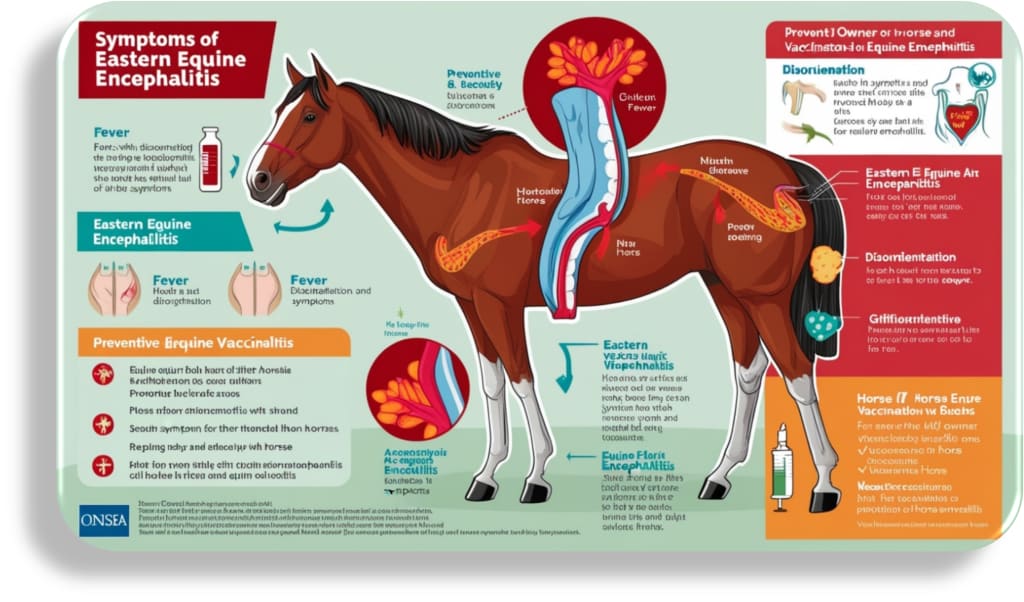
Eastern Equine Encephalitis: Health Alert for Michigan Horse Owners
Eastern Equine Encephalitis is a highly lethal viral infection in horses that was recently reported in Michigan. The report has compelled the Michigan Department of Agriculture and Rural Development to warn horse owners of a filly Standardbred from Van Buren County as its first case in 2024.
Eastern Equine Encephalitis
EEE is a highly deadly viral disease caused by EEEV transmitted mainly through the bites of infected mosquitoes. The virus affects the central nervous system and leads to inflammation within the brain and spinal cord. EEE is an equine disease with very high mortality levels, which are above 90% mortality in horses.
Transmission and Risk Factors
Even though EEE is not contagious to other horses or between humans and horses, mosquito-borne risk factors drive infection. The virus often resides in wetland mosquito breeding areas. Risk is elevated in Michigan from the end of summer to early fall, when mosquitoes are more prevalent. Heavy rains promote the breeding of mosquitoes. This may enhance environmental risk factors for equine health.
Vaccination: The First Line of Defense
The best defense against EEE is vaccination. The American Association of Equine Practitioners has included annual vaccination against EEE as one of the core vaccinations, and several veterinarians suggest vaccinating horses before the mosquito season officially begins—that is, during early spring.
The horse owners who have vaccinated the horses early in the season, especially in southern Michigan, should discuss with veterinarians whether booster shots can be given to continue that protection during the peak activity by mosquitoes. The vaccine, on one hand, saves the individual horses, while, on the other, it minimizes the spread in the equine population.
Awareness of EEE Symptoms
Owners must be watchful for signs of EEE, which may appear suddenly and can sometimes rapidly progress. Some of these signs include the following:
Fever: Body temperature rises to above 103° F
Neurological Signs: Bangs head against objects, cannot walk around coordinated, and dazed walking.
Behavioral Changes: Depression, lethargy, and anorexia
Seizures: When extreme, then there occurs a condition of seizures and unconsciousness.
All these symptoms require a call to a vet in case they manifest. Proper early diagnosis and treatment maximize the chances of being cured.
Mosquito-Breeding Prevention
Prevention from mosquito bites is not in vain, as they set out to decrease their population for the horses. Such prevention may include all of them by horse owners, to mention a few:
Standing Water: Always check the property for sources of standing water where mosquitoes can breed. This is removing water in buckets, troughs, and containers that may collect rainwater.
Repellents: Apply mosquito repellents for horses. Ask your veterinarian to recommend safe and effective ones.
Limit Exposure Time: Horses should be kept indoors during peak mosquito activity times, which are usually early morning and late evening. Shaded, well-ventilated areas can also reduce exposure.
Screens: Screens fitted over barn windows and doors exclude mosquitoes. Fans installed in the barn enhance ventilation.
Larvicides: Standing water cannot be eradicated in some areas. In such areas, larvicides that are environmentally safe may be used to kill the mosquito larvae of mosquitoes.
Role of Horse Owners in Disease Prevention
It would require one to know about EEE and all the diseases found in horses and transferred via mosquitoes. To do that, update your veterinarian constantly to know which vaccines will help and prevent this deadly disease.
Conclusion: Be a part of community action for the reduction of mosquitoes, but try and team up with agricultural or veterinary firms locally and sensitize those around on the matter of EEE.
Recent confirmation of Eastern Equine Encephalitis in Michigan has reminded everybody of the dangers of mosquito-borne diseases. The owners of horses can provide their animals with safe vaccines and proper preventive measures. Equine health and safety require awareness, education, and swift action during mosquito season.
FAQs
What is Eastern Equine Encephalitis?
EEE is a virus that causes inflammation of the brain and spinal cord, mainly by mosquitoes.
How can I protect my horse from EEE?
First and foremost, vaccinate your horse, but also eliminate standing water, use insect repellents, and minimize outdoor exposure during peak mosquito hours.
What are the signs of EEE in horses?
Fever, disorientation, head pressing, seizures, and extreme lethargy
Is EEE contagious between horses, or is it to humans?
No, EEE is not transmitted between horses or from horses to people; EEE is transmitted by a mosquito.
When should I have my horse vaccinated for EEE?
Horses need to be vaccinated every year before mosquitoes begin feeding. Boosters as needed.
If you want more information on equine health and preventives, you can go to the Michigan Department of Agriculture and Rural Development website, or you could ask your vet. Be a responsible and informed guardian of your horse's health.
About the Creator
Shariq Mehmood Khan
My Name is Shariq Mehmood Khan Content writer specializes in developing efficient, well-researched, and reader-friendly content, Shariq has a knack for creating high-quality content that fits the needs of diverse clients.
Keep reading
More stories from Shariq Mehmood Khan and writers in Petlife and other communities.
Top 10 Ranch Horse Bloodlines
Top 10 Ranch Horse Bloodlines Introduction As integral parts of Western ranching, the ranch horse works hard through various cattle work and herding chores on a daily basis as well as through traveling through some of the roughest terrains on earth. Still, all ranch horses are not equal. For most ranches, it's the quality of their bloodlines that determines a lot about the temperament, their body characteristics, and indeed how they might perform at times. Learning about those bloodlines would help people choose the best breeding lines or training practices for the job.
By Shariq Mehmood Khanabout a year ago in Petlife
A Dart at Dusk
Seconds ago, the sullen sun set on the two of us… my exuberant furry companion and me. A fresh breeze embraces us, delivering welcome relief from the day’s oppressive heat. His typical stumbling and staggering along — apace with a sloth — has turned into trip-trapping, high-stepping, almost skipping along.
By Angie the Archivist 📚🪶6 days ago in Petlife



Comments
There are no comments for this story
Be the first to respond and start the conversation.