
Doggone it! How to Train Your Dog to Eliminate Bad Behavior
Stop struggling!


Training a dog to eliminate bad behavior can seem like a daunting task, but it doesn't have to be! With the right techniques and a bit of patience, you can teach your pup to become a well-mannered companion. In this blog post, we'll discuss some effective methods for training your dog to stop doing things like jumping on people, barking excessively, and begging for food. By the time you finish reading, you'll have the knowledge and confidence to get started on the path to a better-behaved dog.
Start with the basics
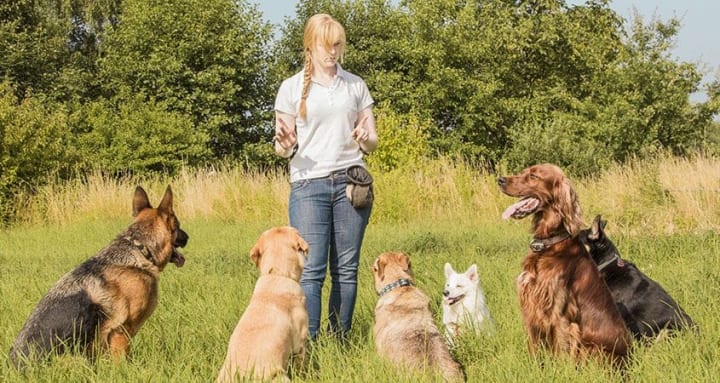
Dog training begins with basic obedience commands. It is important to start teaching your pup as soon as possible so they can learn good behavior from the beginning. Start with simple commands like "sit" and "stay", then move on to more complex ones such as "come", "down", and "leave it". Teaching your dog these commands will help you eliminate bad behaviors by providing them with a way to communicate better with you. You can also use these commands to help guide your pup in difficult situations and distract them from certain behaviors. When teaching your pup, it is important to be consistent and patient; puppies need time to understand and learn. Positive reinforcement will help speed up the learning process and help make training an enjoyable experience for both you and your pup.
Be consistent
Consistency is key when it comes to training your dog. It's important to stick to the same commands, routines, and punishments for bad behavior. This means you should always use the same words for commands, repeat the same routine every day, and use the same rewards or punishments for desired behavior.
Your pup will be much more likely to understand what is expected of them if they are exposed to consistent boundaries and instructions. You should also set a consistent schedule and stick to it. Give your pup a clear understanding of their daily routine, including the same amount of exercise and meals at the same times each day.
With consistency comes structure. Give your pup regular opportunities to practice commands and exercises, and give them plenty of praise and rewards for their success. This will help your pup learn faster and stay focused during training. The more consistent you are in training, the more successful you and your pup will be.

Reward good behavior
When training your dog, it's important to reward good behavior as much as you discourage bad behavior. Whenever your dog does something that you want to encourage, such as going to the bathroom outside or following a command, give them lots of positive reinforcement. You can use verbal praise, treats, petting, or a combination of all three to make sure your dog knows they are doing something right.
Make sure to make the rewards immediate and proportional to the behavior you're trying to reinforce. For example, if your dog follows a command perfectly, give them a large treat or a lot of verbal praise. If they just go outside for a few minutes, give them a smaller treat or a pat on the head.
It's also important to remember that rewards should be given in small doses. Giving too many rewards can make your dog expect them, and eventually they won't respond as well to the reinforcement. Don't forget to take breaks between rewards so that your dog doesn't get used to receiving them.
Rewarding your dog for good behavior is essential in any kind of training. It helps them understand what behaviors are acceptable and encourages them to continue performing those behaviors. With patience and consistency, you will be able to train your dog to eliminate bad behavior and replace it with good behavior.
Set limits
Setting limits is an important part of training your dog. It helps them understand what is expected of them, and lets them know what is acceptable behavior. Setting limits can help reduce bad behavior, such as barking or jumping up on furniture.
The first step to setting limits is deciding what behaviors you want to allow and which ones you want to discourage. For example, if your dog is allowed on the couch, make sure they understand that jumping off and running around the house is not allowed. Once you have decided which behaviors to limit, it's time to establish rules and consequences.
When it comes to enforcing the rules, consistency is key. If you do not consistently follow through with the consequence (for example, a verbal reminder or removing the dog from the situation) then your dog will become confused and less likely to respond to your commands.
It's also important to be patient when it comes to setting limits for your pup. Dogs are intelligent creatures and need time to learn the rules. Establishing clear boundaries and expectations will help your pup learn more quickly. Be sure to reward them with positive reinforcement whenever they obey your commands.
Setting limits for your pup will help them understand what is acceptable behavior and reduce bad behaviors. Be sure to be consistent with enforcing the rules and provide plenty of positive reinforcement along the way. With patience and dedication, you'll be able to teach your pup good manners in no time!

Don't give up
Training your dog to eliminate bad behaviors can be a frustrating process. Even if it seems like you are making no progress, keep going and be patient. Dogs take time to learn and you may have setbacks along the way. Remember that every interaction with your dog is an opportunity to reinforce good behavior and teach them how to behave in a way that pleases you.
Be prepared for some days where you may feel like you're getting nowhere. This is normal! Remain consistent with your expectations, and don't be afraid to go back to basics if needed. If you need help, find a certified dog trainer or behaviorist to guide you. The most important thing is to never give up on your pup!
If you want more information or a full course how to train your dogs, click here ;).
About the Creator
Keep reading
More stories from Anders Gonzalez and writers in Petlife and other communities.
Tired of feeling lost in translation? Check out these easy tips to get by in Spanish!
Are you feeling like your Spanish is holding you back? Are you tired of feeling lost in translation when you travel to Spanish-speaking countries? If so, you're not alone! Learning a new language can be daunting, but it doesn't have to be. With a few easy tips and tricks, you can feel more confident speaking and understanding Spanish in no time. In this blog post, we'll discuss some simple ways to get by in Spanish quickly and easily. Keep reading to find out more!
By Anders Gonzalez3 years ago in Education
The Summer I Was Chosen by a Northern Mockingbird
During the long, suspended days of the pandemic, a wild mockingbird began visiting my driveway and chose me, again and again. What started as a strange encounter became a brief, meaningful connection that I still carry with me.
By Erica Roberts 11 days ago in Petlife
A Letter to the Firestarter
Dear Firestarter, We can all see you, we've been watching you since you began. In case you didn't know we were here before you and we will be here after. We witnessed your rise, your setbacks, your guilt and your lies. We witnessed you start the fire.
By Donny Foleya day ago in Poets


Comments
There are no comments for this story
Be the first to respond and start the conversation.