
Do Animals Feel Grief? Unraveling the Mystery of Emotions in the Animal Kingdom
Exploring How Different Creatures Respond to Death and Loss
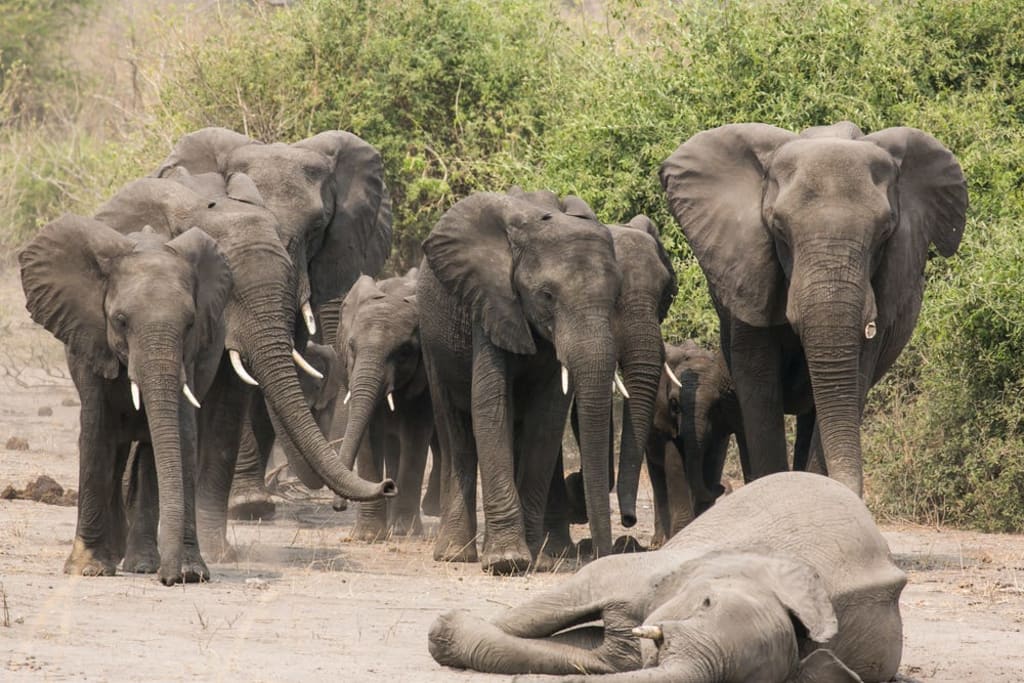
In the vast tapestry of life on Earth, the concept of death isn't exclusive to humans. It's a phenomenon that touches the lives of various species across the animal kingdom. In a world where the boundaries of animal cognition are progressively unraveling, the question of whether non-human animals experience emotions akin to grief has become a subject of intrigue, debate, and ethical consideration.
One poignant case that stirs this contemplation involves Tahlequah, an orca whale whose story captivated the world in 2018. Tahlequah gave birth to a calf that tragically perished within an hour. What followed was an astonishing display of maternal devotion that defied typical animal behavior. Tahlequah steadfastly refused to part from her deceased offspring. For a staggering 17 days and a journey spanning 1,600 kilometers, she supported her calf's lifeless body above water, instinctively nudging it to prevent it from slipping away. This extraordinary act challenges us to question whether it was a mere instinctual response or a poignant expression of grief.
The complexity of this inquiry traces back in time. In 1871, Charles Darwin, a pioneering figure in evolutionary theory, posited that animals, much like humans, experience a spectrum of emotions, including grief. Yet, given the inherent challenge of deciphering the intricate tapestry of animal minds, skepticism endured. Many scientists hesitated to anthropomorphize animal emotions, erring on the side of caution by avoiding projecting human feelings onto non-human creatures. The possibility loomed that animals might exhibit post-death behaviors driven by evolutionary adaptation rather than profound emotional states. The prevailing belief was that human cognitive and emotional capacities stood as a distinctive pinnacle, with other animals predominantly navigating the world driven by instinctual responses.
However, the paradigm of animal cognition experienced a shift in the 20th century. Instances such as Koko the gorilla's poignant response to the death of a companion fostered a broader perspective. Koko, proficient in American Sign Language, demonstrated signs of distress and sorrow upon learning of her companion's demise. She utilized signs like "cry," "sad," and "frown" when presented with an image of another kitten. These glimpses into the emotional lives of animals ignited a reconsideration of the extent to which non-human creatures might experience emotions such as grief.
Contemporary observations and accumulating data now suggest that animals, encompassing mammals and birds, may indeed harbor a capacity for grief. The narrative of Eleanor, an elephant matriarch, and the response of her fellow elephants following her collapse is a testament to the intricate social dynamics and potential emotional undertones within the animal kingdom. Grace, another matriarch, extended empathetic gestures to help Eleanor regain her footing, exhibiting behaviors that resonate with human empathy. Subsequent instances of elephants visiting Eleanor's body and carrying family members' remains underscore a deeper connection between animals and death.
Further scientific investigation into animals' responses to death has sought quantitative evidence. In 2006, researchers delved into the stress hormone levels of baboons, analyzing samples from females who had lost close relatives to predators. The findings revealed elevated glucocorticoid levels in bereaved baboons, accompanied by alterations in their social behaviors. Grooming, a form of social interaction, increased, potentially serving as a coping mechanism to manage grief-like stress. Over time, these stress levels subsided, shedding light on the adaptive nature of animal emotions.
Even primates, our closest evolutionary relatives, present puzzling behaviors in the face of death. Mothers may oscillate between distressing actions like cannibalizing their young's remains and tenderly grooming or carrying the bodies, hinting at an emotional struggle. This dichotomy challenges us to delve deeper into the enigmatic emotional landscapes of animals.
Nevertheless, the profundity of animal emotions remains a realm largely uncharted. Comprehensive comprehension of mourning in the animal kingdom hinges on a more extensive and meticulous exploration of their emotional experiences. The overarching implications are substantial, permeating ethical decisions that range from the captivity of orcas to the separation of dairy cows from their calves.
Amidst the gaps in knowledge, a pertinent quandary arises: how do we navigate the domain of animal emotions without complete understanding? Should we extend the benefit of doubt and attribute a potential for grief to non-human creatures, considering the ethical implications? Alternatively, does assuming emotional incapacity bear more significant ethical ramifications? These inquiries epitomize the juncture where science, ethics, and our collective empathy converge.
In this complex tapestry of life, one thread remains unassailable: the capacity of animals to exhibit behaviors that resonate with our own emotions. While the specifics of animal grief remain enigmatic, our evolving comprehension impels us to approach the subject with sensitivity, respect, and a genuine desire to safeguard the emotional well-being of the creatures we share our planet with.
About the Creator
Keep reading
More stories from Anita Nelima and writers in Petlife and other communities.
Exploring the Transformative Effects of Stretching on Muscles
Imagine a dedicated athlete gearing up for a crucial game. Having gone through the motions of wearing their sports attire and engaging in a proper warm-up routine, they now find themselves at the brink of another vital practice—stretching. It's a common practice among athletes to engage in stretching exercises prior to physical activities in order to preempt injuries such as muscle strains and tears. Yet, a fundamental question looms large: Does stretching genuinely serve as a prophylactic measure against these concerns? And if it does, how enduring are the benefits accrued from stretching? To unlock the answers to these queries, we must embark on a journey within the human body to discern the mechanisms at play when we stretch.
By Anita Nelima2 years ago in Longevity
A Dart at Dusk
Seconds ago, the sullen sun set on the two of us… my exuberant furry companion and me. A fresh breeze embraces us, delivering welcome relief from the day’s oppressive heat. His typical stumbling and staggering along — apace with a sloth — has turned into trip-trapping, high-stepping, almost skipping along.
By Angie the Archivist 📚🪶6 days ago in Petlife
Miss Persephone's Manual to a Seemingly Ordinary Life
Miss Persephone was found at the dining table, her blue eyes swollen, her tears arriving and retreating like the tides of the ocean. Earlier that day, her family had visited her in the retirement home where she had lived for eight years. It was her eightieth birthday.
By Imola Tóth5 days ago in Fiction



Comments
There are no comments for this story
Be the first to respond and start the conversation.