
Dire Wolf
Exploring the Science, Legacy, and Cultural Significance of the Iconic Pleistocene Creature

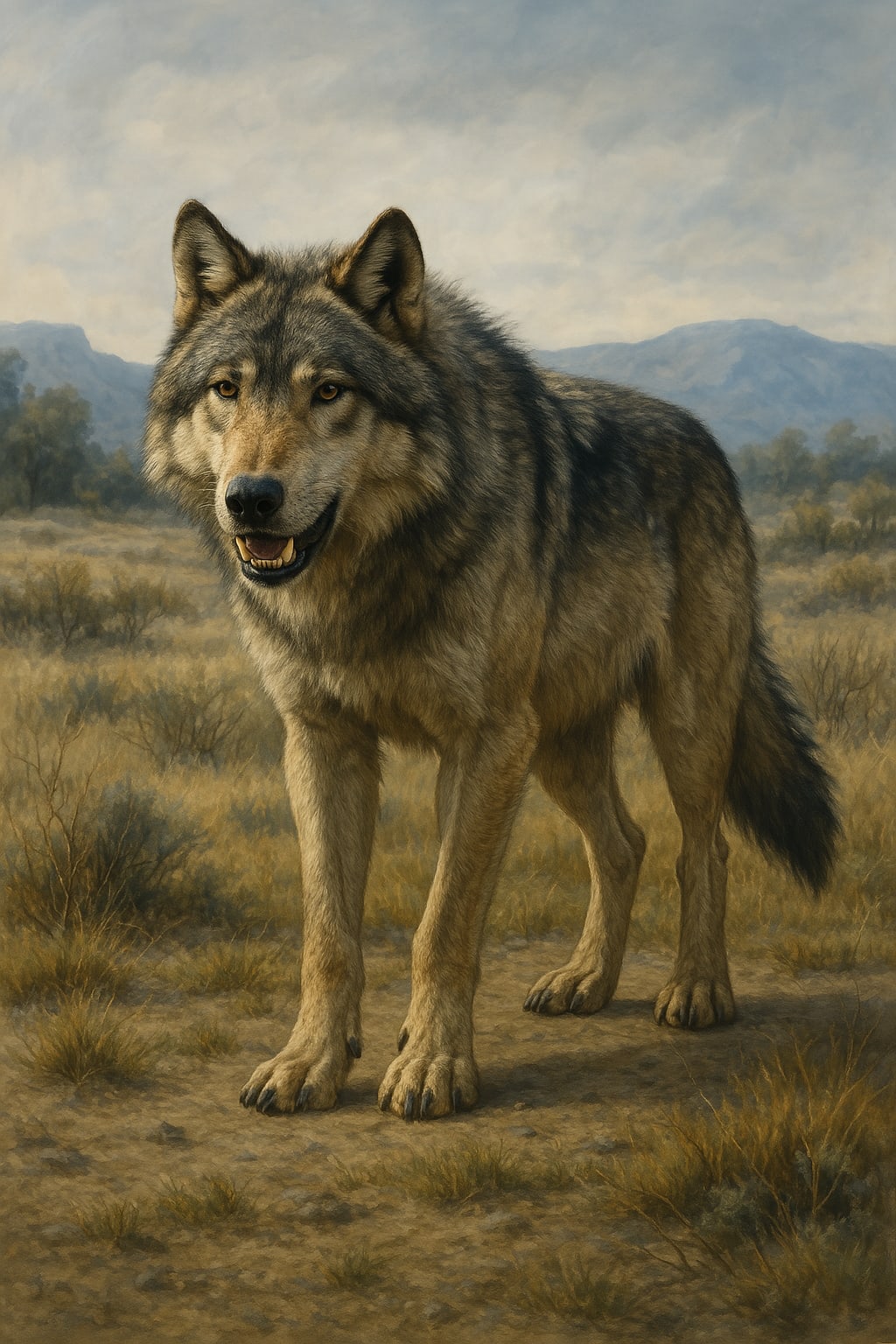
The dire wolf (Aenocyon dirus) is an extinct species of large carnivorous mammal that lived during the Pleistocene Epoch, primarily in North America. Often compared to the modern gray wolf, it was notably larger and more robust, making it one of the most formidable predators of its time. As of 2025, the dire wolf has captured the public’s imagination, not just because of its size and strength, but due to its portrayal in popular media, most notably in HBO's hit series Game of Thrones, where the fictional direwolves were a central part of the plot. However, recent scientific advancements have led to the revival of this iconic species, sparking renewed interest in the dire wolf among the people of the United States and beyond.
Physical Characteristics and Behavior
Dire wolves were much larger than today’s gray wolves, with adult males standing around 30 to 40 inches tall at the shoulder, and weighing between 130 to 150 pounds. Their long, thick fur was well-suited to the cold climates of the Ice Age, providing warmth during the harsh winters. Their physical stature, combined with robust teeth and strong jaws, enabled them to hunt large herbivores such as mammoths, bison, and even horses. Fossil evidence suggests they had larger skulls and teeth than modern wolves, enabling them to capture and kill prey much larger than themselves. Some paleontologists argue that dire wolves could have hunted in packs similar to today’s wolves, although the size and strength of individual dire wolves suggest they might have been capable of hunting alone when needed.
Their teeth, especially their carnassials (molars used for cutting meat), were larger and more powerful than those of other carnivores. The bones in their legs were strong, providing them with a powerful stride to chase down prey in the open plains of what is now North America. With such powerful physical traits, the dire wolf would have been a dominant predator during the late Pleistocene era.
Habitat and Distribution
Fossils of the dire wolf have been found all over North America, with one of the most significant sites being the La Brea Tar Pits in Los Angeles, California. These tar pits preserved an enormous number of prehistoric animal fossils, and it is here that many dire wolf remains have been uncovered. Researchers believe that the dire wolf thrived in a variety of environments, including grasslands, savannas, and open forests, which were abundant with large herbivores, their primary food sources. The species was not limited to a specific geographic region and could be found as far north as Canada and as far south as South America, with fossils even found in Venezuela.
Extinction of the Dire Wolf
Despite its power and widespread distribution, the dire wolf became extinct around 10,000 years ago. The exact cause of its extinction is still a subject of debate among scientists. Some experts believe that the end of the Ice Age led to significant climatic changes that disrupted the ecosystems of North America. As the climate warmed, the once-abundant prey species of the dire wolf began to dwindle, and the habitat that supported them changed dramatically. The loss of prey and the shifting environments likely contributed to the dire wolf's extinction.
Additionally, the arrival of early human populations in North America may have played a role in the demise of the dire wolf. Humans, armed with tools and hunting strategies, would have competed directly with dire wolves for food. Some paleontologists suggest that the hunting practices of early humans, combined with changing climates, may have made survival for the dire wolf increasingly difficult.
The Revival of the Dire Wolf
In April 2025, Colossal Biosciences, a biotechnology company, announced the successful revival of the dire wolf, making headlines around the world. This breakthrough in genetic engineering and de-extinction is a significant step forward in the field of biotechnology. By extracting DNA from preserved dire wolf fossils and using gene-editing technologies like CRISPR, scientists have successfully brought back the species, starting with the birth of three dire wolf pups—Romulus, Remus, and Khaleesi. These pups were born in late 2024 and early 2025 and are part of an ambitious project to reintroduce the species into controlled ecological environments.
The implications of this revival are vast. While the reintroduction of extinct species raises several ethical questions, including the impact on existing ecosystems and the potential challenges posed by reviving a species without its historical predators or prey, it also offers a wealth of scientific opportunities. The project provides scientists with the chance to study extinct species in unprecedented detail, offering a window into ancient ecosystems and the animals that once inhabited them.
The dire wolves, now part of a carefully managed ecological preserve, will not be released into the wild immediately. Instead, researchers plan to monitor their growth and behavior in an environment designed to replicate the conditions of the Pleistocene epoch, ensuring that they have everything they need to thrive.
Cultural Significance of the Dire Wolf
The dire wolf holds a special place in modern popular culture. Its role in Game of Thrones, where the Stark family’s direwolves were integral characters, has made it one of the most recognized mythical creatures of the 21st century. The direwolf's symbolic role in the series, often representing loyalty, courage, and strength, has led to a resurgence of interest in the species. This cultural significance has only grown with the announcement of its revival, with many people eager to see real-life dire wolves and learn more about their true nature.
The dire wolf's place in mythology and media has helped preserve its image as a fierce and noble creature, often standing in stark contrast to other mythical beasts. For many, the dire wolf represents a connection to the ancient past and a reminder of the creatures that once ruled the earth.
Scientific and Ethical Questions
While the scientific breakthrough of reviving the dire wolf has thrilled many, it also raises several ethical questions. Should we be bringing back extinct species, and if so, what does this mean for modern ecosystems? The reintroduction of the dire wolf could potentially disrupt current ecosystems, especially if they are introduced to the wild. The absence of other Ice Age animals—such as mammoths and mastodons—means that the dire wolf might not have the same role it did in ancient times.
Moreover, there is the question of whether we should focus on preserving and protecting the species that are currently endangered, rather than reviving extinct ones. However, advocates of the revival argue that this technology could be used to prevent the extinction of other species, potentially restoring balance to ecosystems in the future.
Conclusion
The return of the dire wolf represents a momentous scientific achievement, blending ancient history with cutting-edge technology. As these majestic creatures return to the world, they remind us of the power and mystery of the animals that once roamed the Earth. Whether in a controlled environment or, someday, in the wild, the dire wolf’s revival is a groundbreaking milestone in the science of de-extinction, bringing us closer to understanding the past while challenging us to think critically about the future of our planet.
LIKE, COMMENT, SUBSCRIBE
About the Creator
Keep reading
More stories from Think & Learn and writers in Petlife and other communities.
Midnight Moon, Empty Heart
The night air carried a chill that crept into the bones. It was past midnight, and the world had fallen silent. Streetlights flickered in the distance, and the countryside around the small town of Ridgefield lay quiet under the glow of the full moon.
By Think & Learn11 months ago in Fiction
Off the Leash: The Essential Gear Guide for Adventurous Dogs
There’s something wildly freeing about unclipping the leash and letting your dog move the way they were built to. If you’re hiking in areas that truly allow off-lead exploration, your gear list shifts. No harness. No leash dragging through dust. Instead, it’s about smart, lightweight essentials that keep your dog safe, hydrated, and easy to manage when adventure gets messy. Long walks off lead are less about control and more about preparation.
By Shabbir Ahmad6 days ago in Petlife


Comments (1)
Nice piece, I wrote something similar to this.