
Animal encyclopedia knowledge: what breeds are the most common pet cats
【The most common types of pet cats】
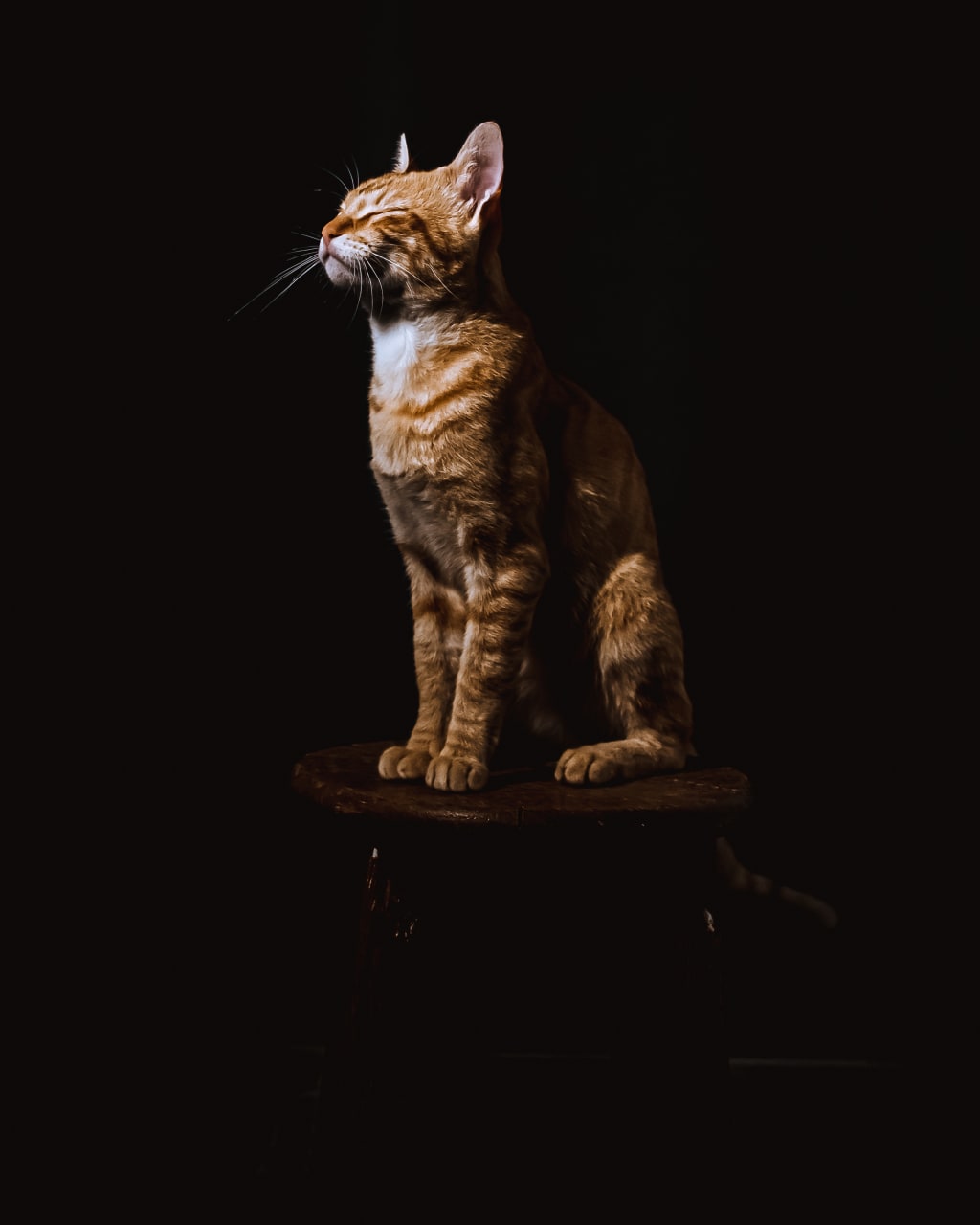
1. Scottish Fold:
In 1951, on a farm in England, a mother cat gave birth to a litter of kittens with folded ears. The owner of the mother cat entrusted some of the kittens to a local shepherd, who decided to try to stabilize the new breed after witnessing the kittens' folded ears. Because this breeding program was carried out in Scotland, the cats bred are the ancestors of what is now called the "Scottish Fold". Although Scottish Folds are basically shorthair cats, they carry the gene for long hair. The long-haired Scottish Fold continued to appear during the breeding process, and after winning a cat show in 1987, the long-haired Scottish Fold finally became another breed of its own.
2. Japanese Bobtail:
Japanese Bobtail, also known as Japanese bobtail cat. This cat is a breed due to genetic mutation. The Japanese Bobtail has a history of about a thousand years in Japan, and some people think that it was introduced to Japan from China or Korea more than 1,000 years ago. The tail of the Japanese Bobtail is only about 10 cm long, and it is the shortest cat breed with the Isle of Man cat. Among Japanese bobtail cats, tricolor cats are the most popular, but there are also many red and white cats and white cats. The appearance of the lucky cat comes from the Japanese bobtail cat.
3. British Shorthair:
The British Shorthair cat has a chubby body, stubby and well-developed limbs, short and dense coat, a big head and a round face, gentle and calm, friendly to people, and easy to keep. It was recognized very early in the UK, and in 1901, the ideal image of its cat breed appeared. It was originally a fairly large and sturdy blue cat, and after 1970, the coat color and appearance began to change. The body is getting smaller and smaller, the variety of coat colors has become rich, and all the changes are towards an elegant style.
4. Non-pure cats:
Non-purebred cats are generally not easily recognized in terms of breed and can be very complex in appearance. Since reproduction is not restricted in any way, the coat pattern varies widely. It is impossible to make meaningful classifications based on facial features. Of course in a particular area there is already a phenomenon of inbreeding of related non-pure cats, so there are many similarities between each other, and then these natural characteristics can be enhanced through selective breeding, and new breeds have emerged. , This is how the latest Singapore cat evolved.
5. Curly cat:
The curly cat is divided into five kinds: Cornish Rex and Devon Rex, Selkirk Rex, LaPerm and Siberian curly cat, the first two kinds. And the latter has a slender body, large ears, short and curly hair all over the body, wavy, and strange in appearance. Curly-haired cats are smart and playful, warm to people, like to play, but afraid of cold, easy to keep.
The curly-haired cat has a high IQ and can adapt to traveling by car, or living in a car house or a unit room. It is an ideal pet for both the elderly and children. The fur of the curly-haired cat is similar to that of a poodle, which is easy to groom and not easy to cause allergic reactions to the owner due to hair loss. This means that people who have allergic reactions to other breeds of cats or who may be prone to asthma can live with the Cornish Rex.
【Behavioural habits of pet cats】
1. If two cats are facing each other, and keep their ears down and pay attention to each other's every move, they will wag their tails vigorously from left to right, indicating that they are in a state of tension or arousal, and there is a possibility of fighting at any time. !
2. When the cat is resting, if you insist on grooming it or restricting its freedom, the cat will wag its tail rapidly to express impatience. And when it is sleeping peacefully somewhere, the cat will not necessarily look back to the owner's call, at most it will only wag its tail as an answer.
3. When the cat voluntarily sleeps in the owner's arms, it is in the happiest mood. At this time, its tail will swing slowly and greatly. Even in sleep, the cat will occasionally shake its tail. When the cat asks for something from you, such as begging for something to eat, it will rub against your feet, its tail is high, the tip of its tail is wagging, and it murmurs, which makes people feel affectionate.
【Personality of pet cats】
1. Cats are insecure animals. When you get close, you can find that it is always on the lookout for injury and is very vigilant. When he likes you, he will show you the softest part of his heart. Snuggling up to you, waiting for a tangible commitment. You can't expect it to offer to be tamed like the watching fox. However, when the cat falls in love with the home, it will occasionally rub the owner's hand and lick the owner's hand. But he would still leave at any time, wandering in a willful way, hoping that there would be a crack in the door and a saucer of milk. Give it a warm nest at any time and embrace it with peace of mind. Then it's your cat.
2. A cat is a vengeful animal. When it likes you, it will show you the softest part of its heart and will not show its claws again. But if you hurt the cat, the cat will remember it very well. The cat is disdain to scratch your face, the cat just leaves and finds a new home and a new nest.
3. Natural loneliness. Wild cats like to be alone and free to move, except for mating in heat, they rarely roost together in groups of three or five. With their wandering qualities, the domestic cat still maintains this solitary character to a large extent. Unlike other domestic animals, it is difficult for cats to adapt to the original wild living environment once they leave people, and they need to rely too much on people to survive. Once the cat runs into the wild, it is easy to mate with the wild cat and become a wild cat again, quickly adapting to the living environment of the outside world and going wild.
4. Love clean habits. Everyone knows that cats are the most hygienic and clean. They wash their faces with their paws and comb their fur with their tongues every day. These are a big reason why people are willing to feed cats. In fact, the "grooming and grooming" of cats is completely a physiological need. Cats lick their fur with their tongues to stimulate the secretion of sebaceous glands, making the hair shiny and smooth, and not easily wetted by water. A small amount of vitamin D can be added for normal bone development. After strenuous exercise, a lot of heat is generated in the body. Since the sweat glands of cats are underdeveloped, it can smear saliva on the coat, and use the evaporation of saliva to take away the heat and play a role in cooling. Regular grooming during depilation promotes new hair growth. By scratching and biting, it can prevent infectious parasitic diseases such as fleas and lice, and maintain good health. The behavior of cats to cover up feces is completely out of the instinct of life. In order to prevent natural enemies from discovering and tracking them from the smell of feces, the ancestors covered up the feces.
About the Creator
A Dart at Dusk
Seconds ago, the sullen sun set on the two of us… my exuberant furry companion and me. A fresh breeze embraces us, delivering welcome relief from the day’s oppressive heat. His typical stumbling and staggering along — apace with a sloth — has turned into trip-trapping, high-stepping, almost skipping along.
By Angie the Archivist 📚🪶4 days ago in Petlife


Comments
There are no comments for this story
Be the first to respond and start the conversation.