
A New Home for Singapore's Stray Cats
The Neko ni Nawa Cat Café


Samuel Chua grew up playing with stray cats. “In public housing in Singapore, it’s illegal to keep a cat,” he said, “So if I wanted a pet, I had to play with the cats that lived in the common areas around our building.” Many Singaporeans today still live in soaring, high-density apartment buildings where pets are not allowed. “This is why people come here,” said Sam.
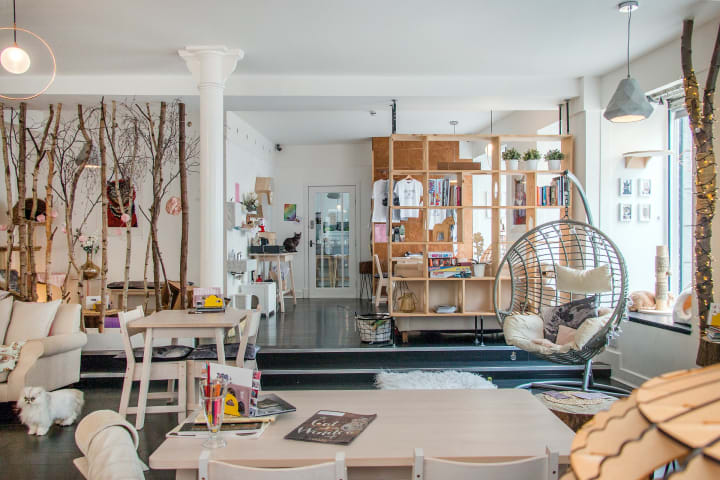
Here is the Neko ni Nawa Cat Café, on Singapore’s bustling Boat Quay. Sam and his partner, Tan Sue Lynn, opened the café in 2013, the first of its kind in the city (there are now five).
Sam and Sue had traveled extensively to Japan for work – she worked in a bank, he in media – where they first encountered the concept of a café where people could come to play and interact with cats. “In all of the cafes we visited there was an amazing calmness and tranquility,” said Sam.
The world’s first cat café, Cat Flower Garden, opened in Taiwan in 1998. The café quickly became a popular destination for locals and tourists. The café was so popular with Japanese tourists that one opened in Tokyo in 2005. These days, Tokyo is home to 39 such cafes. Cat cafes are becoming popular globally, sprouting up across Europe, Asia and North America.
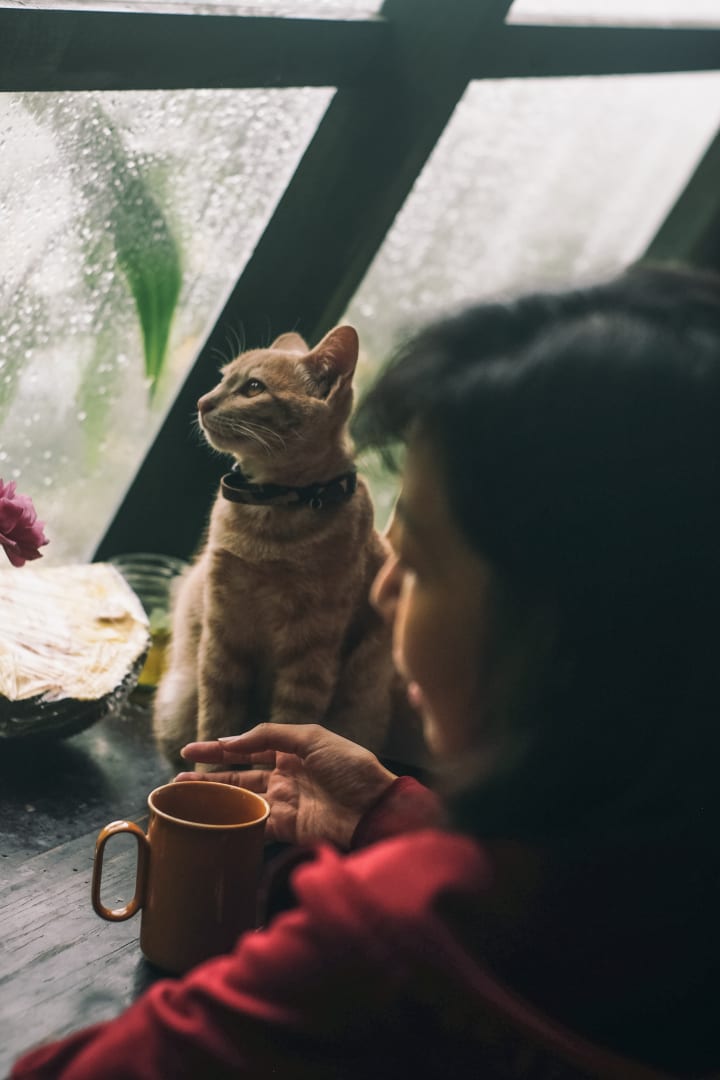
“As in Japan, many people in Singapore work long hours and have stressful jobs,” said Sam. “People come to Neko ni Nawa to relax, unwind and have an experience that they can’t find any other way.” Sam and Sue call it ‘cat therapy’ and they point to research that shows that a cat’s purring has a therapeutic effect on humans. “People move to a lower frequency when they come here,” said Sam.
When Sam met Sue, she had a cat named Marbles. Sam said that he found to his surprise that spending time with an animal had a remarkable effect on him; he felt relaxed and calmer when he played with Marbles. Interacting with pets can reportedly lower blood pressure and reduce anxiety and stress.
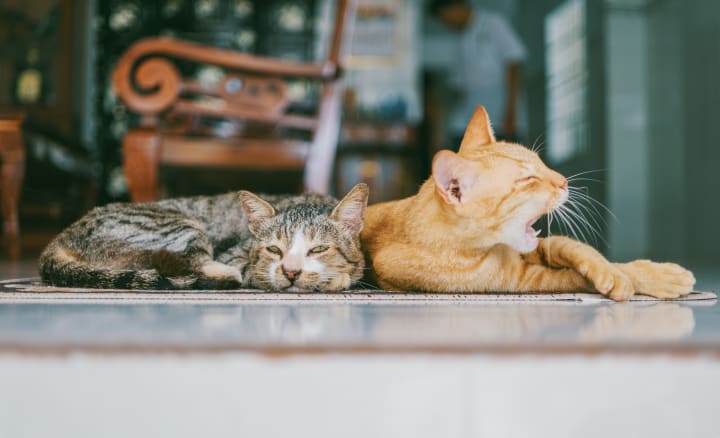
The Japanese Ferray Corporation filled their Tokyo office with cats to help employees relax and increase productivity.
After Marbles died, Sue cried for two weeks, mourning Marbles as a member of the family. Sam also felt the loss keenly. “We wanted to honor his memory by letting other people share the experience of affection and interacting with cats that we had been privileged to know,” said Sam.
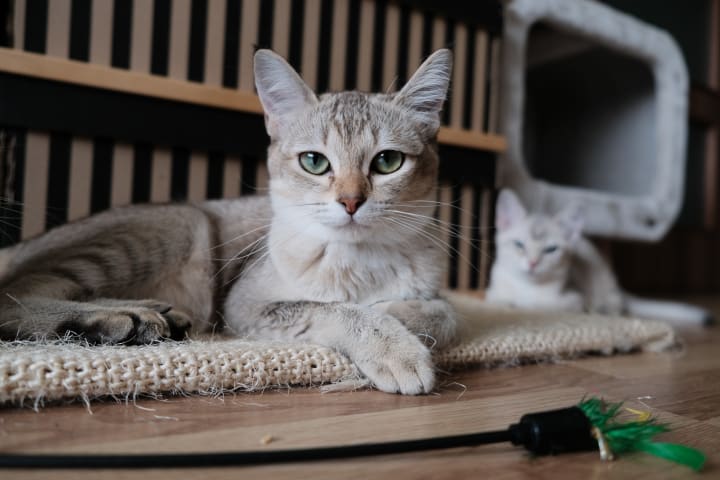
Neko ni Nawa is modeled closely on Japanese cafes. The café has a large open, sunny room, with seats along the wall for humans and plenty of linked, cat towers and blocks for the felines. And strict rules: no children under seven are allowed, visitors must first remove shoes and wash their hands, be gentle with the cats, and not pick them up or disturb them if they’re sleeping. For many Singaporeans, said Sam, this is their first experience of touching animals.
Sue and Sam began to think of opening a cat café in Singapore, but they faced a major obstacle: Singapore Health Authorities had no idea how to regulate sanitation and hygiene issues for such a business and were reluctant to create a precedent.
In addition, both Sam and Sue were new to the idea of running their own business, and neither had ever worked in a restaurant. They spent about a year researching and travelling to cat cafes in Japan, speaking with owners. Sam said he also did a lot of online reading about cat breeds, grooming, health and nutrition. He and Sue discussed using pedigree cats, as the Japanese cafes did. However, Sam said, he was driven by the memory of playing with stray cats when he was a boy and wanting to help them in some way.
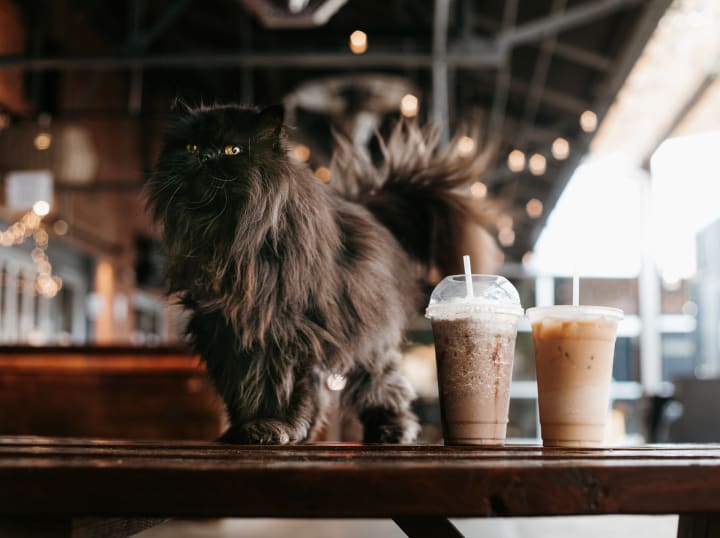
The couple decided that they wanted to fill their cat café with strays, both to illustrate to people the extent of the homeless feline problem in Singapore and to deter people from buying expensive, pedigreed cats when so many cats needed homes. “We wanted to dispel myths about strays,” said Sam, “We wanted to show people how important just love and good food are.”
Stray cats are a serious issue in Singapore, with an estimated 80,000 cats living in parks and around buildings. The Agri-Food and Veterinary Authority (AVA) and the Cat Welfare Society jointly fund a program that pays for the cost of sterilizing stray cats.
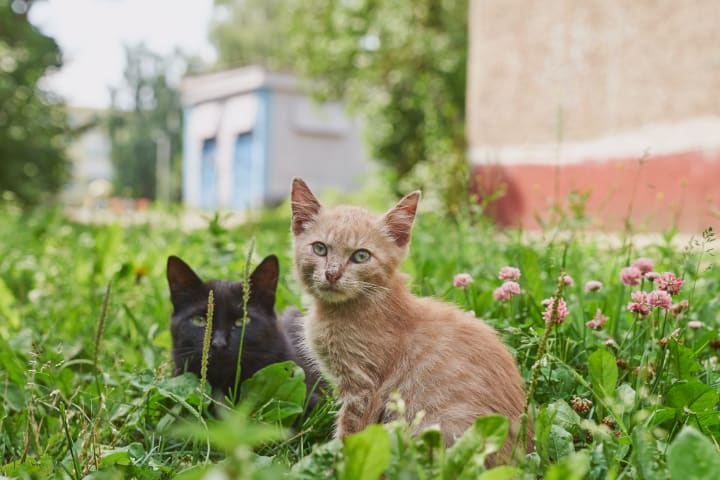
Sam got to know a network of cat rescuers, private individuals who feed strays and catch them to be sterilized.
Rescuers are a very close-knit group and Sam said it took him a long time to gain their trust. Initially, he said, they were worried that the cafe wouldn’t last and the cats would be discarded a second time.
Now, said Sam, rescuers bring them cats that need a home; cats that the rescuers feel would not be able to survive on the streets. ”We have five cats that were recovered as kittens, and one pair that was fished out of a canal,” said Sam.
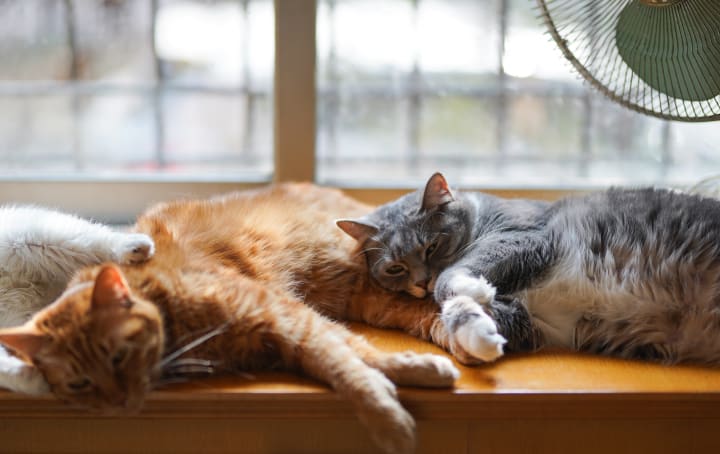
The cats keep the names that their rescuers have given them. The current roster includes Brown Monkey, Skittles, Little Miss Muffet, Luna and Baloo. A local veterinarian makes house calls.
After Sam was able to convince the Singapore Health Authorities that the cats would have no access to the kitchen, and that their litter boxes would be placed in a separate area, the authorities finally agreed to license Neko ni Nawa.
Even then, Sam and Sue spent several months integrating the cats into their new environment – and with each other - before they felt they could open to the public. Sam laughed, “That’s when I realized our cafe would definitely be a labor of love,” he said. “We were spending money on rent and utilities, but couldn’t open until we were sure the cats were ready for people.”
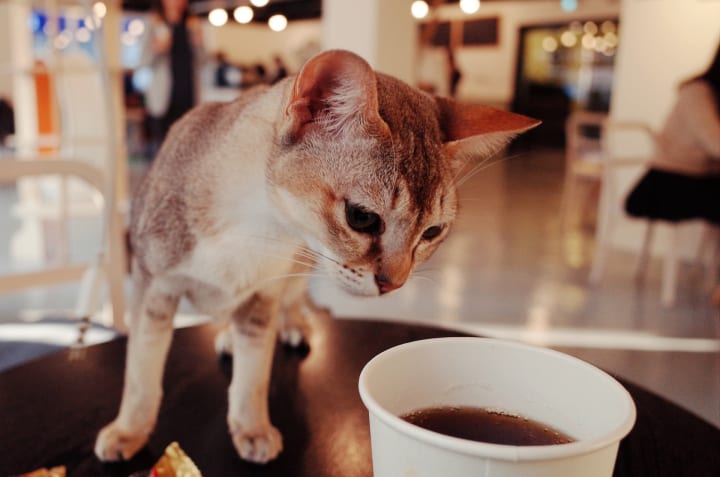
Sue left her previous job to focus full-time on managing Neko ni Nawa. (“The café can only support one of us,” said Sam.) The café has strict rules about food: no savory foods can be sold, as the smell would entice cats; food is served in sealable boxes and all drinks have lids.
Sam maintains that with the right care, good nutrition and a loving environment you can turn mistrustful, scrawny alley cats into loving, gentle, soft creatures. He had me touch several of the cats. Their fur was like angora. I was surprised and said so. Sam explained his philosophy that a healthy diet, regular vitamins and pro-biotics will reverse most of the neglect and hardship the cats have suffered.
“We want to show people what is possible with adopting cats,” said Sam. “People can see and touch for themselves, to understand that adopted cats are beautiful and affectionate.”
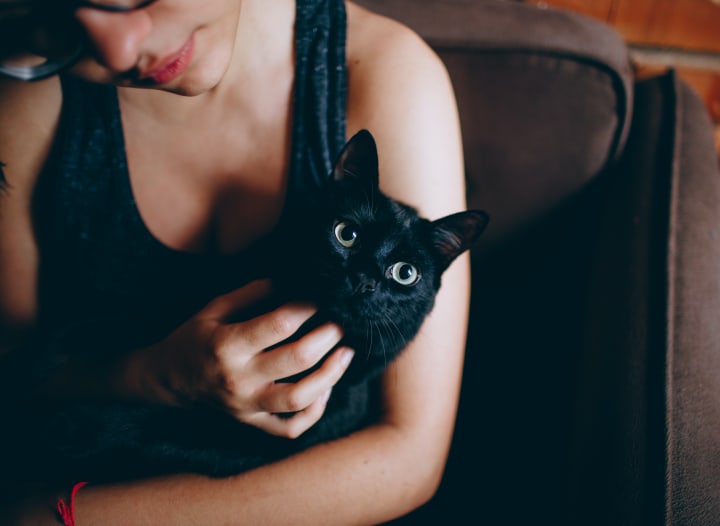
Sam and Sue want to help reduce the number of strays in Singapore, which often face a short, diseased and stressful life. “The more people get our message,” said Sam, “The fewer cats will be abandoned.” The couple offer workshops for people who are considering adopting stray cats and plan to become a go-to advice center for new pet owners.
About the Creator
Liz Sinclair
Amateur historian who loves travel and lives in Asia. I write 'what-if' historical stories, speculative fiction, travel essays and haiku.
Twitter: @LizinBali. LinkedIn: sinclairliz
Keep reading
More stories from Liz Sinclair and writers in Petlife and other communities.
Ten Things I Hate About You
Dear Mr. Sanderz, Do you want to know why I call you Mr. Sanderz? That was the name written over Winne the Pooh's door. My use is ironic. You're like Pooh would have been if he was a mogwai and someone fed him honey after midnight and he turned into a Gremlin. You have claws, sharp teeth and a bad attitude.
By Liz Sinclair4 years ago in Petlife
Off the Leash: The Essential Gear Guide for Adventurous Dogs
There’s something wildly freeing about unclipping the leash and letting your dog move the way they were built to. If you’re hiking in areas that truly allow off-lead exploration, your gear list shifts. No harness. No leash dragging through dust. Instead, it’s about smart, lightweight essentials that keep your dog safe, hydrated, and easy to manage when adventure gets messy. Long walks off lead are less about control and more about preparation.
By Shabbir Ahmad6 days ago in Petlife
Top tipple tricks
Been thinking a lot about drinking, lately. Not least because of a recent episode of over-indulgence and the inevitable after effects. Some readers may recall the earlier articles I wrote about beating the booze. Here I set out an experiment in techniques for cutting down on my alcohol intake. The experiment was successful, the techniques worked, and I have armed myself with an arsenal of weapons in the war against the demon drink. I have yet to fire the first round however. It's all a question of timing (perhaps procrastination).
By Raymond G. Taylor6 days ago in Psyche



Comments
There are no comments for this story
Be the first to respond and start the conversation.