

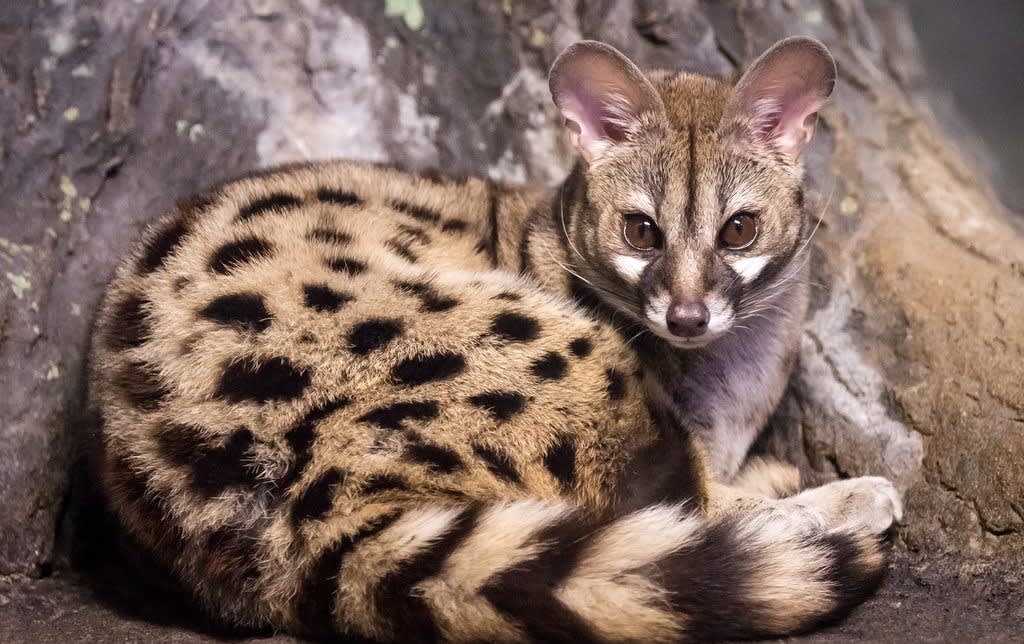
WHAT IS A GENET?
A genet is a small, slender cat-like mammal that is native to both Africa and southwestern Europe. According to wikipedia, there are total 17 type of species of genet which belong to the family GENETTA.
Genets are slender animals with long bodies and tails. They have short legs, large ears, and a pointed muzzle. Their fur is typically spotted or striped, and their tails are banded. Genets range in size from 16 to 24 inches in length, not including the tail. They weigh between 2 and 4 pounds.
Genets are more of nocturnal animals that are active at night. They are solitary animals, but they may live in pairs during the breeding season. Genets are excellent climbers and swimmers. They are also good at climbing trees and running, which they use to escape predators and to find food.
Genets are carnivores and eat a variety of small animals, including rodents, birds, reptiles, and insects. They may also eat fruit and berries.
Genets are not endangered, but they are threatened by habitat loss and fragmentation. They are also sometimes hunted for their fur.
They mark their territory by using a musky scent, they produce a loud, piercing cry. They are good at mimicking other sounds, such as the calls of birds and other animals.
They can be kept as pets but requires a lot of attention and space, they growl and lurk in corner when feel threatened.
THE SCIENTIFIC NAME OF GENET
The scientific name of the genet is Genetta. It is a genus of small, cat-like mammals that are native to Africa and southwestern Europe. There are 17 species of genet, all of which are members of the genus Genetta.
The scientific name of the genet was first proposed by Carl Linnaeus in his 1758 10th edition of Systema Naturae. The genus name, Genetta, is derived from the Latin word "geneta", which means "cat".
The different species of genet are distinguished by their size, fur pattern, and habitat. The common genet (Genetta genetta) is the most widespread species and is found in a variety of habitats, including forests, savannas, and even urban areas. The rusty-spotted genet (Genetta maculata) is found in India, Sri Lanka, and Nepal. And the black-footed genet (Genetta thierryi) is found in the Democratic Republic of the Congo and the Republic of the Congo.
THE GEOGRAPHICAL DISTRIBUTION
The geographical distribution of genets varies by species. The most widespread species is the common genet (Genetta genetta), which is native to Africa north of the Sahara, in savanna zones south of the Sahara to southern Africa, and along the coast of Arabia, Yemen, and Oman. It has also been introduced to southwestern Europe, including Portugal, Spain, France, Switzerland, and Italy.
Other species of genets have more restricted ranges. For example, the black-footed genet (Genetta thierryi) is found only in the Democratic Republic of the Congo and the Republic of the Congo. The spotted genet (Genetta maculata) is found in southern and eastern Africa. And the Angolan genet (Genetta angolensis) is found in Angola, Zambia, and Zimbabwe.
Genets are typically found in a variety of habitats, including forests, savannas, and even urban areas. They are adaptable animals that can survive in a variety of conditions.
WHEN IT WAS DISCOVERED?
The genet was first described by Carl Linnaeus in his 1758 10th edition of Systema Naturae. So, the genet was discovered in the 18th century.
Linnaeus gave the genet the scientific name Viverra genetta. However, the genet is now classified in the genus Genetta.
THE CONSERVATIVE STATUS
The conservation status of the genet varies by species. The most widespread species, the common genet (Genetta genetta), is listed as Least Concern on the IUCN Red List. This means that the species is not considered to be endangered or threatened. However, some populations of the common genet are declining due to habitat loss and fragmentation.
Other species of genets are more threatened. For example, the black-footed genet (Genetta thierryi) is listed as Vulnerable on the IUCN Red List. This means that the species is facing a high risk of extinction in the wild. The black-footed genet is only found in a small area of the Democratic Republic of the Congo and the Republic of the Congo, and its habitat is being destroyed by logging and agricultural development.
The conservation status of genets is important because they play an important role in the ecosystem. They help to control populations of rodents and other small animals. They are also preyed upon by larger animals, such as lions and leopards.
Things that can be done to increase the conservative status is by protecting their habitat from destruction, reducing hunting and trapping and by raising awareness of the threats facing genets.
About the Creator
helloJQueen
Hi, I am a zoology student who loves being mysterious and writing is my newfound love.
Take your time to go through my profile and writings, can't say you might like it and it literally cost you nothing much just your time.
T for Thanks.
Keep reading
More stories from helloJQueen and writers in Petlife and other communities.
Cleo's First Puppy Show
"How would you feel about doing the Corsicana show in November?" Kathleen asked me last September. Dog exhibitors speak in shorthand that way. It's easier to say "the Corsicana show" than it is to say the "North East Texas American Eskimo Dog Association Show." And yes, "North East." I guess "Northeast" shortened the name too much for some people's taste . . . But I digress. In response, I asked two of the three important questions that every exhibitor thinks, first thing.
By Kimberly J Egan26 days ago in Petlife
Low-Maintenance Grooming Routines for Active American English Coonhounds
American English Coonhounds are known for their athletic build, boundless energy, and unmistakable baying voice. Originally bred for endurance and hunting, these dogs thrive on activity and adventure.
By Tenafly Veterinary Centre7 days ago in Petlife




Comments
There are no comments for this story
Be the first to respond and start the conversation.