
7 Best Ways to “Catify” Your Home (Backed by Experts)
Looking for better ways to “catify” your home? With our recommended ways, your cat will want nothing else and even thank you for providing them with the coolest home ever!

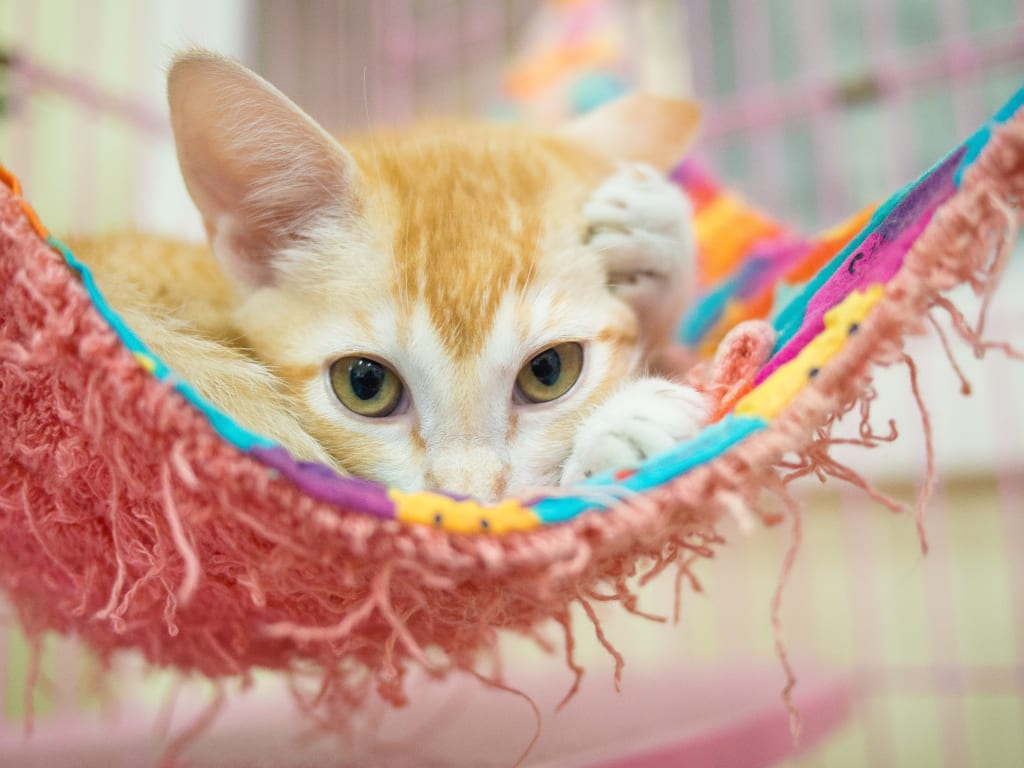
Gone are the days of adopting a cat, providing food and water and a litter box, and leaving your cat to its own devices.
More and more people realize that cats actually require environmental enrichment. One way you can enhance your cat’s life is by catifying your home.
But what does “catify” really mean though?
Catification is a term coined by cat behaviorist Jackson Galaxy and cat-style expert Kate Benjamin. According to them, catification is “the art of making changes and adjustments to your home that meet the needs of both you and your cat aesthetically and spatially.”
Cats like to scratch, run and hide. They have natural instincts that make them want to jump and climb, hunt and eat, play and sleep.
Wild cats, for example, can fulfill all their needs and instincts outdoors — your indoor cat cannot.
It is up to us to provide our cats with ways to fulfill and act on those instincts because a cat whose instinctual needs are not met can grow bored, destructive, or depressed.
Even worse can even develop health and behavioral issues. So it's important to meet all their needs related to activity, behavior, and mental and physical stimulation.
Here’s some expert-backed ways you can help keep your cat healthy and happy by catifying your home.
1. Lots of vertical space to give a better sense of security
Cats like to jump and climb. They love to be up high because a high vantage point allows them to get a full view of their surroundings and escape from “danger.”
Danger could be the evil vacuum cleaner or even another pet. What it really comes down to is your cat feels safest when they’re high up.
Cat trees and cat shelves are two great ways you can provide vertical space for your cat. You can even create a “cat highway” by placing cat trees, shelves, furniture, chests, etc. in such a way that your cat can get around the room without ever having to touch the ground.
A strategically placed cat bed is another way you can give your cat more vertical space. You could put one on top of your refrigerator, kitchen cabinets, or a dresser.
2. Scratchers to help act out their natural instincts
Scratching is a natural cat instinct. They do it when they’re excited or stressed, to mark objects with their scent, to remove their dead nail sheaths, and to get a stretch.
You should place cat scratchers around your home to prevent your cat from scratching your furniture and to give them an outlet to act on that natural instinct.
There are so many different types of scratchers, so you can easily provide your cat with different options like:
- Vertical or horizontal scratchers
- Cardboard, sisal, or carpet scratchers
- Stand-alone scratchers or scratchers as part of cat trees
- Door-hanging scratchers and wall-mounted scratchers
As you can see, the possibilities are almost endless, so there’s no excuse for your cat to not have plenty of scratching choices!

3. Hiding places for when they want to get away
If you’ve lived with a cat for any extended length of time, you’ve probably experienced the feeling of panic when you can’t find them.
Cats are masters at finding the most hard-to-reach hiding places!
Many cats like the safety and peace of being hidden away, and some prefer ground-level hiding places over higher-up, vertical hiding places.
Cardboard boxes and cat cave beds are excellent ways to provide little hidey-holes for your cat.
Maybe even consider putting a bed tucked away behind a curtain or in a corner, too.
4. Excellent views to spark curiosity
Cats are curious by nature, and they love to get a peek into the outside world.
Make sure your cat has access to their favorite channels on “Cat TV” (aka views of birds, squirrels, and chipmunks through the window).
Screened access to an open window is even better (or a catio!) because then they get to experience both the sights AND smells of the outside world.
There are window perches available and even suction cup beds that stick to windows. You could put a cat tree in front of a window too.
And you can earn some bonus points for adding some bird feeders outside your cat’s favorite window.

5. Exercise to keep them spunky
While cats do spend an average of 12-16 hours per day sleeping, they actually require and enjoy play and exercise.
Regular interactive playtime between you and your cat is the best way to fulfill that need. Wand toys and laser pointers are two easy ways you can engage with your cat.
If you have an especially high-energy cat, you might even consider investing in a cat wheel so your cat can run and expend all that excess energy for the times you aren’t able to play with them.
6. Ample litter boxes
Having a litter box for your cat is an obvious need, but there is actually a strategy involved in litter box type, number, and placement.
Litter box issues are a common behavioral complaint, and you can often time solve the issue by changing the type or placement of the litter box.
A general rule of thumb is that you should have one litter box for every cat, plus an extra one. So if you have two cats, you should have three litter boxes.
When trying to optimize your cat’s litter box placement, consider the following:
- What areas of the house does your cat spend the most time in?
- What areas of your home offer some privacy while also not being completely secluded and out of the way?
- What areas of your home are quiet?
- What areas of your home will your cat have 24/7 access to?
Then there’s also the decision of what kind of litter box to use:
- Covered or uncovered?
- Low or high-sided?
- Automated or not?
Each cat will have different preferences, so if you notice your cat has a litter box issue, you might try replacing the one you have with a different style.

7. Feeding areas with water and food separate
Even though many pet food feeders come with two bowls — one for water and one for food — cats really prefer to have their water bowl separate from their food bowl.
In the wild, cats eat and drink in different places to avoid predators, and mixing food and water would also result in bacterial growth and illness.
Even though your domestic cat has to deal with those issues, they will still have that way of thinking ingrained in them.
If you notice your cat isn’t drinking any water, it could be because their food and water bowls are too close together. To satisfy your cat’s natural inclinations, put their water bowl at least 3-5 feet away from the food bowl.
A water fountain might help encourage your cat to drink more as well since cats tend to prefer drinking from a moving water source rather than a stagnant one.
Catification is good for ALL!
There is obviously a lot to consider when trying to catify your home, but it’s all worth it to be able to give your cat the healthiest and happiest life possible.
If all your cat’s needs are met instinctually, physically, mentally, and emotionally then their less likely to experience behavioral issues later on.
And it will relieve potential stress on your end too, so you can fully focus on bonding with and loving your kitty.
So why not go the extra mile to help your cat live the life they deserve?
About the author
Emily is “mom” to seven cats, one dog, and two sugar gliders. She has been writing in the pet industry for over 8 years, with a focus on cats, rescue, and adventuring. When she isn’t writing, playing music, crocheting, or working on her own entrepreneurial pursuits, Emily and her husband enjoy hiking, road-tripping, camping, and canoeing with their three cat adventurers. Follow her on her blog, KittyCatGo.

About the Creator
Gaia Provides
Want to reconnect to nature with your pet? Curious about the latest pet & nature trends? Want to know more about CBD & hemp for your pet? Learning about nature is fun! Subscribe now to stay fresh on hemp news and eco-fun!
Keep reading
More stories from Gaia Provides and writers in Petlife and other communities.
Off the Leash: The Essential Gear Guide for Adventurous Dogs
There’s something wildly freeing about unclipping the leash and letting your dog move the way they were built to. If you’re hiking in areas that truly allow off-lead exploration, your gear list shifts. No harness. No leash dragging through dust. Instead, it’s about smart, lightweight essentials that keep your dog safe, hydrated, and easy to manage when adventure gets messy. Long walks off lead are less about control and more about preparation.
By Shabbir Ahmad3 days ago in Petlife


Comments
There are no comments for this story
Be the first to respond and start the conversation.