
5 Minutes to 59 Days: 10 Animals with the Shortest Lifespans in the Animal Kingdom.
Here is a artical about 5 mins to 59 days : 10 Animal with shortest lifespan...

Introduction: The Fleeting Dance of Life
Life on Earth exists on a broad continuum, from ancient trees that can live for thousands of years to animals whose entire existence spans mere minutes. While humans often marvel at longevity, there is profound fascination in studying creatures with incredibly brief lifespans. These animals remind us of the urgency and intensity of life, where survival and reproduction must occur in the narrowest windows of time.
Fast-paced lives have developed in animals with short lifespans as a result of environmental triggers, evolutionary pressures, and ecological roles. Their brief existence does not diminish their importance in ecosystems. In fact, they often serve as crucial links in food chains, nutrient cycles, and ecological processes.
In this article, we will explore 10 animals whose lifespans range from as little as 5 minutes to just under two months (59 days). Each of these creatures has adapted to make the most of their ephemeral lives, showcasing strategies like explosive mating frenzies, synchronized emergences, or rapid developmental cycles.
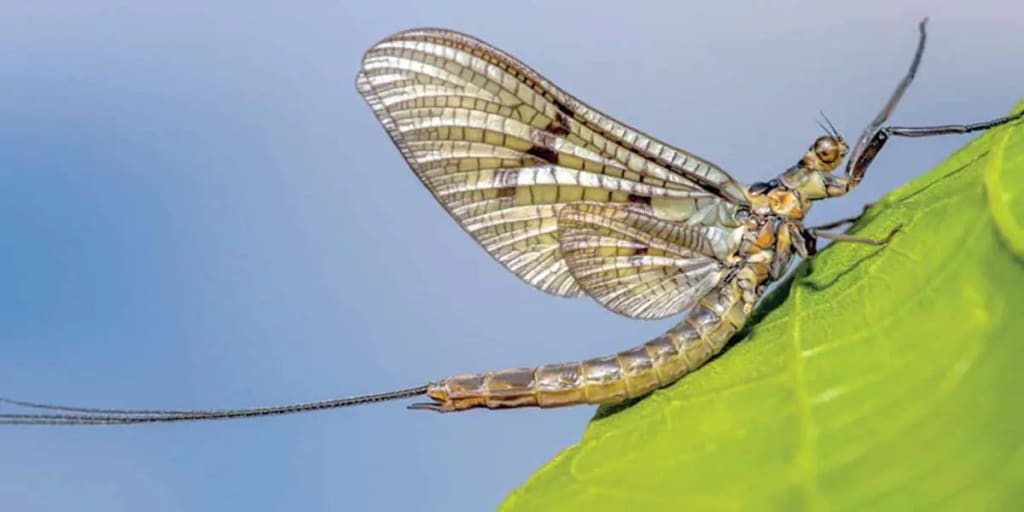
1. Mayfly (Order: Ephemeroptera) – Lifespan: 5 Minutes to 24 Hours
Overview
The mayfly holds the title for the shortest lifespan of any known animal in its adult form. Depending on the species, adult mayflies live from a few minutes to a day. Some species, like Dolania americana, may survive just 5 minutes after emerging.
Life Cycle
Larval Stage: Up to 2 years underwater.
Adult Stage: 5 minutes to 24 hours.
Purpose in adult life: Mating and laying eggs.
Why so short?
Adult mayflies lack functional mouthparts and digestive systems. Their sole purpose is to reproduce and die.
Ecological Role
Despite their short adult life, mayflies play a crucial role in aquatic food webs, serving as prey for fish, birds, and amphibians.
Fun Fact
The name "Ephemeroptera" is derived from the Greek word "ephemera," meaning "short-lived."
2. Drone Ant (Various species, Order: Hymenoptera) – Lifespan: A Few Minutes (Post-Mating)
Overview
Male ants, known as drones, have extremely short lives centered around a single event: mating with a queen.
The Life Cycle Larval Stage: Several weeks.
Adult Stage (Drone): Survive in the colony for a few days or weeks but die within minutes after mating.
Why so short?
Post-mating, the drone’s genitalia often ruptures, resulting in immediate death.
Ecological Function Essential for colony reproduction and the spreading of genetic material.
Fun Fact
Ant colonies time the release of drones and virgin queens to coincide with environmental cues like humidity and temperature.
3. Gnat (Family: Mycetophilidae and others) – Lifespan: 1 to 7 Days
Overview
Gnats are tiny flying insects whose adult lifespan can range from 1 to 7 days, depending on environmental conditions.
Life Cycle
Up to four weeks in the larval stage. Adult Stage: 1-7 days.
Main focus: Mating, feeding, and egg-laying.
Why so short?
Gnats are opportunistic breeders in moist environments and rapidly complete their lifecycle to avoid predation.
Ecological Role
Important pollinators and decomposers, feeding on fungi and decaying organic matter.
Fun Fact
Some species of fungus gnats are key pollinators of unique plant species like the cacao tree.
4. Gastrotrich (Phylum: Gastrotricha) – Lifespan: 3 Days
Overview
Gastrotrichs are microscopic aquatic animals found in both freshwater and marine environments.
Life Cycle
Hatch as miniature adults.
Lifespan of around 3 days.
Why is it so brief? High reproductive rates and parthenogenesis (asexual reproduction) allow for rapid population turnover.
Ecological Role
They help recycle nutrients in aquatic ecosystems by consuming bacteria, algae, and detritus.
Fun Fact
Gastrotrichs move using tiny cilia that resemble hair-like structures.
5. Fruit Fly (Drosophila melanogaster) – Lifespan: 40 to 50 Days
Overview
Though longer-lived than mayflies or gnats, the fruit fly is famous for its short lifespan and is a model organism in genetic research.
Life Cycle
Egg to Adult: 8-10 days.
Adult Stage: 40-50 days.
Focus: Mating and laying hundreds of eggs.
Why so short?
Fruit flies are opportunistic breeders, exploiting decaying fruits.
Ecological Role
Pollinators, decomposers, and prey for spiders, frogs, and birds.
Fun Fact
Fruit flies have contributed to numerous scientific discoveries, including gene mapping.
6. Housefly (Musca domestica) – Lifespan: 28 to 30 Days
Overview
Houseflies are notorious pests known for their quick reproduction and short lifespans.
Life Cycle
From egg to adult: 7 to 10 days. Adult Stage: 2-3 weeks (in optimal conditions).
Why so short?
Houseflies live short lives because they feed on organic matter that is rotting. Ecological Role
Decomposers and vectors for disease.
Fun Fact
One female housefly can lay up to 500 eggs during her short life.
7. Midge (Chironomidae family) – Lifespan: 3 to 5 Days
Overview
Non-biting midges are delicate, mosquito-like insects with short adult lives focused solely on reproduction.
Life Cycle
Larval Stage: Weeks to months underwater.
Adult Stage: 3-5 days.
Why so short?
Midges are designed for synchronized mass emergences to overwhelm predators.
Ecological Role
Important food source for fish and birds.
Fun Fact
Mass midge swarms are so dense they appear as clouds over lakes and rivers.
8. Sea Sponge Larvae (Various species, Phylum: Porifera) – Lifespan: Less than 48 Hours
Overview
Though adult sea sponges are long-lived, their larval stages last less than 48 hours.
Life Cycle
Larval Stage: Less than 2 days.
Adult Stage: Up to thousands of years.
Larvae drift before settling permanently.
Why so short?
Larvae are only mobile long enough to find a suitable spot to anchor.
Ecological Role
Sponges play a role in filtering water and providing habitat.
Fun Fact
Sea sponge larvae swim using cilia, a rare trait in sponges.
9. Turquoise Killifish (Nothobranchius furzeri) – Lifespan: 50 to 59 Days
Overview
Turquoise killifish have the shortest lifespan of any vertebrate known, making them a key species in aging research.
Life Cycle
Egg to Adult: Within 3 weeks.
Adult Stage: Die within 50 to 59 days. Native to seasonal African pools.
Why so short?
Evolution favors rapid maturation due to their ephemeral habitats that dry up quickly.
Ecological Role
Important for controlling mosquito larvae populations.
Fun Fact
Their embryos can enter diapause, surviving dry periods until the next rains.
10. Pygmy Goby (Eviota sigillata) – Lifespan: 59 Days
Overview
Pygmy goby is the shortest-lived known vertebrate fish in the wild.
Life Cycle
From egg to adult: under a month. Adult Stage: Dies within 59 days.
Found in coral reef habitats.
Why so short?
High predation pressure and rapid environmental changes favor a quick life cycle.
Ecological Role
As larger fish's prey, they play a role in the food webs of the reef. Fun Fact
Pygmy gobies are among the fastest maturing fish, reaching sexual maturity in just 25 days.
Conclusion: Lessons from the Shortest Lives
Animals with extremely short lifespans are among the most fascinating inhabitants of our planet. Though their lives are brief, they are packed with purpose and urgency. Evolution has crafted them to thrive within tight timeframes, often syncing their lives with environmental cues like temperature, rainfall, or food availability.
These creatures underscore the beauty of biodiversity and the variety of life strategies employed by different species. From the ethereal dance of the mayfly to the brief swim of the turquoise killifish, life manifests in a kaleidoscope of forms and durations.
Their fleeting existence teaches us lessons about adaptation, resilience, and the intricate balance of ecosystems. The breakdown of nutrient cycles and food chains would occur without them. In studying the animals that live for mere minutes to weeks, we also deepen our appreciation of life's fragility and the urgency to conserve the habitats that support these remarkable beings.
About the Creator
Krypton
Be happy,Be calm,Be Better,Be honest,Be Strong,Be faithful,Be Loving,Life is journey&I am a traveler.
Understanding the Difference Between F1 and F1B Goldendoodles
For families considering a Goldendoodle, one of the most common points of confusion is the difference between F1 and F1B generations. At first glance, the labels can sound technical or even overwhelming. But once you understand what they actually mean, the decision becomes much clearer. While both generations are popular, loving family companions, knowing how they differ can help you choose a dog that truly fits your home, lifestyle, and long-term expectations.
By Addison Hulse5 days ago in Petlife
A Knight of the Seven Kingdoms Series Review (Season 1)
As one of the biggest properties in fantasy, A Song of Ice and Fire remains immensely popular with audiences. After reaching far into the past with House of the Dragon, a second spin-off was on the cards. A Knight of the Seven Kingdoms serves up a bite-sized slice of action and drama, but it still claims a spot among the best small-screen titles.
By Robert Caina day ago in Geeks




Comments
There are no comments for this story
Be the first to respond and start the conversation.