
12 Most Common Dog Behavior Problems-2021
Common Dog Behavior Problems and Solutions.


Dog behavior problems list is not as long as you might think. Dog owners often misunderstand and misinterpret behavior problems with their pets. Perhaps you recently got a dog or are just getting ready to do so, or maybe you've had a four-legged friend for a long time, but he has dog behavior problems, and you want to address them.
Either way, the first step in finding a solution and a way out of a difficult situation is a thorough understanding of the most common behavior disorders.
Moreover, controlling many of these problems or preventing their development will help with competent training, a good knowledge base of commands, and rules of behavior embedded in your dog.
12 Most common dog behavior problems:
The only snag is that many owners misunderstand the messages their dogs send them, trash the house or try to bite the heels of a cyclist.
To solve the problem, you need to know where the problem is coming from, and that wonderful "she's doing everything to spite me" certainly doesn't help anyone. There is a reason for everything.
However, the problem of mutual understanding in the human-dog system is a topic for a separate and very long conversation.
Not here and not now - to start with a run through the main hot spots in the relationship with a pet, often becoming a stumbling block and, as a consequence, the causes of separation. Let us see What is the most common behavioral disorder in dogs? And What are the signs of behavioral problems in dogs?
(1). Excessive barking:

One way or another, most dogs "talk. They bark, howl, whine, etc. One of the problems with dog behavior is excessive barking.
You must first know why your dog barks so often before you can educate him not to do so.
Most often, dogs bark for the following reasons:
- Expressing alarm or warning a person about something;
- Being in a playful or excited state;
- To get attention;
- Out of boredom;
- Reacting to fellow dogs.
- Fear or anxiety.
- Frustration to get attention.
To control excessive barking, you will have to make an effort and be patient. Consider teaching your pet the "Voice" and "Silence" commands. Be consistent.
Eliminate any reason for your dog to bark. Determination and attention to detail will help you tremendously with this problem.
If your dog feels anxious, you may need to take him to a safe place. If he's upset, you need to teach him to deal with his emotional outbursts. If he is bored, you need to meet his need
(2). Tampering with things:

Not only do dogs bark, but they also chew - and chew on everything that is not forbidden to chew, and sometimes even on what is forbidden.
Many people will be surprised, but chewing or gnawing on things is an important part of a dog's life.
Chewing gives a dog an incomparable amount of pleasure.
If certain business items get in your dog's teeth too often, these events can really turn into a problem.
More often than not, the reasons for excessive chewing are puppy teething, boredom again mortal or excess energy, anxiety or fear, plus trivial puppy curiosity.
Massaging your dog's soft spots with a slipper isn't going to solve the problem either way.
Remember the main thing: in order to keep your home safe and sound, you need to keep him so mentally and physically busy that he won't have the energy to chew on anything but his food.
Leave outbursts of emotion for socializing in the marketplace.
At home, it's much more effective to clean up the essentials and leave unnecessary items so that the dog has something to put his itchy teeth.
By the way, when you see that the puppy is chewing on the "wrong" thing, try clapping your hands sharply and loudly, distracting his attention, and then immediately replace the object with a "chewy" toy.
In general, be careful to keep personal items away from your dog, and if you forget to put them away, blame yourself.
I won't recommend a cage, but the particularly forgetful may want to consider this option.
(3). Digging Pits.

Digging is a matter of instinct. If dogs were given the opportunity, most of them would take it immediately. There are dogs whose breed has an inherent tendency to dig.
They are, by nature, burrow hunters (terriers, for example).
The reasons most dogs dig:
- Boredom;
- Excess energy;
- Fear or anxiety;
- Hunting instinct;
- The desire to get comfortable (e.g., to make a nest or to cool down);
- The desire to hide things (e.g., bones or toys);
- To run away or gain access to something.
If a dog likes to dig in the yard, it can be quite frustrating. Especially if a private home or cottage is involved, try to understand why she does it.
The cause of the unwanted digging needs to be addressed. Give your dog more exercise, spend more time together, play with your pet and additionally train him.
If digging is unavoidable anyway, provide a place where he can dig freely and without damaging his surroundings (such as a sandbox). Show him that digging is only allowed there, and get him used to it.
(4) Fear of separation.

Separation anxiety is one of the most discussed behavioral problems in dogs.
It can cause the animal to bark, howl and whine, chew on everything, go to the toilet in the wrong place and hours later.
Other symptoms are also possible. But not all of these behaviors are due to separation anxiety.
Signs of true separation anxiety:
- The dog becomes anxious when he sees that the owner is about to leave.
- During the first 15-45 minutes after the owner has left, unwanted behavior is noticed.
- The dog follows the owner at all times.
- If possible, the dog tries to touch the owner.
Special training and desensitization exercises are needed to correct real separation anxiety. In especially severe cases, medication may be required.
(5). Urinating and defecating in the wrong place:
The problem of uncleanliness is, without exaggeration, one of the most unpleasant.
A dog that urinates in the wrong place not only messes up the house but also makes himself and the owner persona non grata in the homes of those he knows.
And here, it is very important to separate the flies from the cutlets, excluding purely medical reasons.
Only if the veterinarian has determined the absence of diseases should you move on to what can be called dog behavior problems, such as obedience or excessive excitement, marking territory, fear, or lack of proper daily routine.
Note that there is no reference to age in this list: obviously, untidiness is a natural companion to the first few months of life with puppies.
You shouldn't even dream that the litter story will somehow begin to develop before the puppy is 12-16 weeks old - it's, as they say, "not a sure thing."
Similar problems in adult dogs are an entirely different topic.
Many of them, not too scrupulous about toileting, after a thorough "breakdown," need serious behavioral therapy because it will be unrealistic to get rid of an ingrained habit in another way.
(6). Begging is one of the dog behavior problems.

Begging is a bad habit, but it's often the dog's owners' fault for encouraging this behavior. Keep in mind that bits of human food that suddenly fall into your dog's lap can lead to obesity and digestive problems.
Dogs beg for food from you because they love to eat. However, eating from the table is not a treat, and giving in to a beggar is not a show of love for your pet.
Yes, it's hard to resist the begging look, but by telling yourself, "Just this once," you're creating a problem for the future. By giving in, you are teaching the dog that begging is allowed, giving the animal the wrong signal.
Before you sit at the table, send your dog to his seat. Preferably, he should not be able to see you eating from it.
If necessary, close the animal to another room. Reward your dog with a treat for good behavior, but only after you and your family members have finished eating.
(7). Chasing Moving Objects:
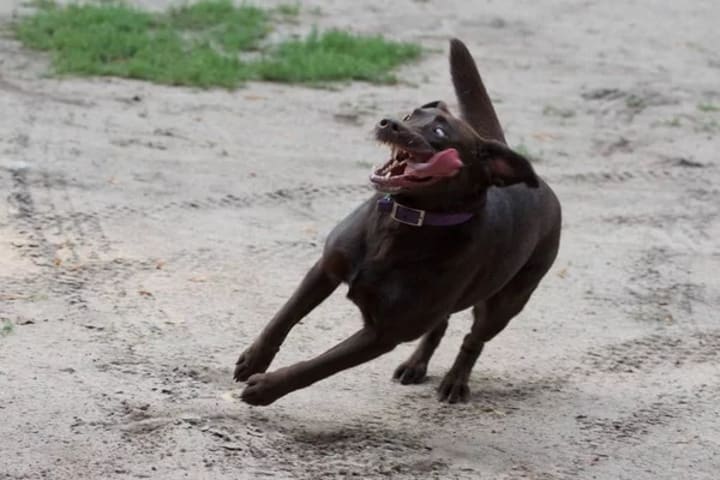
The desire to rush after any moving object is a manifestation of the dog's predatory instinct. Some dogs chase other pets, people, and vehicles. The consequences of chasing can be dangerous and destructive.
You can't stop your dog from trying to run after someone, but you can take some steps to reduce the risk:
- If there is the slightest chance that your dog will run away in pursuit, keep your dog on a leash.
- If there's a chance your pet will chase if there is a chance of chase, teach your pet to come when called.
- Keep a whistle handy to get your dog's attention.
- Be alert for potential "victims" (runners or cyclists). When they appear, increase your vigilance and control the animal.
It is best not to let the chase get out of control. Continuous training throughout the pet's life will teach it to focus on the owner before it starts chasing prey. Of course, you don't let the 'predator' get away!
Special training can help with that.
(8). A dog puts his front paws on a person:

Raising and putting his front paws on someone is part of a dog's natural behavior. Puppies lean on their mother in this way as a sign of greeting. As the dog grows up, it may also try to greet people.
Dogs put their paws on people from overexcitement or to reach for an object in their hands. But a dog that puts its paws on people can be annoying and even dangerous.
There are many ways to interrupt a dog's attempts to put his paws on you, but not all of them will be successful.
In some cases, an animal may stop a person by picking up their lap, grabbing their paws, or pushing them away, but most dogs will not understand this.
More often than not, the dog, by putting his paws on you, is looking for attention, and your response provides that awareness - the animal has gotten what it wants and will continue to persevere even more.
The best way to teach your dog to paw at you is to turn away and ignore him. You can simply walk away if the circumstances require it. Don't speak to your puppy, don't look him in the eyes, and also don't touch him.
Mind your own business. Go where you left off. When the animal is relaxed and back to normal, calmly encourage him.
Dogs are very intelligent creatures, and after a while (fairly quickly), they will understand what behavior is correct.
It won't be long before your dog understands the message.
(9). Bites:
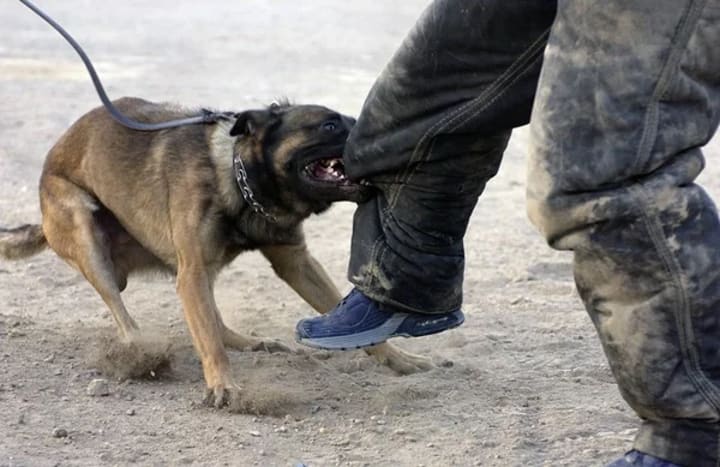
Dogs bite. Period. Why? Because they are dogs and don't know how to use a phone or even talk.
Puppies explore their environment by testing it with their teeth, and their mother dogs teach them to do so without being overly rude, strictly telling the little ones off when the need arises.
They can do this for several reasons, most of which are instinct. Puppies bite to explore their surroundings.
Mother dogs teach their pups not to bite too hard and put their babies in their place with bites when necessary. In this way, puppies learn to regulate the force of the edge.
Unlike puppies, adult dogs can bite for several reasons. It's also important to understand that biting isn't always a symptom of aggressiveness.
Possible causes:
- Fear
- Protecting themselves or their property,
- Sickness or pain,
- Predator instinct.
Any dog can bite. It does so if its instinct tells it. The tendency to bite can be reduced by both breeder and owner. This requires proper training, competent socialization, and breeding practices.
(10). Aggressive dog behavior problems :

Such an unpleasant thing as aggression most often includes growling, baring teeth, attempts to pounce, and, in fact, bites.
This is a much more serious problem than just a puppy's inability to control its jaws. Obviously, its causes are most often similar to those for which the dog bites or snaps, differing only in scale.
Size and breed are not important.
It's important to know that any dog, regardless of breed, is capable of aggression. However, a well-established public perception breeds a fighting past bred for hard work is far more likely to be aggressive toward people or other animals.
Because of such prejudices, in some countries, some breeds have been legally classified as "dangerous," and in some countries, they are simply banned.
Most experts understand that this has little to do with common sense since a legal ban on certain breeds is not a sensible solution.
Any dog can inherit certain aggressive traits, just as any dog can be aggressive by crooked parenting.
If you notice aggressive tendencies in your pet, you should first visit your veterinarian to rule out possible health problems and then seek help from an experienced behaviorist. If you don't want to end up with no hands, stay out of the way.
(11). Frustration:

Poor frustration management in dogs often leads to behaviors that are acceptable to humans. It's necessary to keep in mind that managing emotions is challenging and requires practice.
If your dog does not manage his frustration well, he may :
- Bark at you.
- Bite to let off emotional steam.
- Make urine marks.
- Get excited easily.
Not listen to your instructions
(12). Dirt

Dogs' uncleanliness often pushes owners to the limit. However, it is important to be considerate. Dogs usually don't have access to the toilet when they want to throughout the day.
However, defecating is quite natural, and everyone should be able to relieve themselves when they want to.
If your dog is messy at night, it is very important to get a veterinary examination to rule out any health problems.
If a medical cause cannot be established, try to figure out what is causing the behavior, which could be one of the following::
Emotional urination (the dog is too happy to see you again, or on the contrary, it causes him stress).
The olfactory message marking is often related to frustration.
Anxiety.
Bad conditioning (at breeding, the puppy was on concrete, so he does not understand what he must do in the grass).No learning.
Sphincter still information (for puppies).
Physical inability to restrain (puppy up to about 6 months, illness, old age, poor diet, etc.)
In all cases, we do not punish the dog for his "mistakes." We teach him what to do. It is, therefore, preferable to remain attentive.
Take him out after eating, drinking, playing, waking up, or getting excited. When he's on track, compliment him and take him out on a regular basis.
When you're away, you can restrict his space a bit or close the bedroom doors to avoid accidents throughout the house.
Final Thoughts:
Dog behavior problems are often misunderstood or mishandled by dog owners.
Unfortunately, some breeds are designated "dangerous" in some areas, and their breeding is banned. The environment where a dog lives has a huge influence on its behavior.
Fortunately, most experts agree that breed-specific laws are not the answer. The reasons for aggression are essentially the same as why dogs bite or snap, but overall, dog aggression is a more severe problem.
If your dog is acting aggressively, see your veterinarian right away because it could be a sign of a medical issue. Then get the assistance of a professional dog trainer or behaviorist.
You must take serious measures to protect others from aggressive dogs. If you suspect that your pet is sick, contact your veterinarian immediately.
Always consult your veterinarian with any health questions, as he or she can examine your pet, know their health history, and give you the best recommendations.
Be patient with your dogs.
Thanks
Please Note: This article is intended solely for informational purposes. We are not qualified to prescribe any veterinary treatment or diagnose any condition. We recommend that you bring your dog to the veterinarian in case they suffer from any medical problem or are experiencing discomfort.
Thank you so much for reading all the way to the end, and have a blessed day. I hope you will get some information about dog behavior problems by reading this article. Comment down your thoughts on this article below. If you have any queries, then ask My Clear Voice.
Manwarhusen Saiyad
About the Creator
MANWARHUSEN SAIYAD
I am Manwarhusen Saiyad from USA. I am Writer and Tranlator. My website https://myabba.xyz. is one source for all articles related to Pets and Health -Fitnessniche with a focus on quality and uniqueness.
Keep reading
More stories from MANWARHUSEN SAIYAD and writers in Petlife and other communities.
The Summer I Was Chosen by a Northern Mockingbird
During the long, suspended days of the pandemic, a wild mockingbird began visiting my driveway and chose me, again and again. What started as a strange encounter became a brief, meaningful connection that I still carry with me.
By Erica Roberts 9 days ago in Petlife
To locate food, spider monkeys employ collective intelligence.
It's difficult to find fruit in a tropical forest. Throughout the seasons, fruit trees come and go, and their places frequently shift. Due to their heavy reliance on fruit, spider monkeys must search wisely in order to succeed.
By Francis Damia day ago in Petlife



Comments
There are no comments for this story
Be the first to respond and start the conversation.