
Wired for Growth: How Neuroplasticity Shapes the Person You
Become Discover how your brain’s ability to rewire is key to lasting change and personal evolution.

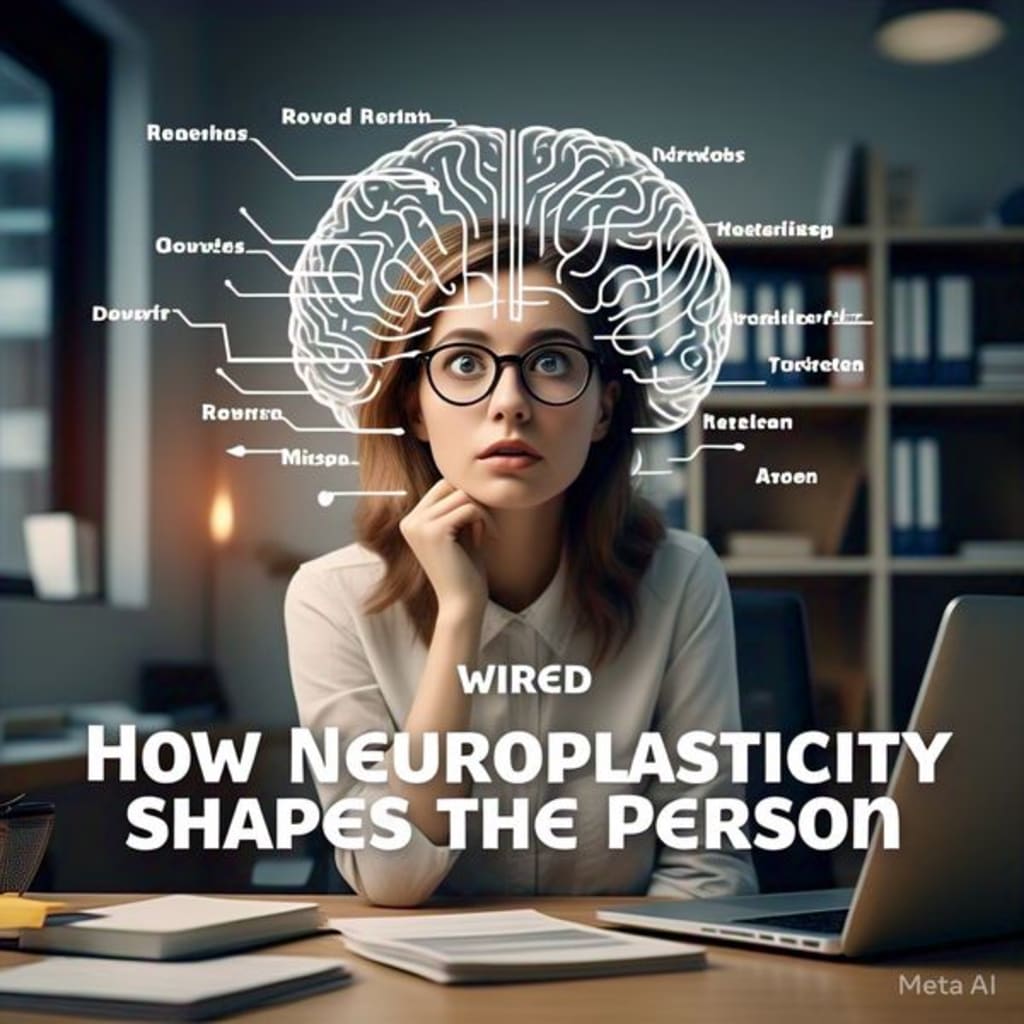
Wired for Growth: How Neuroplasticity Shapes the Person You
Have you ever caught yourself saying, “That’s just how I am,” or “I’ll never be good at that”? Most of us have. It’s easy to believe that our personalities, habits, and skills are set in stone. But what if the brain told a different story? What if, deep inside your head, a quiet revolution was happening every day—one that could completely change who you are and what you’re capable of?
Enter neuroplasticity: the brain’s incredible ability to rewire itself. It’s not science fiction. It’s real, it’s powerful, and it might just be the most important concept you’ll ever learn about personal growth.
For decades, scientists believed that once we reached adulthood, our brains became fixed, like hardened concrete. But modern neuroscience has completely flipped that idea on its head. Your brain is more like clay than concrete. It can adapt, reshape, and reorganize its structure based on your experiences, thoughts, habits, and even your emotions. That means you’re not stuck with the brain you were born with—you’re shaping it every single day.
Think about that for a second. Every time you learn a new skill, face a challenge, or even change a thought pattern, your brain is physically changing. Neurons—the brain’s communication cells—are forming new connections and strengthening old ones. This rewiring is what allows you to learn how to ride a bike, speak a new language, or even bounce back after heartbreak. You’re building a better brain through your actions and intentions.
Neuroplasticity doesn’t just apply to learning cool tricks or developing talents. It plays a massive role in healing and recovery, too. People who’ve suffered strokes have been able to retrain different parts of their brains to take over damaged functions. Individuals dealing with trauma and anxiety have used practices like mindfulness, therapy, and journaling to reshape harmful thought loops and emotional triggers. That’s the beauty of it—your brain wants to heal and grow. It just needs the right environment.
So, what does all this mean for you? It means you’re not stuck. It means growth is not just possible—it’s happening right now, whether you realize it or not. But here's the catch: while neuroplasticity is always at work, how it works depends on what you’re feeding it.

If you constantly think negative thoughts, doubt your abilities, or surround yourself with chaos, your brain adapts to that, too. It strengthens those patterns. That’s why it's so easy to fall into habits that feel hard to break. But the good news is that you can redirect your brain’s wiring. You can interrupt the loops and build new ones.
Let’s say you want to become more confident. Confidence isn’t a switch—it’s a muscle. You build it through repeated action, positive reinforcement, and challenging the mental stories that tell you you're not good enough. As you keep showing up, the brain gets the message. The pathways associated with fear and hesitation begin to fade, and the ones linked to courage and self-belief grow stronger. That’s neuroplasticity at work, reshaping not just your thoughts, but who you are.
This process doesn’t require a grand transformation overnight. The small choices—the decision to speak up, to try again, to learn something uncomfortable—create change. Every choice is a signal to your brain: “Hey, this matters.” And your brain listens.
One of the most empowering things about understanding neuroplasticity is realizing that your potential is never fully defined. You are a work in progress—forever unfinished, but forever evolving. Your habits, your attitude, your resilience—they’re not just traits you inherit. They’re skills you can train.
So, what’s something you’ve always believed you weren’t capable of? Public speaking? Starting a business? Learning to code? That fear isn’t a wall—it’s a map. It shows you where your brain hasn’t built strong pathways yet. But with time, patience, and intention, those paths can form. And once they do, the impossible starts to feel natural.
Neuroplasticity reminds us that personal development isn’t a destination—it’s a daily choice. You don’t need to change everything at once. Just change one thing consistently. That’s where the magic begins.
Remember: you’re not hardwired. You’re rewiring. And the more you lean into growth, the more your brain follows your lead.
Quote: “The mind is just like a muscle—the more you exercise it, the stronger it gets and the more it can expand.” — Idowu Koyenikan
Call to Action: Start small today. Choose one thought, one habit, or one action that reflects the person you’re becoming—not the one you used to be. Your brain is ready. Are you?
About the Creator
Pure Crown
I am a storyteller blending creativity with analytical thinking to craft compelling narratives. I write about personal development, motivation, science, and technology to inspire, educate, and entertain.
Keep reading
More stories from Pure Crown and writers in Motivation and other communities.
Your Friendly Guide to a Bold, Bright Future
Have you ever felt that spark of excitement when a new idea comes to mind—a gentle nudge that says, “This is your moment!”? In a world that’s constantly changing, sometimes all we need is a bit of courage to take that first step toward creating something amazing. This article is a friendly reminder that every one of us has the power to shape our future. It’s not about being a genius or a superhero—it’s about believing in yourself and taking small, determined steps every day.
By Pure Crown11 months ago in Motivation



Comments
There are no comments for this story
Be the first to respond and start the conversation.