
Why We Invest in Gold
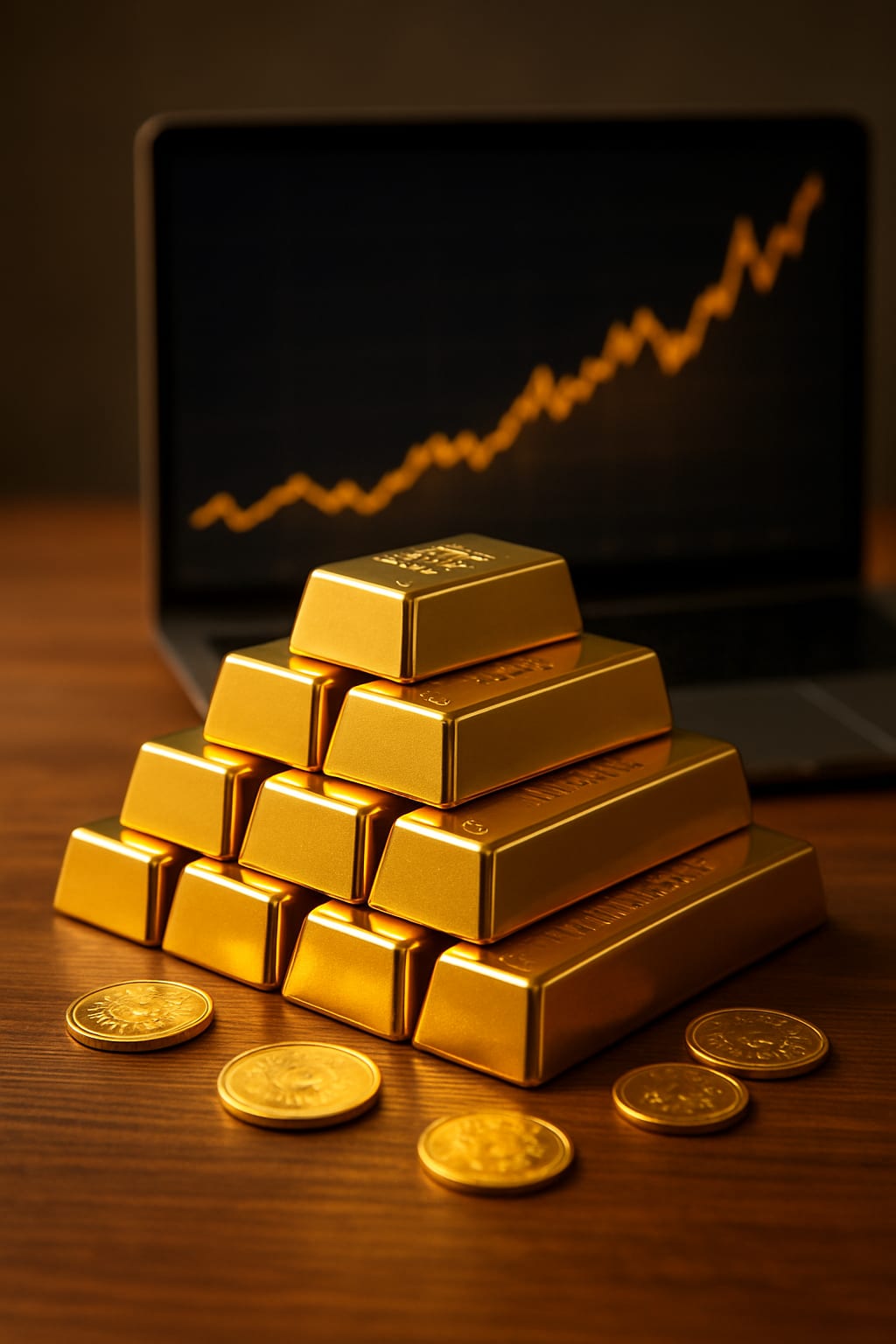
A timeless asset that continues to shape wealth, security, and financial strategy

Why We Invest in Gold
A timeless asset that continues to shape wealth, security, and financial strategy
For thousands of years, gold has captured human fascination. Ancient civilizations revered it as a symbol of power, beauty, and divinity. Kings and empires measured their strength by how much gold they held in their vaults. Even today, in an age dominated by digital payments, cryptocurrencies, and complex financial instruments, gold remains one of the most sought-after investments in the world.
But why do we continue to invest in gold? Why does this metal, shiny and simple compared to modern innovations, still play such an important role in financial strategy? The answer lies in a mix of history, economics, psychology, and practicality.
Gold as a Symbol of Trust
Money, at its core, is built on trust. Paper bills, coins, or even the numbers in your bank account represent value only because we collectively agree they do. Historically, this trust was directly tied to gold. The gold standard, which dominated global finance for much of the 19th and 20th centuries, pegged currencies to a fixed quantity of gold. This system gave people confidence that their money was not just paper but backed by something real and universally valuable.
Even after the gold standard ended, that trust did not fade. Today, central banks around the world, including the United States Federal Reserve, still hold massive gold reserves. It acts as a financial safety net, ensuring that even in times of crisis, nations can rely on a universally accepted form of wealth.
For individuals, investing in gold often feels the same—it’s a way to place trust in something tangible, immune to the risks of politics, inflation, or digital uncertainty.
Gold as a Hedge Against Inflation
One of the most common reasons people invest in gold is its role as a hedge against inflation. Inflation slowly reduces the purchasing power of money. What you could buy with $100 ten years ago is far more than what that same $100 will get you today. Gold, however, tends to hold its value over time.
For example, in the 1970s, when inflation in the U.S. was soaring, the price of gold surged dramatically. Investors turned to gold because while paper money lost its value, gold’s purchasing power often stayed the same or even increased.
In simple terms: when the cost of living goes up, gold usually goes up too. That makes it a reliable asset for protecting wealth during uncertain times.
Gold as a Safe-Haven Asset
Markets are unpredictable. Stock prices rise and fall. Currencies weaken. Real estate bubbles burst. But gold, often called a “safe-haven asset,” is unique in that it holds its value during times of economic and geopolitical turmoil.
When the global financial crisis hit in 2008, or when tensions flare between countries, investors flock to gold. They do this not because they expect high returns but because they want safety. Unlike stocks, bonds, or cryptocurrencies, gold is not tied to the performance of a government, company, or technology. It simply exists, valuable in its own right.
For everyday investors, this is a key reason to add gold to a portfolio. It acts as insurance—a protective shield against unpredictable financial storms.
Gold and Human Psychology
There’s also something deeply human about our attraction to gold. Unlike digital money or complex investments, gold is something you can hold, see, and feel. A bar of gold or even a gold coin has weight and beauty that make wealth feel real.
This psychological connection cannot be underestimated. Investors often feel more secure knowing part of their wealth is stored in a form that has been valued across all cultures and eras. While cryptocurrencies may be exciting and stocks may promise growth, they lack the timeless emotional reassurance that gold provides.
Gold as a Diversification Tool
A smart investor knows not to put all their eggs in one basket. This principle—called diversification—helps reduce risk. Since gold behaves differently than other assets, it adds balance to an investment portfolio.
For instance, when stock markets fall, gold often rises. When currencies weaken, gold strengthens. This inverse relationship means that holding gold can reduce overall risk and make a portfolio more resilient.
That’s why many financial advisors recommend allocating at least a small percentage of one’s investments to gold. It might not make you rich overnight, but it can protect you from devastating losses when other investments stumble.
The Future of Gold Investment
With the rise of digital currencies and new financial technologies, some argue that gold may lose its importance. Yet history suggests otherwise. Gold has survived wars, revolutions, depressions, and technological revolutions. It has adapted, moving from coins to reserves to modern investment products like ETFs (exchange-traded funds).
In fact, today’s investors have more ways to invest in gold than ever before—physical bullion, jewelry, gold-backed ETFs, mining stocks, or even fractional ownership apps. The accessibility of gold ensures that it remains relevant, even in the age of Bitcoin and artificial intelligence.
Conclusion: Why We Still Trust Gold
So why do we invest in gold? Because it is more than just a shiny metal. It’s a symbol of trust, a shield against inflation, a safe haven during chaos, and a psychological anchor in an uncertain financial world. It’s the ultimate reminder that while trends may change, some values remain constant.
In the end, gold is not just an investment—it’s a story of resilience, survival, and timeless value. And in a world where uncertainty is the only certainty, that’s exactly why gold continues to shine.
About the Creator
WAQAR ALI
tech and digital skill
Keep reading
More stories from WAQAR ALI and writers in Motivation and other communities.
Dropshipping Dreams: From Grind to Glory
Dropshipping Dreams: From Grind to Glory How One Hustler Turned a Laptop into a Life-Changing Empire The clock ticks past midnight in a cramped Chicago apartment, where Mia, 24, hunches over a thrift-store desk. Her laptop’s dim glow battles the shadows, illuminating a stack of unpaid bills. Her barista job barely covers rent, let alone her dreams of freedom. She’s trapped, yearning for a life where she’s the boss. One restless night in October 2024, a rogue ad flashes across her screen: “Millionaires Mentor Dropouts to Millions!” It’s about dropshipping—selling products online without ever touching inventory. No warehouse, no cash sink—just hustle and a Wi-Fi connection. Mia’s heart pounds. Could this be her way out of the 9-to-5 cage?
By WAQAR ALI7 months ago in Motivation
When Insight Does Not Translate Into Change
There is a common experience where something finally makes sense, yet life remains unchanged afterward. The connection is clear. The reasoning holds. The conclusion feels settled. And still, nothing moves. This gap between understanding and embodiment is not rare, and it is not primarily a failure of intelligence or sincerity. It is a structural gap between knowing what is true and living in alignment with it.
By Peter Thwing - Host of the FST Podcast4 days ago in Motivation
The Piggy Project
I’ve had so many names in this life I lose track of which ones were ever really mine and which ones I wore because someone needed me to. Some were handed to me before I had words to refuse them, before I knew what they meant, before I knew I could say no. Most weren’t meant to hurt. That doesn’t mean they didn’t leave marks. Marks that told me who I belong to, who I am by way of who claims me, recognizes me in the good and bad, who walks beside me.
By Fatal Serendipity6 days ago in Confessions



Comments
There are no comments for this story
Be the first to respond and start the conversation.