
US–Venezuela Operation “Not an Invasion” as Captured Leader Nicolás Maduro Held in New York
A Dramatic Development With Global Repercussions
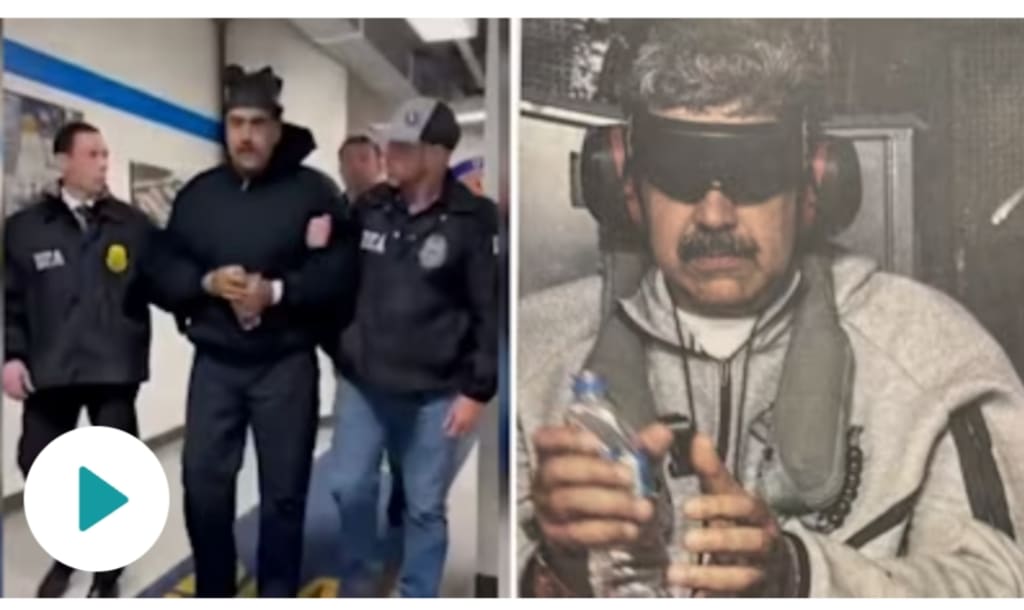
The United States has insisted that its recent operation involving Venezuela is “not an invasion,” even as captured Venezuelan leader Nicolás Maduro is now being held in New York, according to U.S. officials. The announcement has sent shockwaves through diplomatic circles, reigniting debates over sovereignty, international law, and the limits of American power in the Western Hemisphere.
While Washington describes the action as a targeted legal and security operation, critics across Latin America and beyond argue that the distinction between intervention and invasion is increasingly blurred. The event marks one of the most consequential moments in U.S.–Venezuela relations in decades.
How the Operation Unfolded
Details surrounding the capture of Nicolás Maduro remain tightly controlled. U.S. authorities say the operation was conducted with precision, avoiding civilian harm and focusing solely on securing Maduro to face legal proceedings. Officials emphasize that no large-scale troop deployment occurred and that Venezuelan territory was not occupied, forming the basis for the claim that the action does not constitute an invasion.
According to U.S. statements, Maduro was transferred to New York under strict security arrangements, where he is being held pending court appearances related to long-standing allegations, including corruption, drug trafficking, and human rights abuses.
Venezuelan state media, however, has described the event as an act of aggression and a violation of national sovereignty, fueling outrage among Maduro loyalists.
Why the US Rejects the “Invasion” Label
American officials have been careful with language. By framing the action as a law enforcement and counter-crime operation, the U.S. seeks to distinguish it from traditional military interventions that involve occupation or regime overthrow.
Officials argue that Maduro is not a legitimate head of state but rather an individual accused of international crimes, making his capture comparable to past extraditions or arrests of transnational criminals. From Washington’s perspective, legality—not geography—defines the operation.
This framing is designed to reassure allies, limit diplomatic fallout, and prevent escalation in a region already wary of U.S. interventionism.
Maduro’s Detention in New York
Maduro’s presence in New York carries enormous symbolic weight. For years, he appeared untouchable, surviving sanctions, diplomatic isolation, and internal opposition. Being held in the United States represents a dramatic reversal of fortune.
Legal experts suggest that the proceedings could take months or even years, depending on jurisdictional challenges and international responses. Maduro’s legal team is expected to contest the legitimacy of the arrest, arguing that he retains head-of-state immunity and that the operation violated international norms.
Supporters of accountability see the detention as a milestone in addressing alleged crimes that Venezuelan courts were unwilling or unable to prosecute.
Venezuela’s Reaction: Crisis and Uncertainty
Inside Venezuela, the capture has created confusion and tension. Government institutions loyal to Maduro have condemned the operation, while opposition figures cautiously welcomed the development, calling it a potential opening for democratic reform.
The country’s new or interim leadership faces immediate pressure to maintain stability, prevent violence, and reassure citizens already exhausted by years of economic collapse, inflation, and mass migration.
For ordinary Venezuelans, reactions are mixed. Some express hope that accountability could lead to change. Others fear that external pressure will worsen instability or provoke retaliation.
International Law and Sovereignty Concerns
The operation has reignited a familiar global debate: can a powerful state unilaterally capture a foreign leader and claim legality? International law traditionally prioritizes sovereignty and non-intervention, though exceptions exist for crimes such as terrorism and drug trafficking.
Several Latin American governments have called for emergency regional consultations, warning that precedent matters. European leaders have urged transparency and due process, emphasizing that accountability must align with international legal standards.
Human rights organizations are watching closely, stressing that justice must not come at the expense of legal norms.
A Long History Shapes the Response
U.S. actions in Venezuela cannot be separated from historical context. From sanctions and covert operations to open regime-change rhetoric, Washington’s role in the country has been controversial for decades.
Supporters argue that pressure from the U.S. helped expose corruption and weakened authoritarian control. Critics counter that sanctions devastated the economy and deepened humanitarian suffering.
By declaring the operation “not an invasion,” the U.S. appears keenly aware of this legacy—and of the skepticism it generates.
Strategic Implications for the Region
The capture of Maduro could reshape regional dynamics. Allies may feel emboldened to pursue accountability for leaders accused of serious crimes, while adversaries may view the action as a warning.
At the same time, the move risks escalating tensions with countries that oppose U.S. dominance in Latin America. Analysts warn that how Washington handles the aftermath—legally, diplomatically, and rhetorically—will determine whether the operation stabilizes or destabilizes the region.
Political Messaging at Home and Abroad
Domestically, U.S. leaders framing the action as “not an invasion” are speaking to multiple audiences: voters wary of foreign wars, allies concerned about precedent, and critics ready to label the move imperial overreach.
The messaging suggests a desire to appear decisive without appearing reckless—a delicate balance that will be tested as details emerge and legal proceedings unfold.
Conclusion: A Defining Moment Still Unfolding
The U.S.–Venezuela operation that resulted in Nicolás Maduro being held in New York is a defining moment whose consequences are still unfolding. Whether history views it as a legitimate act of justice or a dangerous breach of sovereignty will depend on transparency, legal rigor, and the impact on Venezuelan stability.
For now, the U.S. insists it was not an invasion. The world is watching to see whether actions in the days ahead support that claim—or complicate it further.
One thing is certain: this episode has redrawn the boundaries of power, law, and accountability in the Americas, and its effects will be felt long after the court proceedings begin.
About the Creator
Keep reading
More stories from Aarif Lashari and writers in Motivation and other communities.
Trump’s Venezuela Raid Has Created Chaos — and That Is a Risk for China
Donald Trump’s decision to authorize a dramatic raid targeting Venezuela’s leadership has sent shockwaves far beyond Latin America. While the operation was framed by U.S. officials as a decisive strike against authoritarianism, its aftermath has plunged Venezuela into political, economic, and social chaos. That instability, analysts warn, is not only a regional concern—it poses a strategic risk for China, one of Venezuela’s most important international partners.
By Aarif Lashari2 months ago in Motivation
The Sound of Walking Alone
No one warns you about this: the path to your dreams gets quieter the further you go. At first, it’s all noise. Opinions. Advice. Encouragement. Even skepticism feels loud. Everyone has something to say—how you should start, when you should stop, who you should listen to.
By Habib Rehman2 days ago in Motivation




Comments
There are no comments for this story
Be the first to respond and start the conversation.